
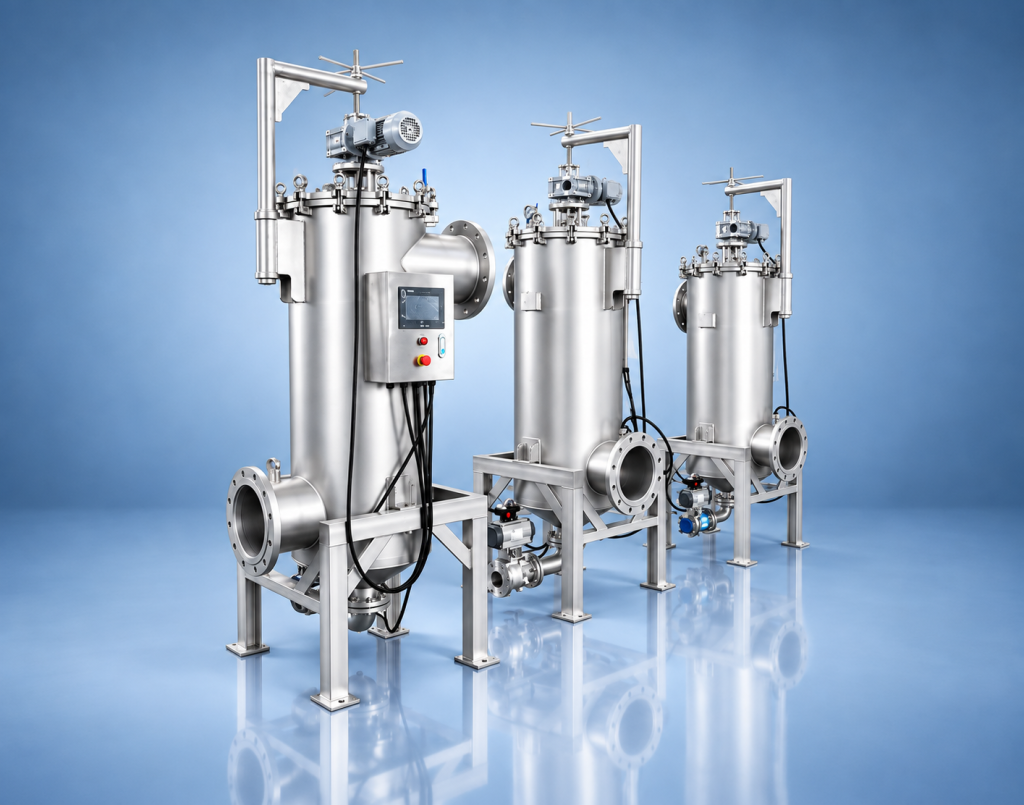
Short answer: INCE-MB-02 is the published two-bag reference model with a Ø400 mm barrel, DN80 flange connections, 60 T/H reference flow and 3.0 mm listed wall thickness. It is only a starting point. Confirm liquid density and viscosity, normal/peak flow, solids loading, bag media and micron rating, clean pressure drop, operating/design pressure and temperature, material, seals, nozzle orientation and maintenance access before accepting the model.
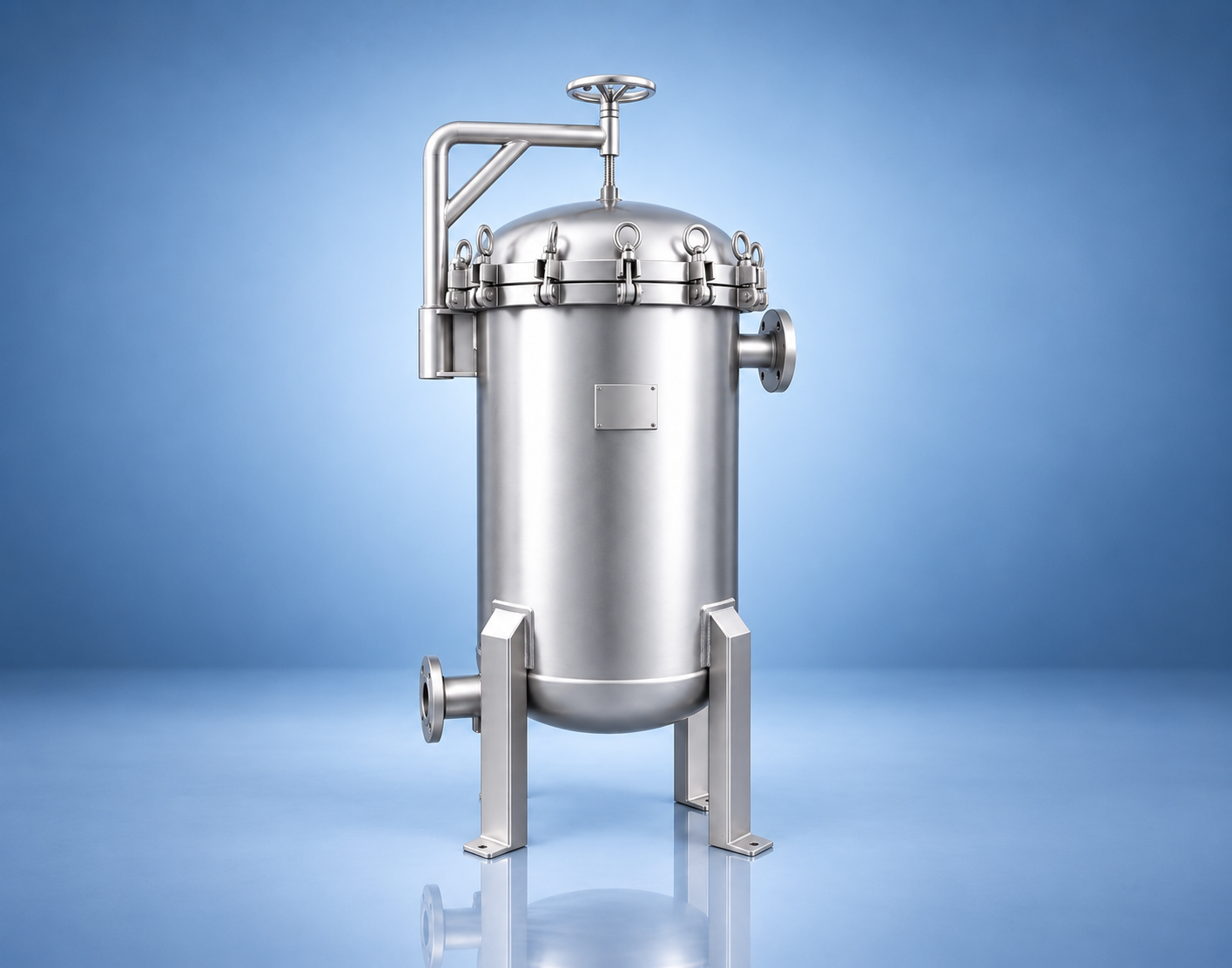
What is verified for INCE-MB-02?
| Published parameter | INCE-MB-02 reference | Procurement note |
|---|---|---|
| Bag count | 2 bags | Confirm bag model, finished dimensions, ring and basket interface. |
| Barrel diameter | Ø400 mm | Reference vessel value; request the complete GA drawing. |
| Inlet / outlet | DN80 flange | Specify flange standard, class/rating, facing and nozzle orientation. |
| Reference flow | 60 T/H | T/H is mass flow. Conversion to m³/h depends on liquid density; actual capacity also depends on viscosity and filtration duty. |
| Listed wall thickness | 3.0 mm | Do not convert this table value into a pressure approval; the complete design basis controls. |
| Materials | 304 or 316L stainless steel options on the product page | Select from chemistry, temperature, corrosion and documentation requirements. |
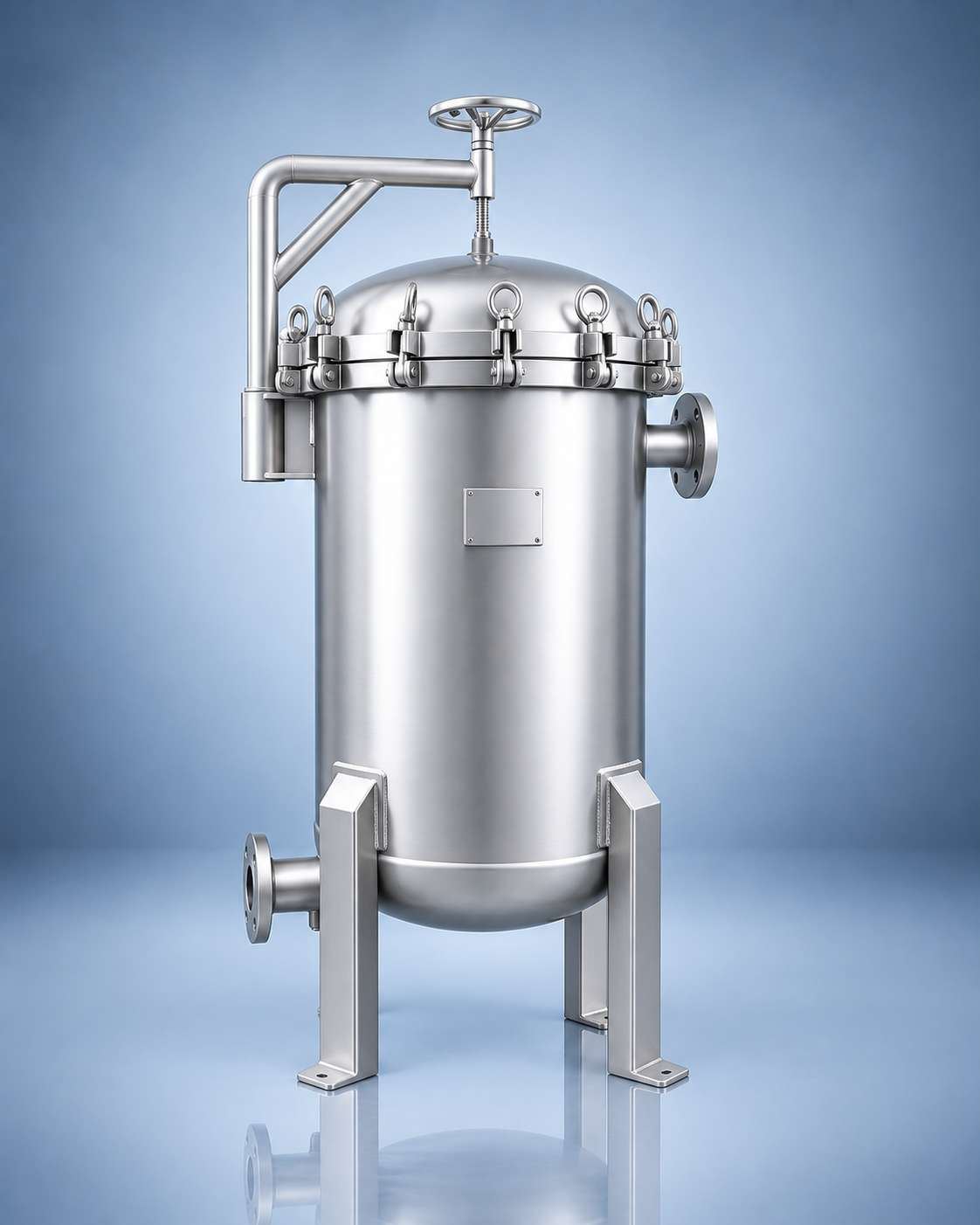
Why can 60 T/H not be treated as a universal capacity?
The published page explicitly identifies the series flows as reference values. If a liquid density is 1,000 kg/m³, 60 tonnes per hour is numerically about 60 m³/h; if density differs, the volumetric flow changes. Viscosity, bag permeability, micron grade, solids loading, pipe losses and allowable pressure drop then affect the practical result. Procurement should supply both the process flow and its units, not copy “60 T/H” into the order without context.
A two-bag vessel also needs a flow-distribution review. Parallel bags should load as evenly as practical, and the inlet distributor, baskets, retaining system and sealing interface should be shown in the approved drawing.
When should buyers compare a larger model?
- Peak flow or viscosity pushes the selected bags beyond the acceptable clean pressure drop.
- High solids loading would cause an uneconomically short change-out interval.
- The process needs a lower face velocity or more contaminant-holding area.
- Maintenance planning favors longer campaigns despite a larger vessel footprint.
- Future capacity expansion is part of the project basis.
Compare the published 2–24 bag series on the multi-bag filter housing product page. Reference flows range from 60 T/H for MB-02 to 720 T/H for MB-24, but every model still requires process confirmation.
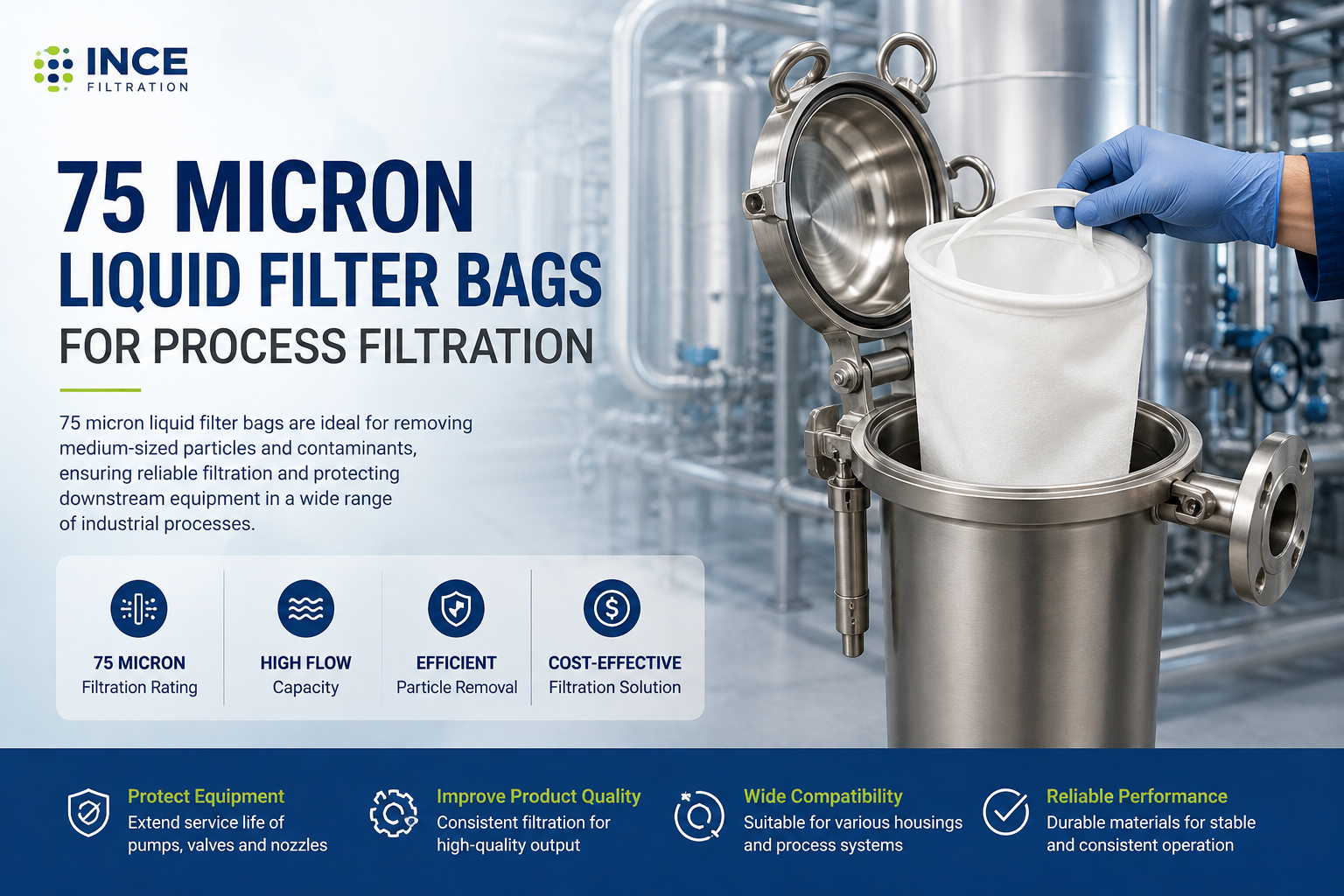
Quote-ready INCE-MB-02 checklist
- Liquid identity, density, viscosity, solids concentration and any hazardous constituents.
- Minimum, normal and peak flow with units; batch or continuous service.
- Bag media, micron rating, bag size, ring profile and expected change-out interval.
- Operating pressure, design pressure, temperature and upset conditions.
- 304 or 316L request, internal/external finish and required material documents.
- DN80 flange standard/class or alternative connection; nozzle direction, drain and vent.
- Seal material, cover lifting clearance, platform/support arrangement and installation drawing.
- Quantity, destination, packaging, inspection and documentation requirements.
Boundary condition: the listed 60 T/H, 1.0 MPa design-pressure family statement and up-to-130°C product-page statement are reference data, not a universal operating guarantee. The approved project drawing and written quotation must define the selected assembly.
Frequently asked questions
Is 60 T/H the same as 60 m³/h?
Only when the liquid density is approximately 1,000 kg/m³. Provide density and both mass/volumetric flow context.
Does DN80 identify the complete flange specification?
No. Confirm standard, class or pressure rating, facing, material and nozzle orientation.
Can INCE-MB-02 use 316L?
The product page lists 304 and 316L options. Final selection depends on chemistry, corrosion, temperature and documentation requirements.
 WhatsApp