
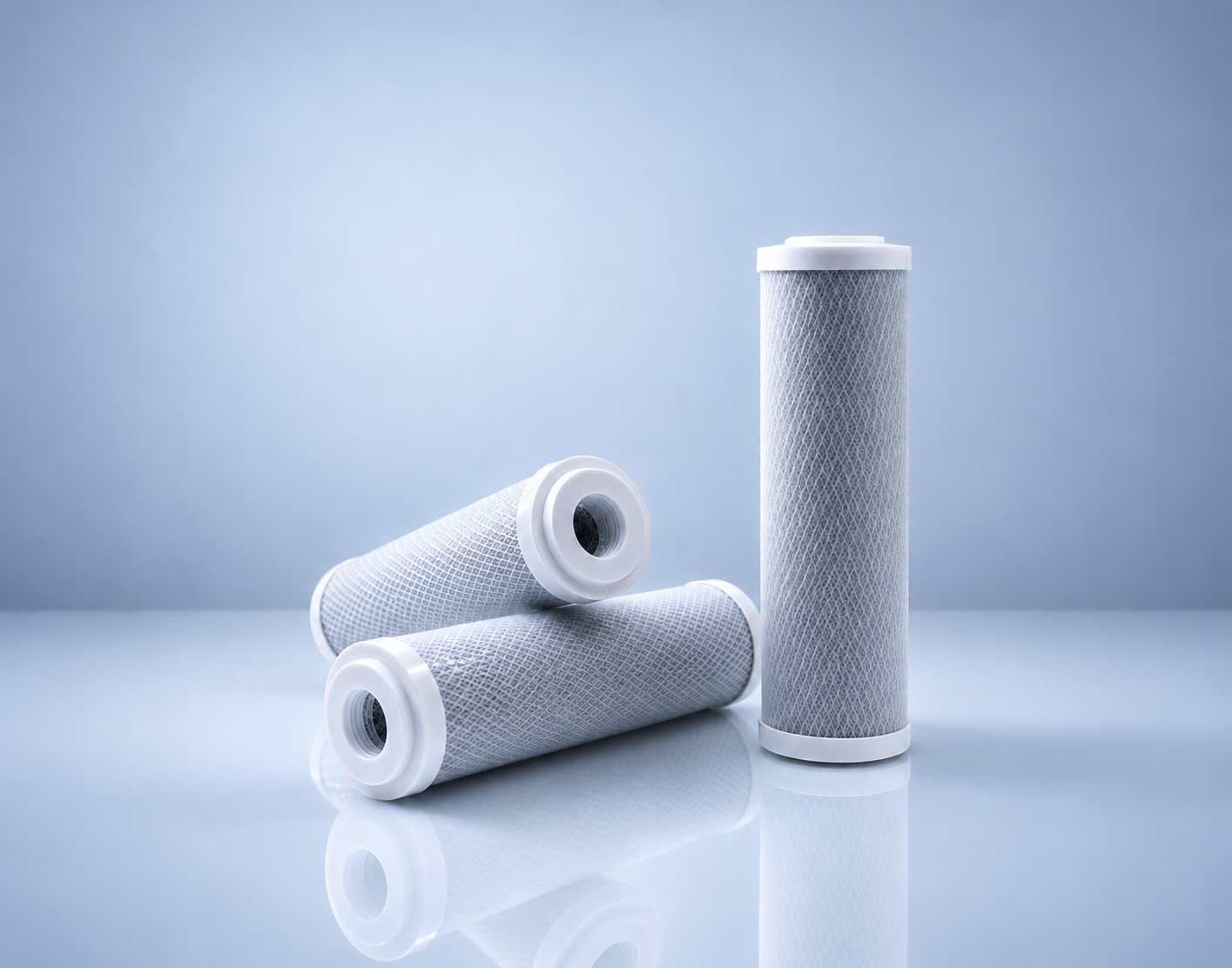
Short answer: quote an activated carbon cartridge only after defining the adsorption target, cartridge format, dimensions, flow, water chemistry and required evidence. “Carbon filter” is not a complete specification. CTO, granular activated carbon (GAC), carbon-block and wrapped-carbon constructions can have different pressure-drop, particle-release and contact-time behavior.
Request Activated Carbon Cartridge Pricing
For a comparable offer, send the existing cartridge or housing model, outside diameter, length, end connection, target contaminant, inlet concentration if known, required flow, operating temperature, quantity and destination. INCE can then review a suitable cartridge construction rather than guessing from a generic keyword.
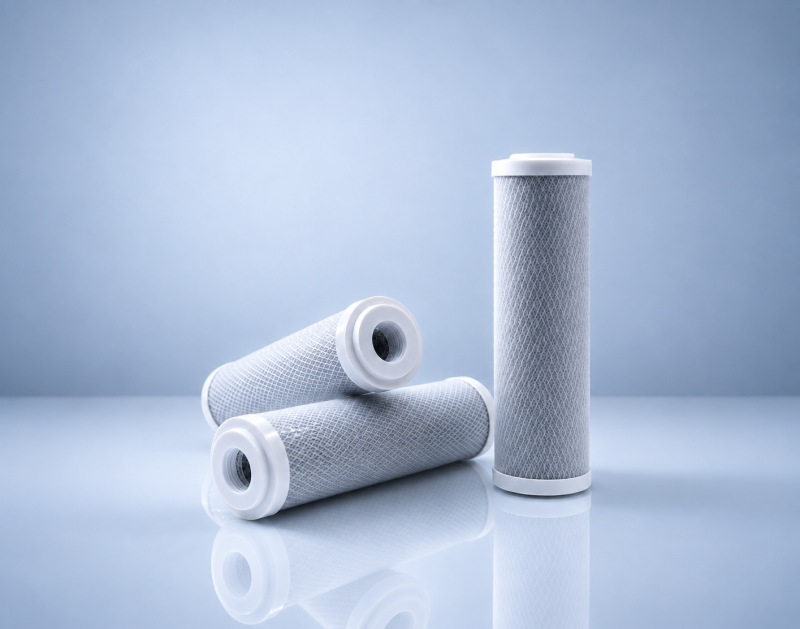
Which carbon cartridge construction fits the procurement problem?
| Construction | What the buyer should verify | Typical quotation risk |
|---|---|---|
| CTO cartridge | Chlorine, taste and odor target; block density; nominal dimensions; end seals | Assuming the same “CTO” label means the same capacity or pressure drop |
| GAC cartridge | Carbon grade, bed arrangement, distributor screens, flow direction and fines control | Ignoring channeling, residence time or initial carbon-fines flushing |
| Carbon block | Block geometry, binder system, mechanical filtration role and clean differential pressure | Ordering by micron alone without defining adsorption duty |
| Wrapped / composite carbon | Layer sequence, support structure, outer media, end caps and intended contaminant | Comparing a composite element with a solid block as if they were identical |
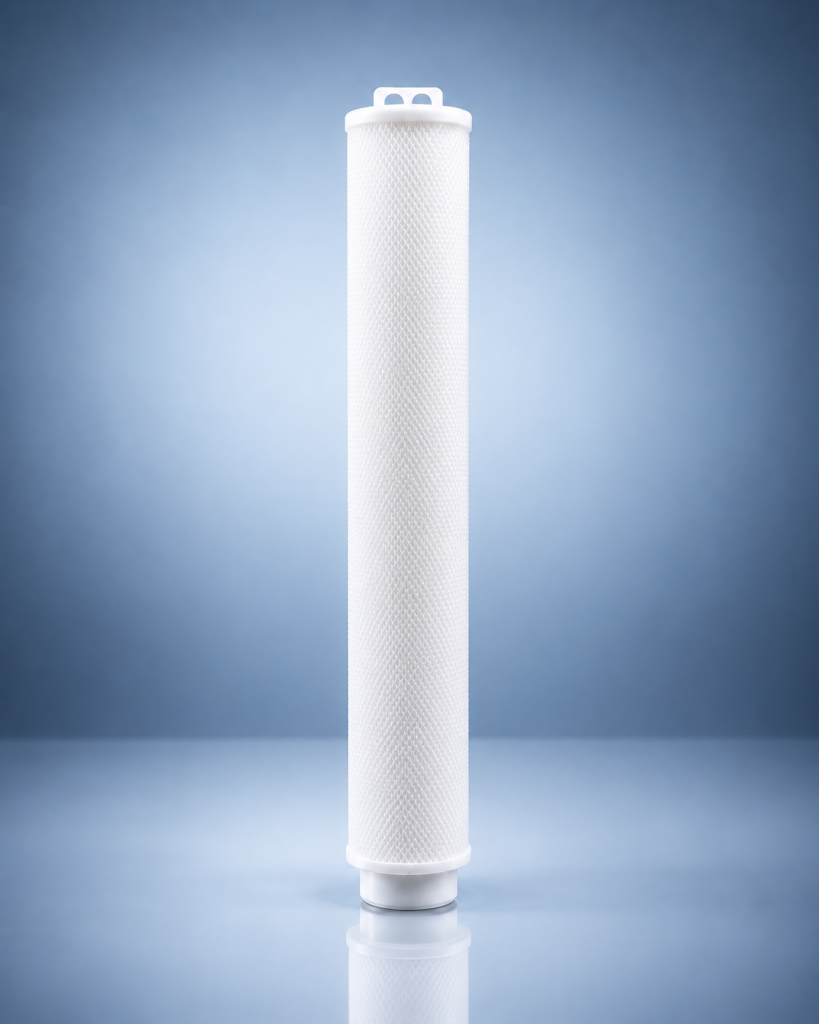
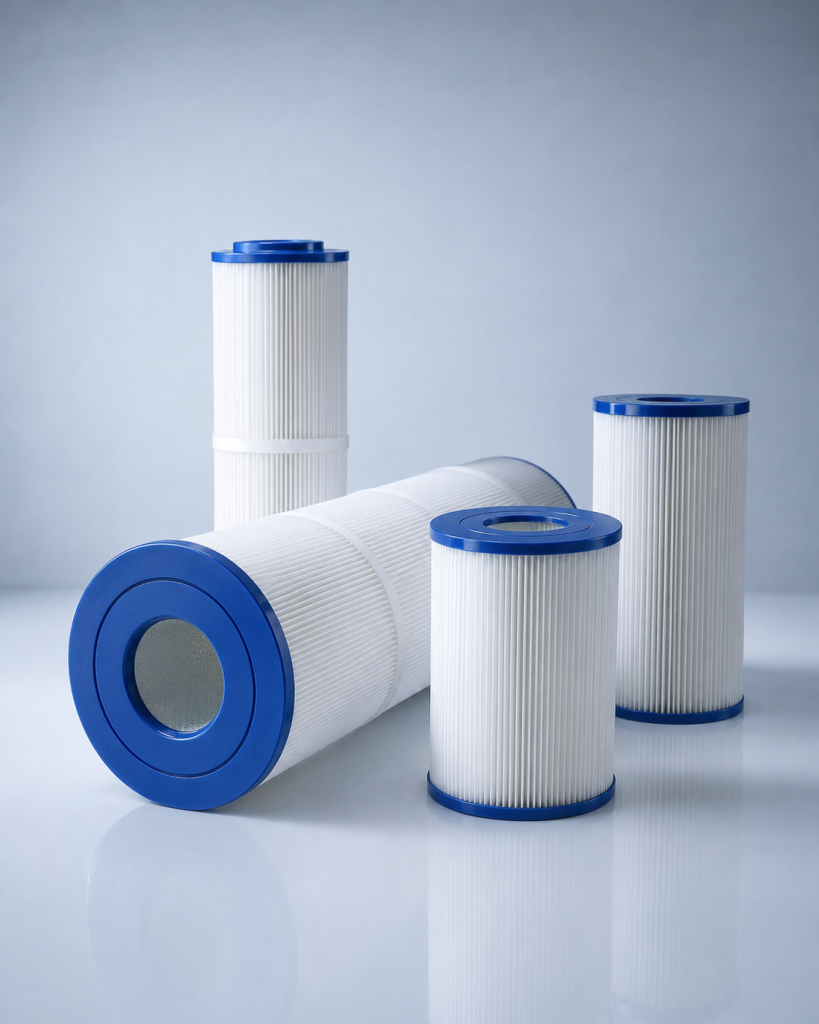
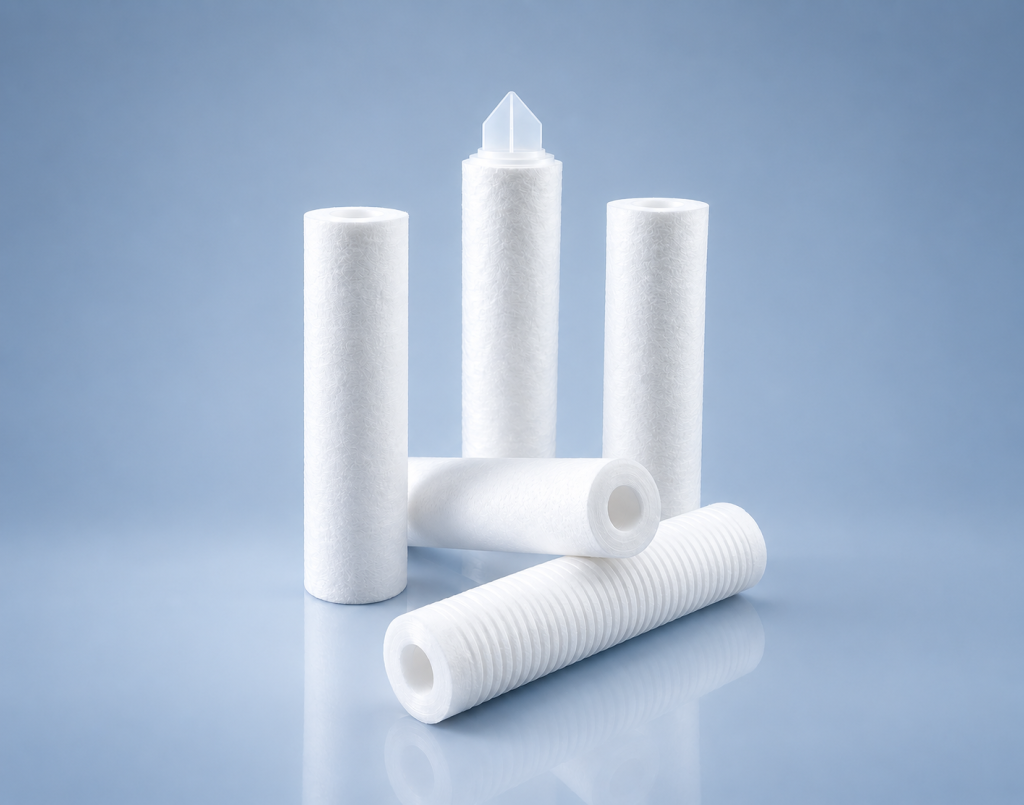
The INCE cartridge range identifies CTO, GAC, carbon block and wrapped-carbon options for compatible water and process-liquid service. The correct choice depends on the actual target and installation. Review the filter cartridge product range before sending the RFQ.
What must be supplied for a useful carbon-cartridge quote?
- Adsorption objective: chlorine, taste, odor, color or a named organic compound. Do not request a broad “all contaminants” claim.
- Inlet and acceptance data: inlet concentration, target outlet, sampling method and required service volume where these are part of acceptance.
- Water/process conditions: pH, temperature, competing organics, turbidity, disinfectant and any cleaning chemicals.
- Hydraulic data: normal and peak flow, allowable clean pressure drop, housing count and desired change-out basis.
- Mechanical fit: length, OD, ID, end-cap style, gasket material and current model or drawing.
- Commercial data: annual quantity, trial quantity, packing, private label, destination and inspection documents.
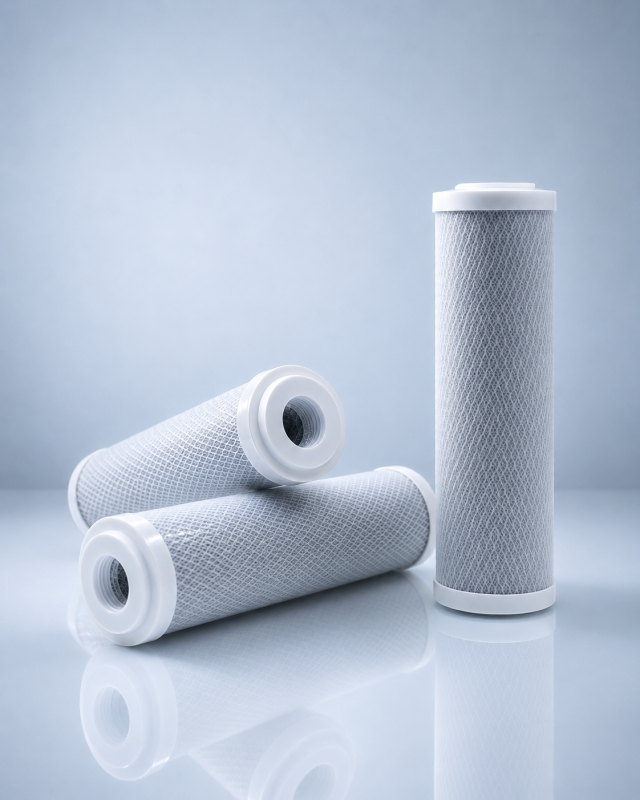
Do not confuse adsorption with mechanical micron filtration
Activated carbon removes selected dissolved substances by adsorption; a cartridge can also include mechanical filtration layers, but these are separate functions. If the feed contains heavy suspended solids, an upstream bag, melt-blown or other sediment stage may protect the carbon element and preserve usable adsorption area. Specify both the particle-control stage and the adsorption stage when the system needs both.
Capacity depends on the carbon, target compound, concentration, temperature, competing substances, contact time and acceptance criterion. A buyer should therefore request test data or a controlled trial for the exact offered construction instead of importing a capacity claim from a different cartridge.
Send Water Chemistry and Cartridge Dimensions
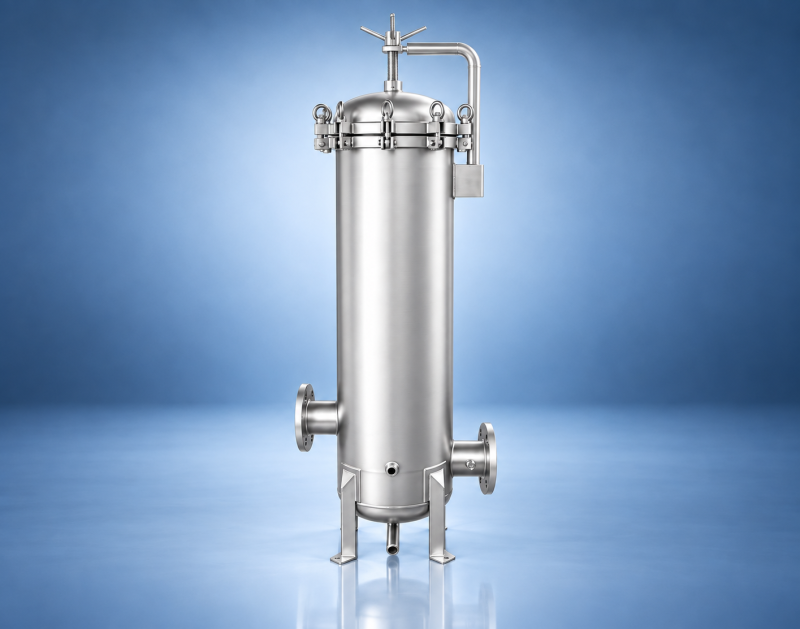
Quotation comparison checklist
| Line item | Required supplier response |
|---|---|
| Exact construction | CTO, GAC, block or wrapped/composite; carbon source and support materials |
| Dimensions | Length, OD, ID, end caps, gasket and dimensional tolerances |
| Performance basis | Named contaminant, test water, flow, concentration, endpoint and method |
| Hydraulics | Clean pressure-drop basis and recommended operating range for the offered element |
| Compliance | Only certifications or declarations tied to the exact product and intended market |
| Commercial offer | Trial quantity, production quantity, packaging, labeling, lead-time basis and Incoterm |
Frequently asked questions
Is CTO the same as a micron-rated sediment cartridge?
No. CTO identifies a chlorine/taste/odor adsorption purpose. Any mechanical rating and its test basis must be stated separately.
Can a carbon cartridge remove every organic chemical?
No. Adsorption varies by compound and conditions. Name the target and request evidence for the exact offered construction.
What should a buyer send if the current model is unknown?
Send cartridge measurements, photos of both ends, the housing model, water chemistry, target contaminant, flow and quantity.
 WhatsApp