01
Defined Mesh Opening
Woven monofilament construction creates repeatable apertures for screening and surface filtration.

INCE filtration supplies nylon filter mesh as precision woven monofilament media for liquid filtration, particle screening, sieving and custom filtration components. Specify the mesh by opening, mesh count, thread diameter, width and final fabricated shape.
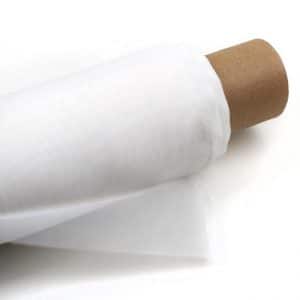
Nylon mesh provides a woven, geometrically defined opening rather than a depth-filtration structure. This makes it useful where screening, repeatable apertures, high open area and cleanable media are more important than depth-loading capacity.
Woven monofilament construction creates repeatable apertures for screening and surface filtration.
Suitable mesh geometry can provide efficient flow with comparatively low resistance for screening duties.
Nylon mesh can be handled as rolls or converted into cut pieces, bags, screens and shaped components.
Many mesh constructions can be cleaned and reused when the process chemistry and cleaning method are compatible.
Precision woven nylon mesh is available in fine and coarse constructions; exact grade depends on opening and thread diameter.
Mesh can be converted into application-specific components from drawings, samples and dimensional requirements.
A reliable mesh specification uses several dimensions together. This avoids ordering by “micron” or “mesh count” alone and receiving a different open area or mechanical behavior.
| Parameter | What It Means | What to Send INCE filtration |
|---|---|---|
| Mesh Opening | Clear distance between adjacent monofilament threads. | Target opening in µm or mm, or required particle-screening target. |
| Mesh Count | Number of threads/openings over a defined unit length. | Count per inch or per centimeter if your drawing already specifies it. |
| Thread Diameter | Diameter of the nylon monofilament yarn. | Nominal thread diameter when known; otherwise provide the existing sample. |
| Open Area | Percentage of the fabric surface that is open aperture. | Minimum open area when flow or pressure drop is critical. |
| Fabric Width | Roll width or cut-piece dimensions. | Width, roll length, sheet size or finished-component dimensions. |
| Final Form | How the mesh is supplied or fabricated. | Roll, sheet, disc, tube, screen, filter bag or drawing-based component. |
| Operating Conditions | Chemistry and service conditions that affect material suitability. | Liquid composition, temperature, cleaning method, flow and mechanical load. |
These are common purchasing targets for nylon filter mesh. Where an exact woven opening is not listed in the INCE filtration reference construction table, the nearest standard construction is shown and the final opening, mesh count and thread diameter should be confirmed before production.
Exact reference: JPP25-399 — 25 µm opening, 157 mesh/cm, 399 mesh/inch, 43 µm thread diameter.
Nominal target: closest standard references are 48 µm JPP48-279 and 57 µm JPP57-254. Confirm which construction best matches the required retention and flow.
Nominal target: the closest listed reference is 96 µm JPP96-163 with 64 mesh/cm, 163 mesh/inch and 60 µm thread diameter.
Exact reference: JPP150-102 — 150 µm opening, 40 mesh/cm, 102 mesh/inch, 100 µm thread diameter. A 153 µm construction is also listed.
Nominal target: nearest standard references include 213 µm JPP213-76 / JPP213-81 and 178 µm JPP178-91. Select by required opening and strength.
Nominal target: nearby standard constructions are 237 µm JPP237-71 and 267 µm JPP267-61. Final selection should match the required opening tolerance.
Exact reference: JPP300-51 — 300 µm opening, 20 mesh/cm, 51 mesh/inch, 200 µm thread diameter. A 305 µm construction is also available in the source table.
Nominal target: the closest listed construction is 408 µm JPP408-43 with 17 mesh/cm, 43 mesh/inch and 180 µm thread diameter.
Nominal target: the closest listed construction is 514 µm JPP514-36 with 14 mesh/cm, 36 mesh/inch and 200 µm thread diameter; 533 µm is another nearby option.
Common purchasing targets are shown below. Final production should be confirmed by actual opening, mesh count and thread diameter.
Exact reference: JPP25-399, 157 mesh/cm, 399 mesh/inch, 43 µm thread.
Nominal target; nearby INCE filtration openings: 48 µm JPP48-279 and 57 µm JPP57-254.
Nominal target; closest listed INCE filtration opening: 96 µm.
Exact reference: JPP150-102, 40 mesh/cm, 102 mesh/inch, 100 µm thread.
Nominal target; nearest listed opening: 213 µm with JPP213-76 and JPP213-81; 178 µm is a finer option.
Nominal target; nearby listed openings: 237 µm and 267 µm.
Exact reference: JPP300-51; a 305 µm construction is also listed.
Nominal target; closest listed opening: 408 µm, with 375 and 425 µm nearby.
Nominal target; nearby listed openings: 514 µm and 533 µm.
The table below lists INCE filtration reference nylon monofilament mesh constructions by product code, clear mesh opening, mesh count, thread diameter and standard width. These values are more useful for purchasing and replacement matching than a micron number alone.
| Product Code | Mesh Opening (µm) | Mesh Count / cm | Mesh Count / inch | Thread Dia. (µm) | Width (cm) |
|---|---|---|---|---|---|
| JPP1900-10 | 1900 | 4 | 10 | 600 | 127 |
| JPP1500-13 | 1500 | 5 | 13 | 500 | 127 |
| JPP1317-15 | 1317 | 6 | 15 | 350 | 127 |
| JPP1129-18 | 1129 | 7 | 18 | 300 | 127 |
| JPP1079-18 | 1079 | 7 | 18 | 350 | 127 |
| JPP950-20 | 950 | 8 | 20 | 300 | 127 |
| JPP900-20 | 900 | 8 | 20 | 350 | 127 |
| JPP899-22 | 899 | 8.7 | 22 | 250 | 127 |
| JPP861-23 | 861 | 9 | 23 | 250 | 127 |
| JPP811-23 | 811 | 9 | 23 | 300 | 127 |
| JPP750-25 | 750 | 10 | 25 | 250 | 127 |
| JPP700-25 | 700 | 10 | 25 | 300 | 127 |
| JPP583-30 | 583 | 12 | 30 | 250 | 127 |
| JPP533-30 | 533 | 12 | 30 | 300 | 127 |
| JPP514-36 | 514 | 14 | 36 | 200 | 127 |
| JPP425-41 | 425 | 16 | 41 | 200 | 127 |
| JPP375-41 | 375 | 16 | 41 | 250 | 127 |
| JPP408-43 | 408 | 17 | 43 | 180 | 127 |
| JPP350-51 | 350 | 20 | 51 | 150 | 127 |
| JPP300-51 | 300 | 20 | 51 | 200 | 127 |
| JPP305-56 | 305 | 22 | 56 | 150 | 127 |
| JPP267-61 | 267 | 24 | 61 | 150 | 127 |
| JPP237-71 | 237 | 28 | 71 | 120 | 127 |
| JPP213-76 | 213 | 30 | 76 | 120 | 127 |
| JPP213-81 | 213 | 32 | 81 | 100 | 127 |
| JPP178-91 | 178 | 36 | 91 | 100 | 127 |
| JPP150-102 | 150 | 40 | 102 | 100 | 127 |
| JPP153-109 | 153 | 43 | 109 | 80 | 127 |
| JPP128-122 | 128 | 48 | 122 | 80 | 127 |
| JPP119-142 | 119 | 56 | 142 | 60 | 127 |
| JPP96-163 | 96 | 64 | 163 | 60 | 127 |
| JPP89-183 | 89 | 72 | 183 | 50 | 127 |
| JPP75-203 | 75 | 80 | 203 | 50 | 127 |
| JPP57-254 | 57 | 100 | 254 | 43 | 127 |
| JPP48-279 | 48 | 110 | 279 | 43 | 127 |
| JPP40-305 | 40 | 120 | 305 | 43 | 127 |
| JPP42-330 | 42 | 130 | 330 | 35 | 127 |
| JPP37-355 | 37 | 140 | 356 | 35 | 127 |
| JPP25-399 | 25 | 157 | 399 | 43 | 127 |
| JPP20-457 | 20 | 180 | 457 | 39 | 127 |
| JPP15-508 | 15 | 200 | 508 | 39 | 127 |
| JPP10-559 | 10 | 220 | 559 | 39 | 127 |
| JPP5-600 | 5 | 240 | 610 | 39 | 127 |
For a square plain-weave mesh, a useful geometric approximation is that one pitch equals the clear opening plus one thread diameter. This is why mesh count cannot be converted to micron opening accurately unless the thread diameter is also known.
When mesh count is expressed per inch, pitch is approximately 25.4 mm divided by the mesh count. This relationship is a geometry guide, not a substitute for the manufacturer’s final measured specification and tolerances.
INCE filtration can supply nylon mesh as raw media or review fabrication requirements for finished filtration components.
Roll-goods supply for converters, equipment manufacturers and in-house fabrication.
Square, rectangular or drawing-based cut pieces for assembly and process screening.
Round filter discs and inserts produced to the required outside diameter and mesh specification.
Tubular or cylindrical mesh components for screening assemblies and OEM filtration parts.
Flat or shaped screening elements based on required dimensions and installation method.
Finished NMO liquid filter bags for standard bag-filter housings and custom applications.
The best mesh depends on chemistry, temperature, mechanical requirements, flexibility and whether the final component should be polymeric or metallic.
| Feature | Nylon Mesh | Polyester Mesh | Stainless Steel Mesh |
|---|---|---|---|
| Construction | Woven monofilament polyamide | Woven monofilament polyester | Woven metal wire |
| Handling | Flexible fabric | Dimensionally stable fabric | Rigid to semi-rigid metal mesh |
| Common Supply | Rolls, cut pieces, bags, screens | Rolls, cut pieces, support layers | Sheets, discs, cylinders, screens |
| Typical Selection Driver | Defined opening, flexibility, cleanable screening | Stable geometry and polymer mesh handling | Mechanical durability and metal construction |
| Key Check | Chemistry, temperature, opening, thread diameter | Chemistry, temperature, opening, thread diameter | Alloy, weave, opening, wire diameter |
Nylon mesh is commonly considered where a defined woven opening, flexible media and fabricated screening component are required.
Screening and pre-filtration before downstream equipment or finer filtration stages.
Ingredient screening, washing and process separation where material suitability is confirmed.
Removal of agglomerates and larger debris before filling or downstream processing.
Particle screening where nylon is compatible with the process chemistry and temperature.
Reusable screens and baskets for suitable cleaning, washing and solids-separation duties.
Coarse screening and equipment protection for compatible oils and industrial liquids.
Mesh elements positioned upstream of pumps, nozzles and other sensitive components.
Custom discs, tubes, screens and shaped parts integrated into customer equipment.
Send the required opening, mesh count if known, thread diameter, dimensions, process liquid, temperature, final component shape and quantity. A drawing or physical sample is especially useful for replacement mesh.
Nylon filter mesh is a woven monofilament polyamide mesh used for surface filtration, particle screening, sieving and fabricated filtration components. It is normally specified by the mesh opening, mesh count, thread diameter and open area.
Micron opening is the clear aperture between adjacent threads. Mesh count describes how many threads or openings occur over a defined length. Because thread diameter changes the available space, mesh count cannot be converted reliably to a micron opening without the thread diameter.
The terms are sometimes used interchangeably in industrial sourcing. For precise selection, specify monofilament woven nylon mesh and define the required opening, thread diameter and finished dimensions rather than relying on the name alone.
Yes. Depending on the selected mesh construction and fabrication method, nylon mesh can be supplied as rolls, cut pieces, discs, tubes, screens and finished filter bags.
Many nylon mesh constructions can be cleaned and reused for suitable screening duties. Reusability depends on the process liquid, contamination, temperature, cleaning chemistry and the mechanical condition of the mesh after service.
Send the existing mesh specification if available. If not, provide a physical sample or clear measurements together with the process liquid, required dimensions and application. Opening, thread diameter and overall construction should be matched before production.
Choose raw mesh or cut pieces when you fabricate the component yourself. Choose a nylon mesh filter bag when the final element must fit a standard or custom bag-filter housing. INCE filtration can supply both pathways depending on the requirement.
 WhatsApp