150 µm
JPP150-102Exact 150 Micron Standard
Use when the specified clear opening is 150 µm and this listed construction matches the process requirement.
40 mesh/cm102 mesh/inch100 µm thread127 cm width

INCE filtration lists an exact 150 µm nylon monofilament construction: JPP150-102. It combines a 150 µm clear opening with 40 mesh/cm, 102 mesh/inch and 100 µm thread. A nearby 153 µm construction, JPP153-109, uses a finer 80 µm thread and a different woven geometry.
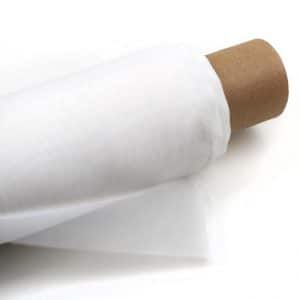
This is an exact listed woven construction, not a rounded purchasing approximation.
| Reference | Mesh Opening | Mesh Count / cm | Mesh Count / inch | Thread Diameter | Reference Width |
|---|---|---|---|---|---|
| JPP150-102 | 150 µm | 40 | 102 | 100 µm | 127 cm |
The openings are close, but the thread diameters and mesh counts are different, so the constructions should not be treated as identical.
Use when the specified clear opening is 150 µm and this listed construction matches the process requirement.
Only 3 µm larger in opening, but uses a thinner 80 µm thread and a higher mesh count.
150 micron is a clear-opening measurement. 150 mesh is a thread/opening count per inch. INCE filtration reference JPP150-102 has a 150 µm opening but is listed at 102 mesh/inch.
The open space between adjacent monofilament threads and the primary aperture specification for JPP150-102.
A separate measurement. Thread diameter changes the resulting opening, so mesh count is not a direct micron conversion.
Use neighboring listed constructions to position the exact 150 µm reference within the wider nylon mesh range.
48 mesh/cm · 122 mesh/inch · 80 µm thread.
40 mesh/cm · 102 mesh/inch · 100 µm thread. Exact target.
43 mesh/cm · 109 mesh/inch · 80 µm thread. Nearby alternate.
36 mesh/cm · 91 mesh/inch · 100 µm thread.
After confirming the parent woven construction, specify the final dimensions and fabricated form.
Application suitability depends on material grade, process chemistry, temperature, cleaning method and the final component design.
Defined-opening screening and pre-filtration in compatible systems.
Removal of larger process contaminants before downstream stages.
Process screening only after material and compliance requirements are confirmed.
Particle screening after checking liquid chemistry and operating temperature.
Mesh inserts upstream of equipment requiring controlled particle screening.
Discs, screens and custom nylon mesh parts integrated into equipment.
Applications where the selected nylon construction can be cleaned without damage.
Screening upstream of finer filter media or finished filtration stages.
Use the exact JPP150-102 reference when it matches your required woven geometry.
Specify 150 µm clear opening and state whether the nearby 153 µm construction is acceptable as an alternate.
Reference JPP150-102 for the exact 150 µm standard, including mesh count and 100 µm thread diameter.
Provide roll length, sheet size, disc OD/ID, drawing, process liquid, temperature and quantity.
Yes. JPP150-102 is listed with a 150 µm clear opening, 40 mesh/cm, 102 mesh/inch, 100 µm thread diameter and 127 cm reference width.
JPP150-102 uses a 100 µm thread and 102 mesh/inch. JPP153-109 uses an 80 µm thread and 109 mesh/inch. Their openings are close, but their woven geometries are not identical.
No. JPP150-102 has a 150 µm opening but a mesh count of 102 per inch. Micron and mesh count describe different parts of the woven geometry.
No. It is the clear woven opening. Actual particle retention depends on particle shape, orientation, loading, process conditions and the finished component.
Yes. Provide disc outside diameter, center-hole size if any, layer count, edge treatment and quantity after the parent mesh is confirmed.
Mesh size alone does not establish food-contact suitability. Confirm the supplied nylon grade, documentation, process temperature, cleaning chemistry and finished component requirements.
Reference JPP150-102 and send the required finished dimensions, process conditions and quantity. INCE filtration can also review JPP153-109 when a nearby alternate construction is acceptable.
 WhatsApp