Short answer: treat “40-inch FOE 5/20 or 20/50 NBR” as an incomplete replacement description. Confirm the manufacturer or housing family, actual end-cap drawing, OD/ID and sealing length, flow direction, the meaning and order of both micron numbers, retention basis, media layers, NBR seal dimensions, liquid, temperature, flow and quantity. FOE and dual-number ratings are not safe to decode from text alone.
Why is the shorthand not enough for a quotation?
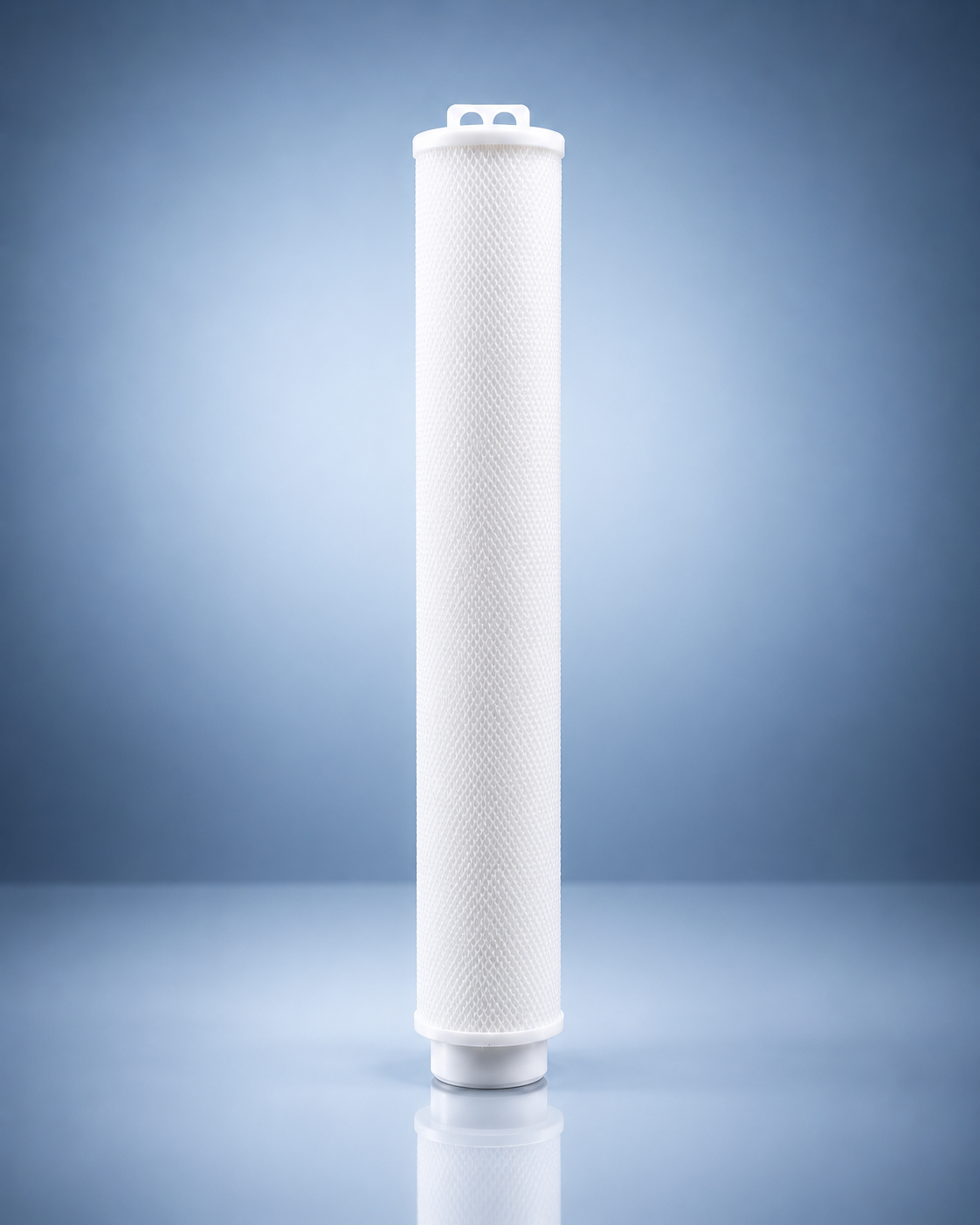
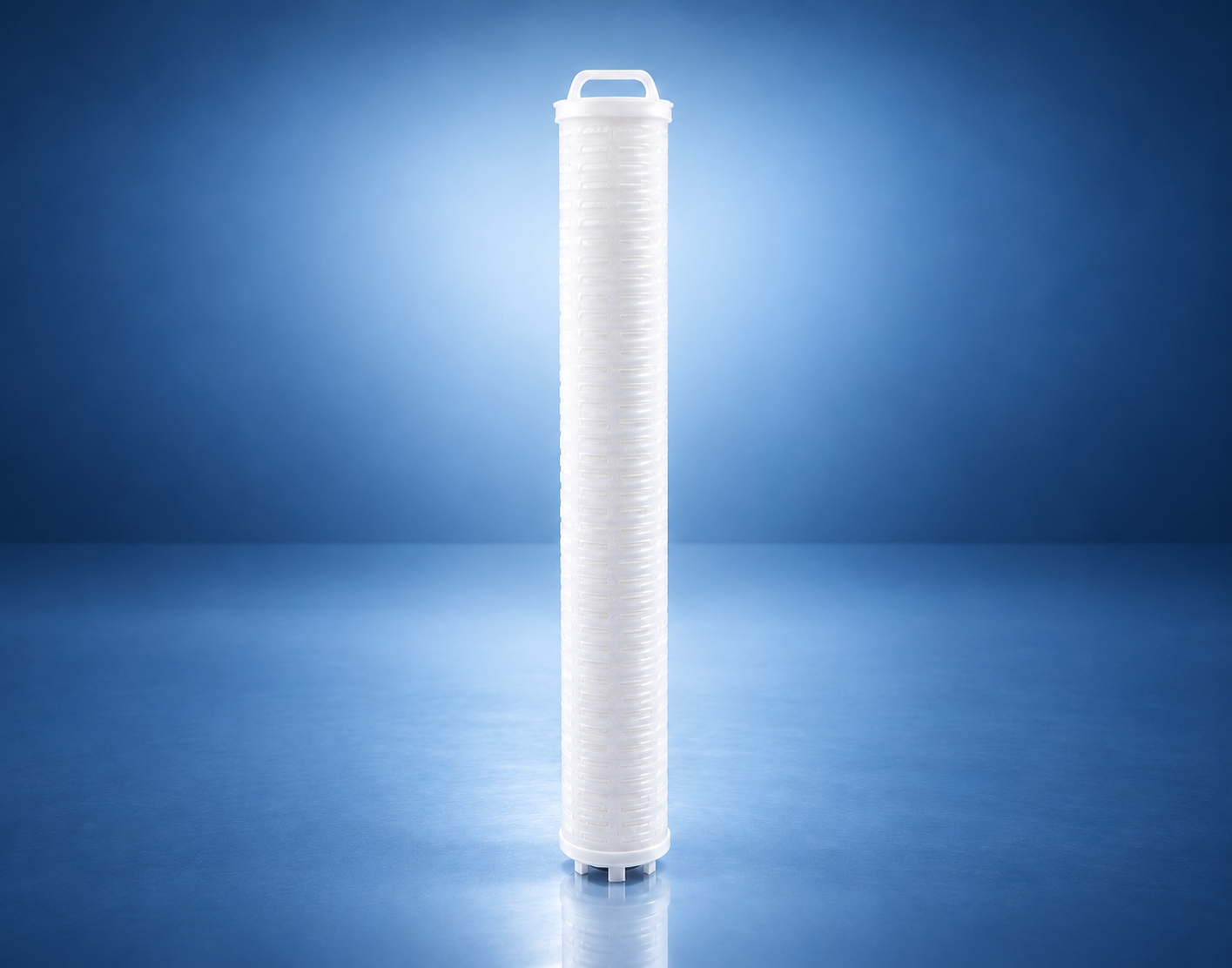
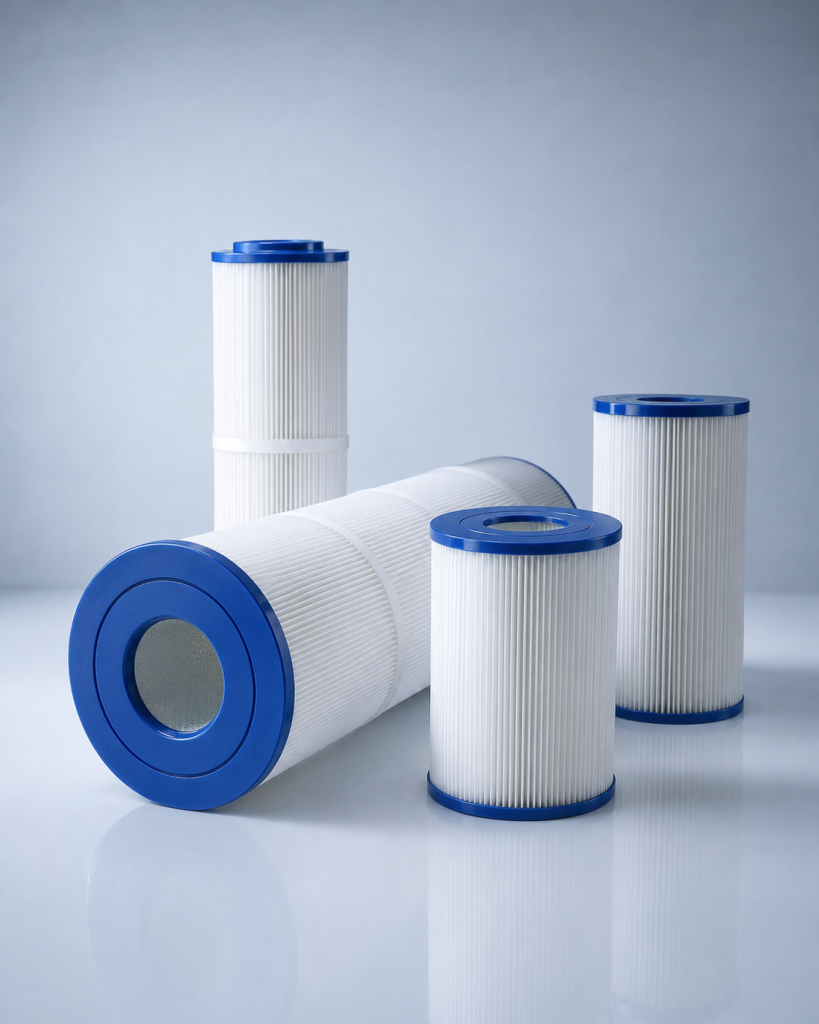
INCE’s published high-flow family includes Pall-style, Parker-style, 3M-style and custom cartridges, common 20-, 40- and 60-inch lengths, multiple micron grades and seal choices including NBR. These families can differ in diameter, end-cap interface, handle or fin geometry, sealing location and flow direction. A 40-inch label therefore narrows length but does not define fit.
| Code fragment | What it may indicate | What procurement must verify |
|---|---|---|
| 40 inch | Nominal cartridge family length | Actual overall and sealing length; whether the stated length includes handle/fin. |
| FOE | An end configuration or supplier-specific code | Do not rely on the abbreviation alone; supply photos, drawing and mating adapter. |
| 5/20 or 20/50 | Possibly a dual-layer or staged rating notation | Which number is upstream/downstream, nominal/absolute basis, test method and accepted efficiency. |
| NBR | Nitrile seal material | O-ring/gasket profile, hardness if controlled, dimensions and chemical/temperature compatibility. |
How should dual micron numbers be handled?
A buyer may intend two media layers, a coarse-to-fine sequence, or another manufacturer-specific designation. The supplier should not silently convert 5/20 into a single 5 µm or 20 µm grade. Ask for the original data sheet or sample label, identify the liquid-entry direction, and state the required retention result. If the original notation cannot be verified, quote the proposed construction as a controlled alternative and require a sample trial.
Boundary condition: this article does not state that 5/20 and 20/50 have a universal meaning. The meaning must be confirmed from the source specification or mutually approved replacement drawing.
Quote-ready dimensional and process checklist
- Original manufacturer, full model number and housing model.
- Nominal length plus measured overall/sealing length; OD and ID.
- Clear photos of both ends, handle/fin, adapter and installed seal.
- Flow direction and whether the support core is inside or outside the media pack.
- Media polymer, support and core materials; any stainless insert requirement.
- Micron numbers, rating basis, layer sequence and acceptance criterion.
- NBR seal profile, quantity and dimensions; process chemistry and temperature.
- Normal/peak flow, clean and change-out differential pressure, quantity and destination.
Where should the RFQ link?
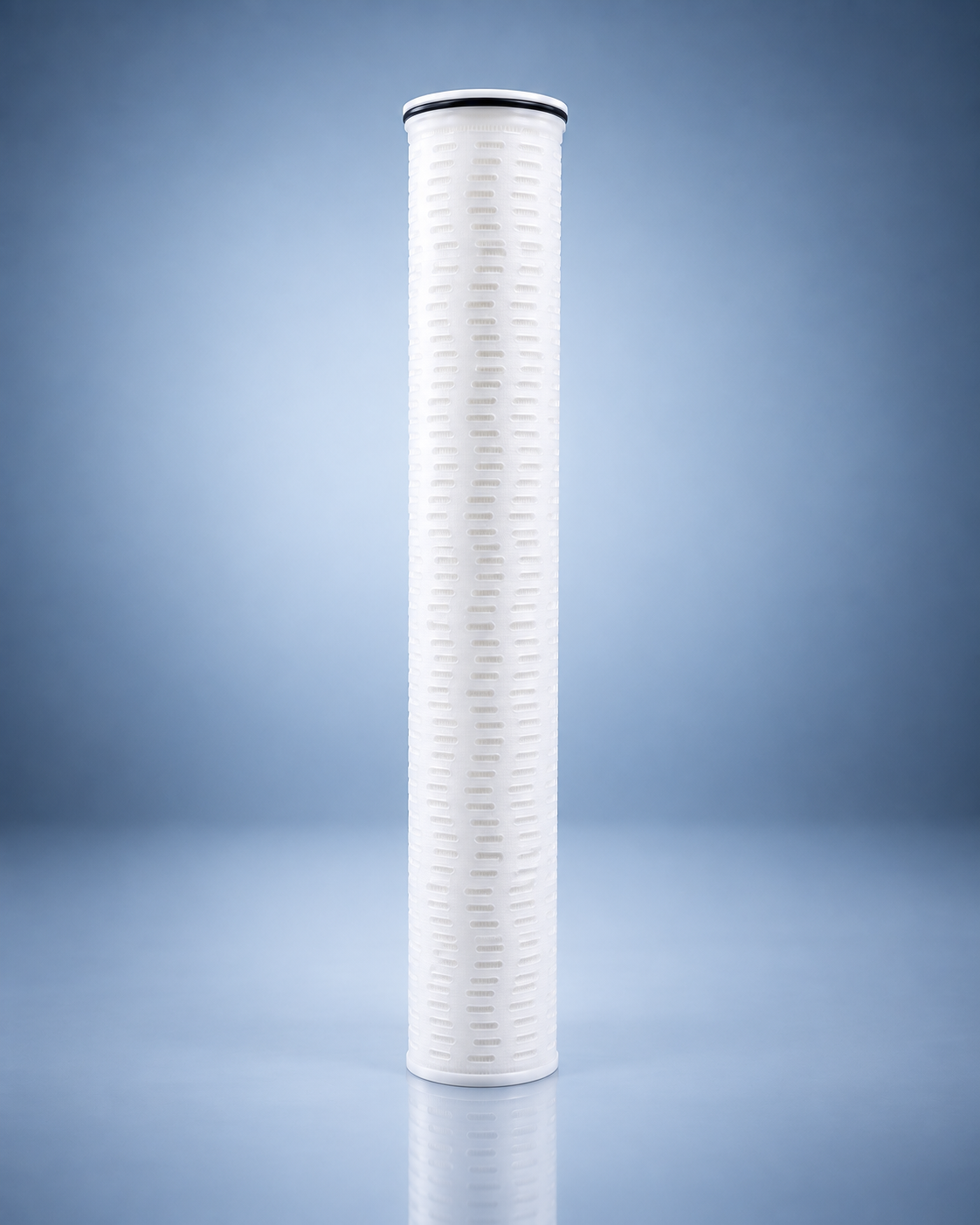
Use the high-flow cartridge product family to compare compatible and custom options. Then send the source model, dimensional evidence and process data through the filter cartridge inquiry form.
Frequently asked questions
Does 40 inch guarantee that the cartridge will fit?
No. End interface, sealing length, diameter and flow direction must also match.
Can 5/20 be quoted as 5 micron?
Not safely without the source definition. Confirm both numbers, the layer sequence and the rating basis.
Is NBR suitable for every liquid?
No. NBR is a seal option, but compatibility depends on the full chemical mixture, concentration and temperature.
 WhatsApp