
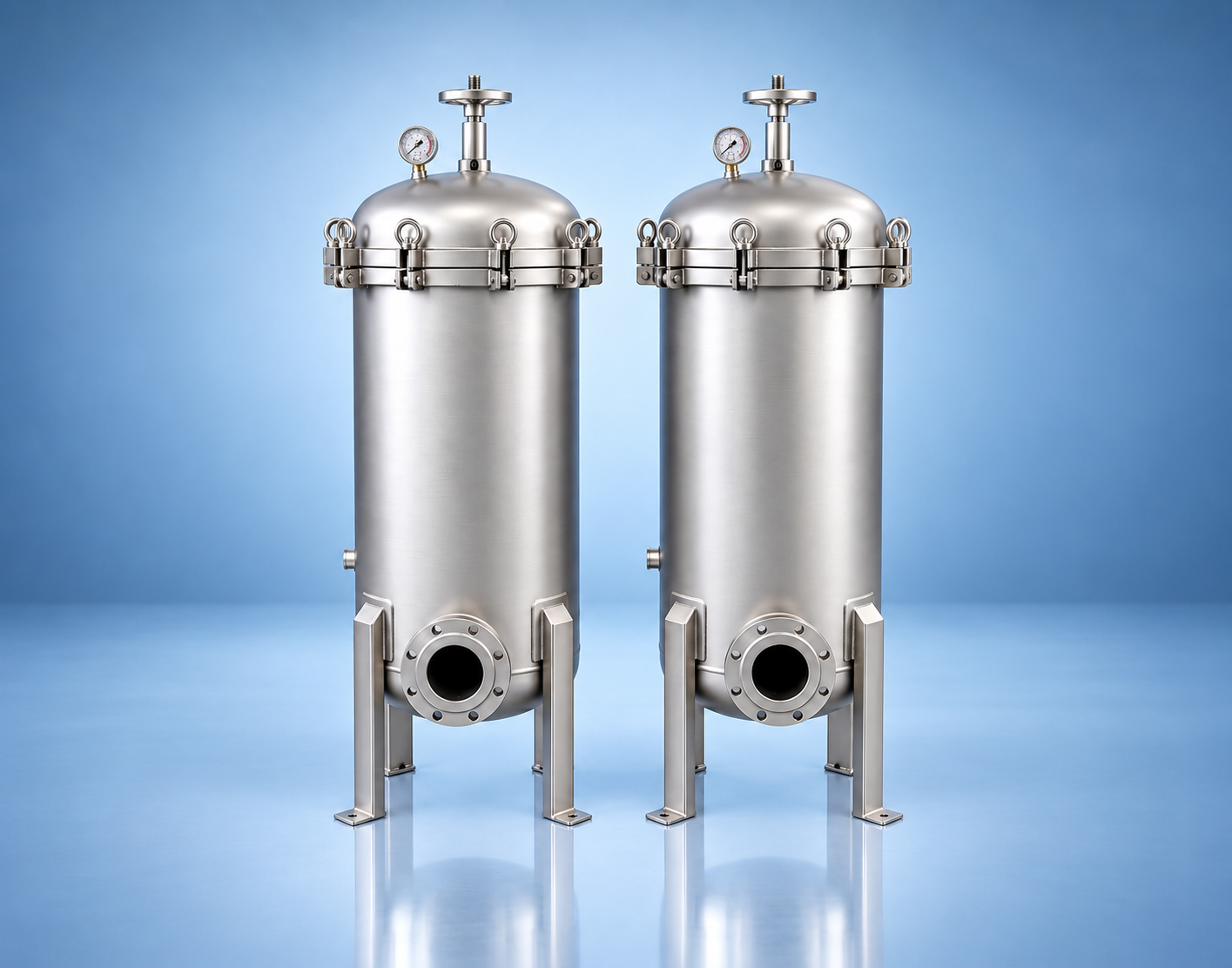
Direct answer: choose a horizontal high-flow filter housing when low-level element access and reduced overhead removal height are priorities; choose a vertical layout when floor space is tighter and the project can safely provide overhead clearance, lifting and operator access. The correct RFQ compares footprint, cartridge extraction path, drainage, venting, nozzle loads, platform needs and the actual 40- or 60-inch element interface—not orientation alone.
Need a layout-specific high-flow housing quotation?
Send flow, liquid, viscosity, temperature, design/operating pressure, cartridge brand or drawing, length, quantity, flow direction, metallurgy, nozzle standard, orientation preference, available footprint, overhead clearance and destination code.
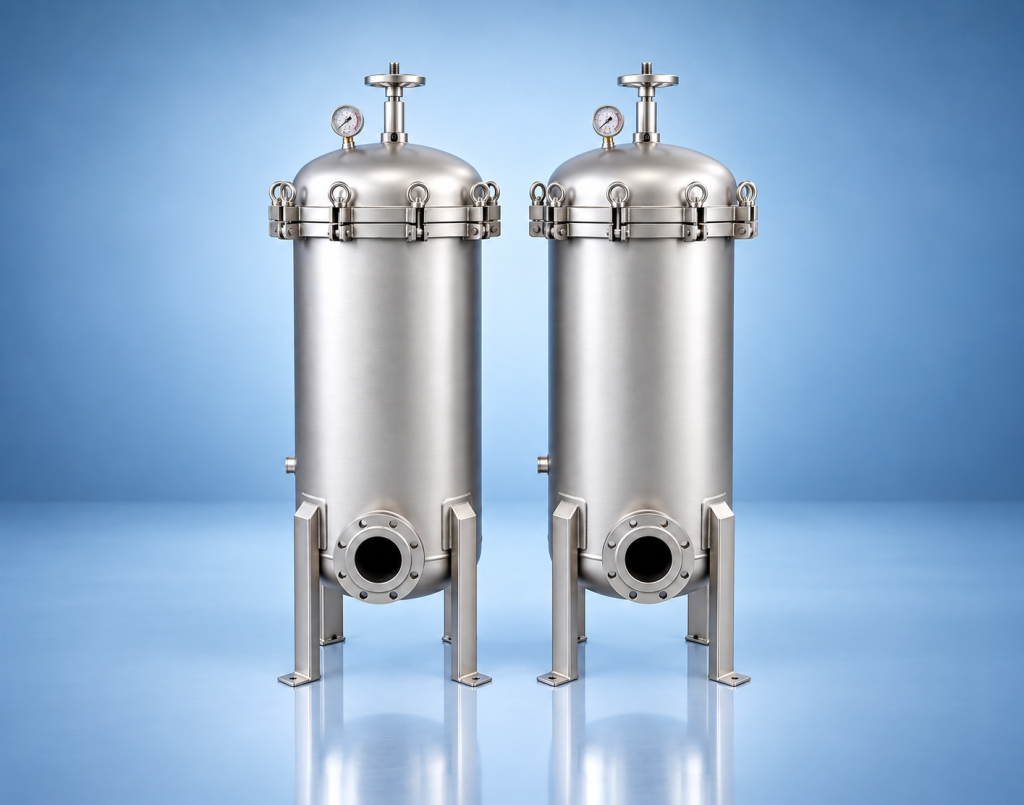
When is a horizontal high-flow housing the better choice?
Horizontal vessels can make long elements easier to withdraw near grade level and can reduce the need for tall platforms or overhead lifting. They usually need a longer footprint, a clear pull zone in front of the closure and suitable support for the opened head or cover. Drainability and low-point arrangement must be addressed on the drawing rather than assumed.
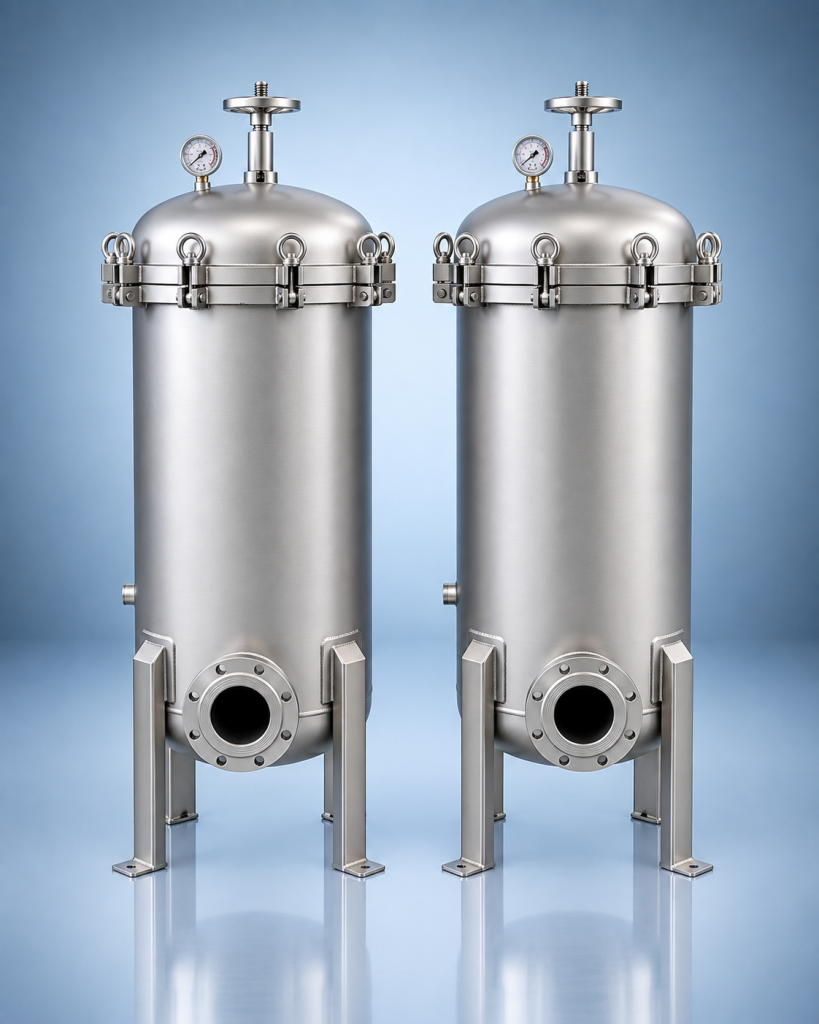
When is a vertical high-flow housing the better choice?
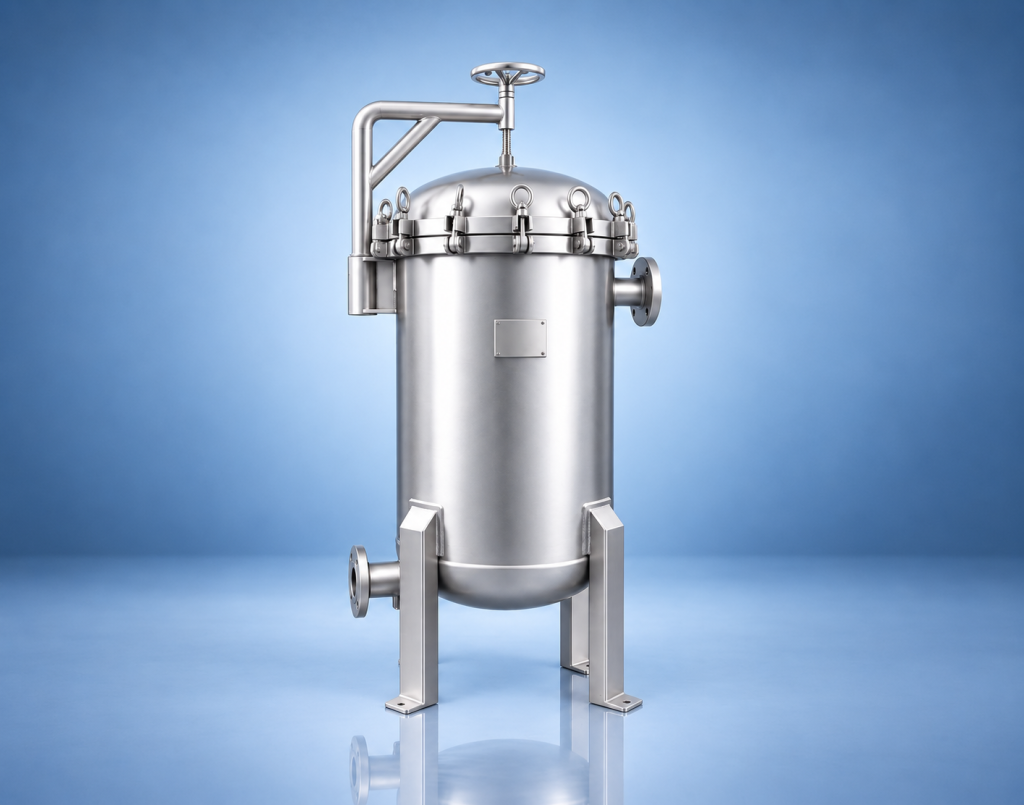
Vertical vessels can conserve floor area, but the project must reserve enough height to remove the full cartridge and safely handle a wet element. Larger vertical vessels may require platforms, ladders, lifting devices or guarded access. The nozzle orientation, support skirt or legs, vent at the high point and drain at the low point should be fixed before fabrication.
Pall’s public high-flow system literature offers horizontal, vertical and centerpipe configurations and explains the practical tradeoff: horizontal layouts can avoid platform access, while vertical vessels may suit limited floor space but require access for element removal. Use the principle, not another manufacturer’s dimensions, for an INCE RFQ. See Pall housing design guidance.
| Layout question | Horizontal | Vertical |
|---|---|---|
| Floor footprint | Usually longer | Usually more compact |
| Removal envelope | Clear lateral pull zone | Clear vertical lift height |
| Operator access | Can be near grade | May need platform or lifting aid |
| Drain and vent | Low points must be designed deliberately | Natural high/low points, still requiring correct nozzles |
| GA approval focus | Footprint, closure swing, cartridge pull | Overall height, platform, lifting and headroom |
Ask for the extraction envelope before approving the vessel
A usable GA should show overall dimensions, centerlines, supports, nozzle sizes/ratings/orientation, closure movement, cartridge pull distance, lifting points, platform interface, vent, drain and maintenance clearances.
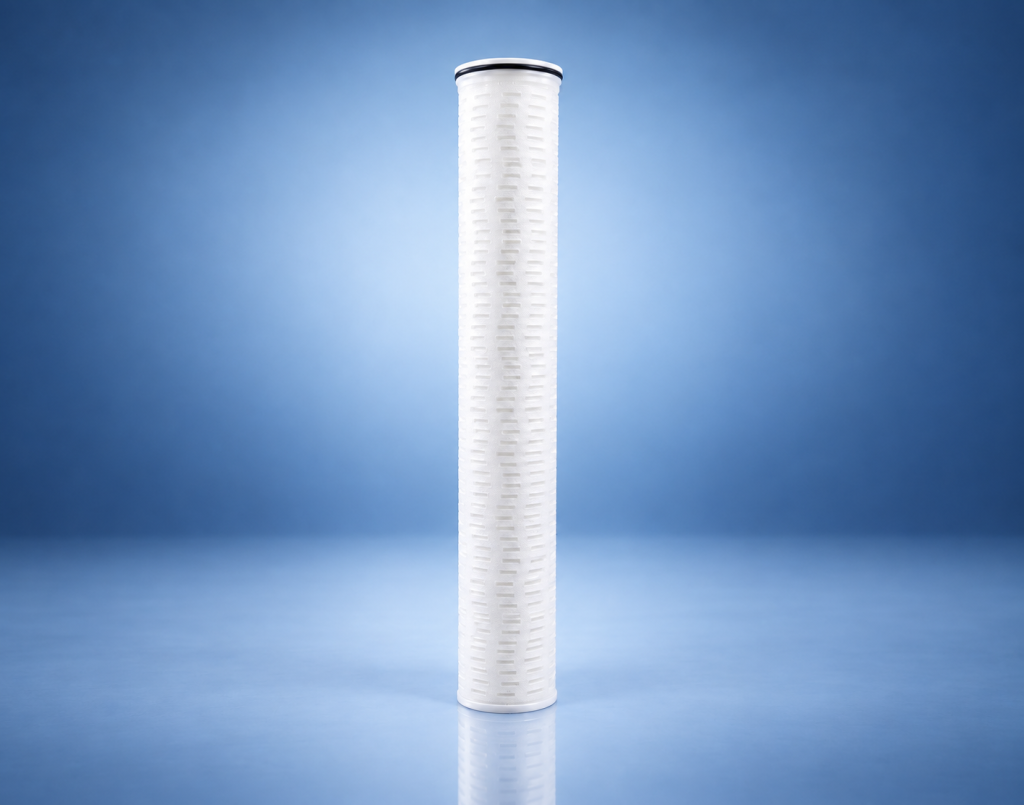
Cartridge compatibility comes before vessel orientation
- Provide manufacturer and exact part number or a dimensioned sample drawing.
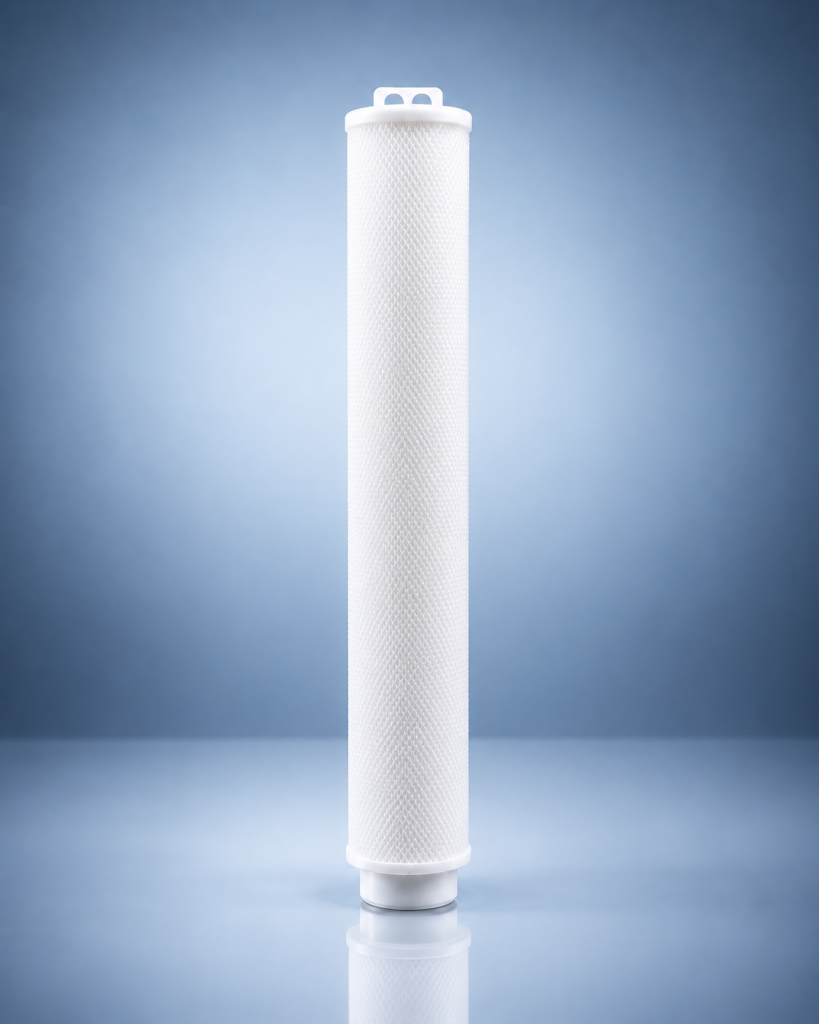
- Confirm nominal length, outside diameter, open/closed-end geometry, seal location and material.
- State inside-out or outside-in flow and whether the cartridge has a core or cage.
- Define the number of elements and design flow using validated pressure-drop data for the real liquid.
- Identify hold-down, sealing and tubesheet details; “Pall-style,” “Parker-style” or “3M-style” alone is not enough.
What should the RFQ include?
Submit a process data sheet with normal and maximum flow, fluid composition, viscosity at operating temperature, solids loading, required retention/efficiency, operating and design pressure/temperature, corrosion allowance, metallurgy, code requirement, nozzle standard, gasket, surface treatment, vent/drain connections, instruments, orientation, support, lifting, insulation clearance and destination. If the vessel must fit an existing skid, attach the skid layout and allowable nozzle loads.
For commercial review, see the high-flow filter housing page and compatible high-flow cartridge options. Do not approve a housing from catalogue flow alone; request the GA and design data for the quoted configuration.
Frequently asked questions
Is a horizontal high-flow housing always easier to maintain?
It can reduce overhead extraction height, but it still needs a clear lateral pull zone, safe closure handling and deliberate drainage.
Does a vertical housing always use less space?
It generally reduces floor footprint, but the required overhead clearance, platform and lifting envelope can be substantial.
What drawing should I send for a Pall, Parker or 3M replacement housing?
Send the exact cartridge part number or a dimensioned drawing showing length, diameter, end geometry, seal position and material, flow direction and required cartridge count.
Get a configuration-specific quotation
Send process conditions, cartridge interface, layout constraints, orientation, materials, nozzle standard, code, quantity and destination. INCE will confirm what can be engineered and which details require approval.

 WhatsApp