A micron label and a matching carton quantity are not a complete incoming inspection plan for PP filter bags. For recurring industrial orders, connect each delivered lot to an approved part specification, agreed checks and a documented release decision. This makes a later quality investigation more useful than comparing two untraceable bags.
The following is a buyer’s proposed control framework, not a statement that every INCE order already includes batch certificates or a particular inspection standard. Ask for documentation, sampling, labeling and retention requirements to be confirmed in the quotation for polypropylene PP filter bags.
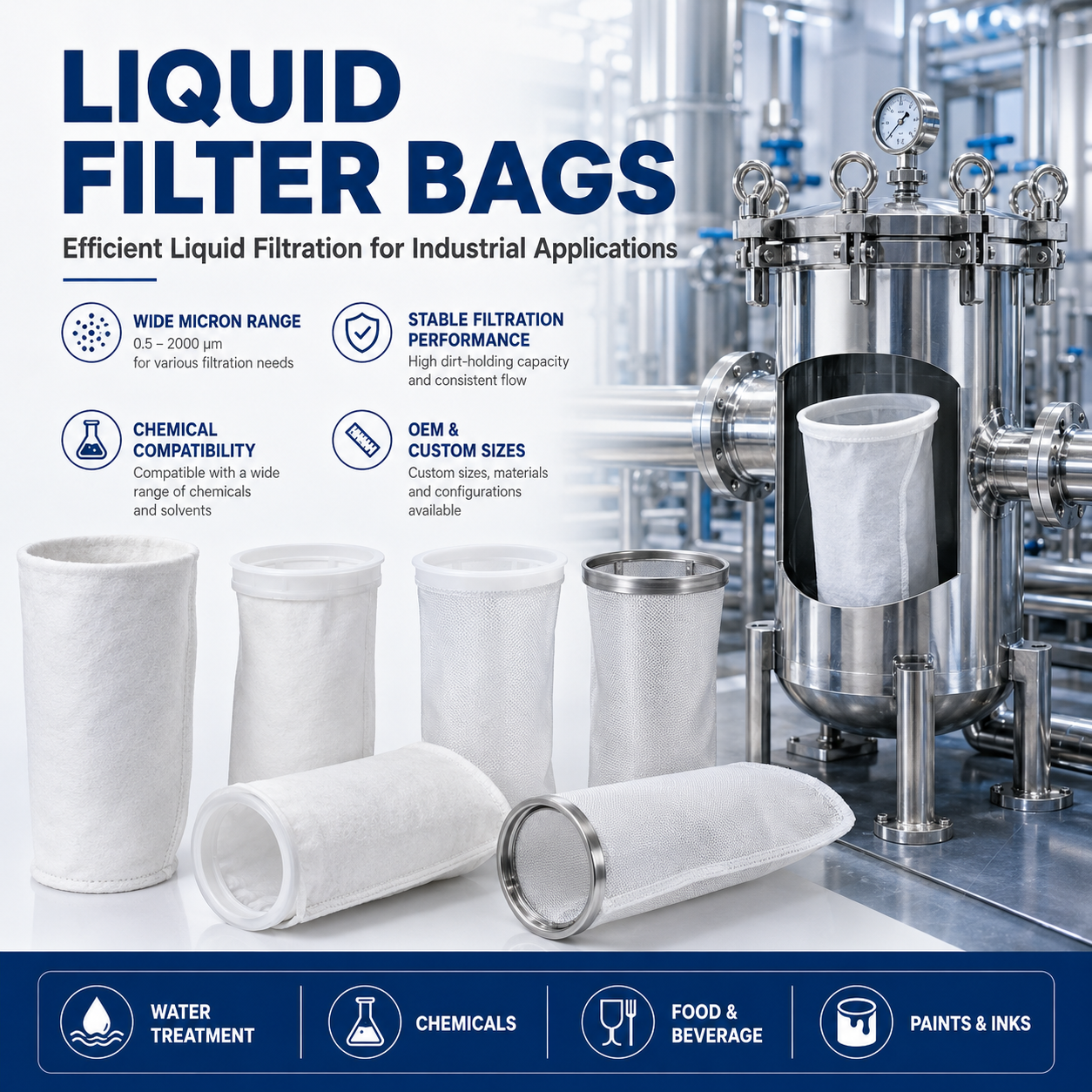
Representative liquid filter bags. Appearance cannot verify polymer identity, micron performance or a delivered lot’s conformity.
Freeze the approved part before defining the lot
Start with a purchasing part number and specification revision. Define the medium, micron-rating basis, finished dimensions, ring or collar, seam construction and packaging. Record which features are mandatory and which alternatives require approval. A changed seam or collar is a specification change even if the nominal micron number remains the same.
For example, a 250 micron PP order should identify the actual approved media and construction; it should not be released because it resembles an approved 250 micron nylon mesh bag. Polymer and media construction are distinct purchasing fields. The same separation is important for 75 micron requirements: confirm the offered material and rating basis instead of inferring them from the number.
Agree what a lot code connects
| Control item | Request before purchase | Receiving use |
|---|---|---|
| Part identity | Part code and approved revision on agreed labels | Match delivery to the correct purchase-order line |
| Lot identity | Defined lot-code format and scope | Separate mixed production lots during acceptance |
| Construction record | Agreed media, seam and collar identifiers | Investigate a construction change or mismatch |
| Inspection record | Checks, method, sample basis and acceptance criteria | Compare results with the agreed specification |
| Packaging identity | Quantity, lot segregation and protective packaging | Prevent stockroom mix-ups and handling contamination |
Ask what the supplier can actually trace: finished assembly, media lot, ring component or another production grouping. Do not assume that a printed number reaches back to raw polymer manufacture. If a single delivery contains more than one lot, require the packing information to distinguish them.
Separate visible checks from performance evidence
Count cartons and units, examine packaging condition, check labels and inspect sampled bags for obvious damage, contamination or inconsistent construction. Measure agreed dimensions using the same datum and relaxed condition as the drawing. Record the measurement method, not only a pass/fail mark.
Visual examination cannot prove filtration efficiency, chemical compatibility or polymer purity. If the process needs a retention test, extractables information, food-contact documentation or a specific material declaration, define that requirement before ordering and review the relevant evidence. Neither a generic certificate of conformity nor an attractive product photograph replaces a test result required by the purchase order.
Eaton’s SENTINEL product information illustrates why description fields should remain separate: it identifies needle-felt media, nominal efficiency and a particular sealing construction independently. That is a terminology example only. Its certifications, performance and proprietary ring claims do not apply to an INCE lot.
Choose a proportionate sampling and release plan
There is no universal sample quantity in this guide. Define the lot size, critical defects, inspection level and acceptance rules with the responsible quality team. Where a formal sampling standard is required, specify its exact edition and plan rather than adding an unexplained “AQL passed” statement.
Keep suspect material identified and segregated while a discrepancy is reviewed. Record the affected lot and quantity, photographs, measurements and purchase specification. Agree the supplier’s disposition process before accepting a deviation, rework or replacement. Do not blend an unapproved lot with released stock.
Make reorders reproducible
Retain an identified approved sample where useful and link it to the drawing and trial record. For a repeat order, reference the accepted revision rather than asking for “same as last time.” Specify whether the supplier must notify you before changing the medium, collar, seam process or packaging arrangement.
For seam-specific acceptance, use the separate welded versus sewn PP bag guide. For the wider product range, see industrial filter bags. This article focuses on lot release and repeat-order control, not on selecting a universal micron grade.
Request OEM pricing with a receiving-control plan
Send the approved part specification, order and annual quantities, required label fields, documentation needs, inspection requirements and destination. Ask for each requested control, any extra inspection cost and the proposed sample-approval step to be confirmed in writing. Request a Quote through the contact page; no certificate or acceptance service is implied until agreed.
Frequently asked questions
Does a lot number prove that a filter bag passed every test?
No. A lot number provides identity only to the extent defined by the supplier’s records. Review the agreed inspection and performance evidence separately.
Can appearance confirm a PP bag’s micron rating?
No. Appearance cannot establish particle retention or its test basis. Verify the specified media, rating definition and required supporting records.
Are certificates and custom labels included automatically?
Do not assume so. State the exact documents, traceability scope and label requirements in the RFQ and obtain written confirmation of availability and cost.
Reference and scope
Eaton SENTINEL product information is used only to illustrate separate specification fields. The receiving framework above is proposed purchasing guidance; it does not claim INCE certification, automatic lot testing or regulatory approval.

 WhatsApp