
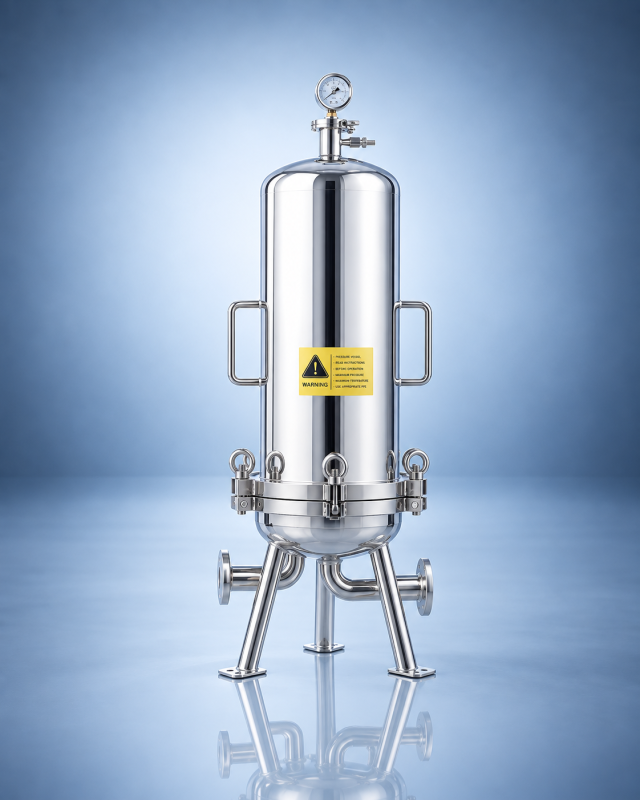
When specifying a 222 cartridge filter housing or 226 cartridge filter housing, the interface name is a starting point, not a complete compatibility approval. The cartridge connection, opposite end, seals, retaining arrangement and operating duty must match the housing assembly.
What buyers need to confirm
222 and 226 are commonly used designations for single-open-end cartridge interfaces. DOE identifies a double-open-end arrangement. Supplier naming conventions and cartridge families can vary, so obtain a dimensional drawing rather than relying only on a purchase description.
| Check | Evidence to provide |
|---|---|
| Sealing end | Close-up photographs and a dimensioned end-cap drawing |
| Retention | Seat and locking geometry, if present, plus retaining-plate details |
| Opposite end | Fin, flat, closed or other actual end configuration |
| Element dimensions | Actual overall length, body diameter and end-cap dimensions |
| Seals | Number, dimensions and material of supplied seals |
| Operating conditions | Liquid, flow, temperature and expected differential pressure |
Why the wrong interface can bypass filtration
The cartridge body fitting inside the vessel does not establish a seal. A mismatched seat, seal compression or retaining arrangement may allow unfiltered liquid to pass around the cartridge. The housing proposal should identify the intended cartridge family and show the interface arrangement.
Replacement housing or replacement cartridge?
For a replacement housing, submit the cartridge drawing and dimensions before confirming the adapter plate. For a replacement cartridge, provide the existing housing model, seat photographs and a used-element drawing or sample. If converting an existing vessel to a different interface, obtain an approved conversion design; do not assume an adapter can be added safely.
Do not transfer standard interfaces to high-flow products
Large-diameter high-flow cartridges use product-family-specific end geometry. A supplier’s 222/226 discussion for conventional cartridges should not be applied automatically to a high-flow element. See the existing high-flow seal and end-cap guide for the separate replacement checklist.
Send an interface-focused RFQ
Send photographs of both cartridge ends, actual dimensions, housing nameplate, adapter-seat photos, seal material, required micron rating, liquid and cleaning conditions, flow and quantity. State whether you need the housing only, cartridges only or a matched package. Any uncertain dimension should be identified before ordering.
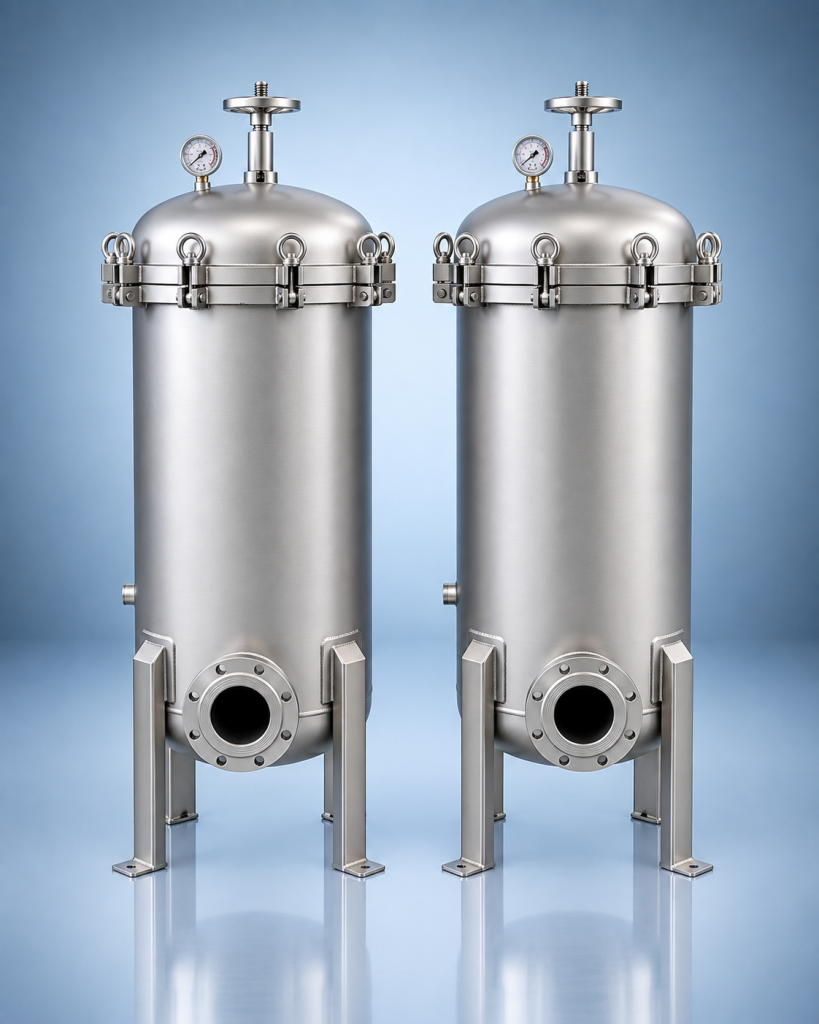
INCE filtration’s Cartridge Filter Housing range supports project review of internal adapters. Final interface availability and compatibility require drawing confirmation. For element length and layout, see the single/multi and 20/40 inch selection guide.
FAQ
Are 222 and 226 cartridges interchangeable?
Do not assume interchangeability. Verify the cartridge drawing and housing seat/retention geometry with the supplier.
Is nominal length enough to buy a replacement?
No. Actual length, end-cap shape, diameter and seal engagement are also required.
Can you quote from a photo?
A photo can start the review, but dimensions and process information are needed before final compatibility confirmation.
Request an INCE Filtration Proposal
Send your liquid, flow, pressure, temperature, cartridge details, material requirement and quantity. Include drawings or photos when replacing equipment.
Send Your Cartridge Filter Housing RFQ
View Cartridge Filter Housing Specifications · View High-Flow Housings
 WhatsApp