Metal pretreatment lines circulate cleaners, rinses, conversion-coating solutions and other baths before painting or coating. Filtration can remove suspended dirt, scale and process debris, but the bag, housing and operating plan must match the specific stage. “Use a 25 micron bag” is not a complete design: bath chemistry, contaminant type, temperature, turnover target and downstream quality determine the trial.
Eaton’s bag-filter-housing overview lists automotive pretreatment baths, e-coat, primer, paint, parts-cleaning fluids and metalworking fluids among bag-filtration applications. This confirms the application category, but it does not prescribe one media or micron rating for every line. The process owner should qualify the selected construction.
Map the bath before choosing a bag
- Process stage: cleaner, rinse, phosphate/conversion bath, e-coat support loop or parts washer
- Chemistry, concentration, pH, supplier and safety data sheet
- Normal and upset temperature
- Contaminants: rust, scale, fibers, paint/coating agglomerates, oil, metal fines or precipitate
- Particle-size evidence from samples or quality defects
- Tank volume, circulation flow and desired turnover
- Pump curve, available pressure and acceptable clean/terminal differential pressure
- Current filter type, bag size, change frequency and failure mode
Compatibility should be checked for the complete bag—not only the fabric. The collar or ring, seam, thread, gasket and any surface treatment can contact the liquid. If chemistry varies by stage, issue a separate data sheet for each bath rather than one blanket approval.
Choose the capture mechanism deliberately
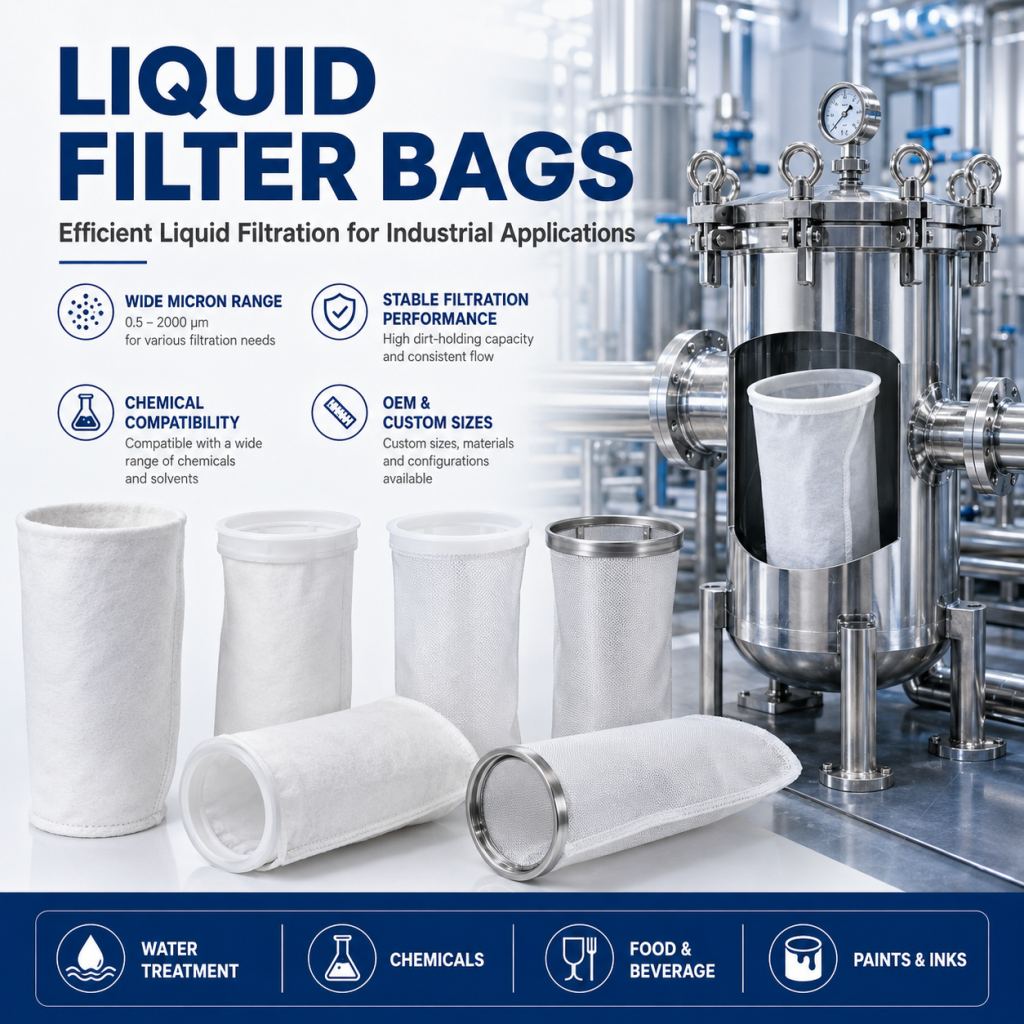
Needle felt provides depth loading and is commonly considered when irregular particles and holding capacity are important. Monofilament mesh acts more like a surface screen and can be useful for coarser, defined particles or cleanable service. A multilayer high-efficiency bag may improve retention but can also change initial pressure drop and wetting requirements. Compare constructions at the same documented test basis; the word “micron” alone does not establish efficiency.
Polypropylene, polyester and nylon each have different temperature and chemical-resistance profiles. Do not approve a polymer from a generic compatibility chart alone. Provide the exact bath composition and temperature to the filter supplier, then validate with the bath chemical supplier and a controlled trial.
Build a staged trial rather than jumping to the finest bag
- Establish the baseline: product defects, bath solids, flow, temperature, clean ΔP and current service interval.
- Fit the correct bag size and collar, verify basket support and confirm no seal bypass.
- Start with a construction selected from sample evidence and the process goal.
- Record inlet/outlet pressure, flow and temperature at fixed intervals.
- Measure downstream quality using the plant’s agreed method, not only visual clarity.
- Inspect the used bag and retained solids; note blinding, deformation, seam condition and evidence of bypass.
- Change one variable at a time—media, micron rating, area or flow—so results remain interpretable.
A finer bag can shorten service life without solving a defect caused by dissolved contamination, unstable bath chemistry or material generated downstream of the filter. Conversely, a coarser prefilter may protect a finer polishing stage when loading is high. The trial should identify whether the process needs one stage, staged filtration or a different separation method.
Housing and circulation questions
| Question | RFQ implication |
|---|---|
| Must the line run continuously? | Consider duplex operation or planned bypass during safe change-out |
| What is the required flow? | Select single or multi-bag area from the stated fluid and loading |
| Is air introduction harmful? | Define venting and startup procedure |
| Are solids abrasive? | Review bag, basket and piping wear |
| Is the bath aggressive? | Confirm vessel, basket, closure, gasket and instrument compatibility |
| How is loading monitored? | Provide inlet/outlet pressure taps and an approved ΔP method |
| How will spent bags be handled? | Define drainage, PPE, containment and disposal with site EHS |
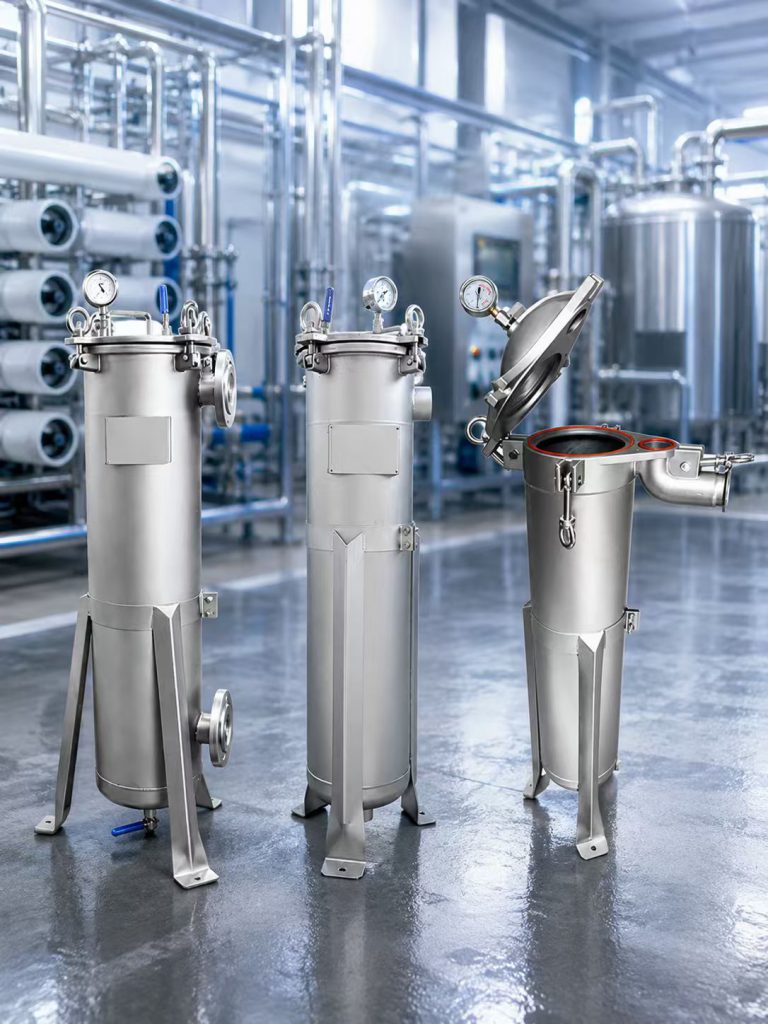
Review a single bag housing for lower flows and a multi bag housing where the required area is larger. For uninterrupted operation, see the duplex versus multi-bag planning guide.
RFQ and acceptance package
Ask the supplier to return the proposed material and construction, rating test basis, bag size and collar, seam type, recommended clean/terminal ΔP, temperature limit for the quoted assembly, certificate options, sample quantity, lead time and any startup or disposal instructions. State that compatibility and life are subject to validation in the actual bath.
Acceptance criteria can include lower downstream particle counts, fewer verified surface defects, stable bath circulation, no bypass or leakage, and an economically useful service interval. Do not promise a yield increase or a fixed number of days without plant trial data.
Request a trial quotation
Send Your Specification with the bath stage, chemistry, pH, temperature, tank volume, circulation flow, bag dimensions, collar photo, current media, captured-solids sample and quality target. Ask for trial quantities that let the team compare at least two qualified constructions under controlled conditions.
FAQ
What micron bag should a metal pretreatment bath use?
There is no universal value. Use particle evidence, process quality targets, chemistry, loading and flow to choose a trial range, then verify the result in the actual bath.
Can the same PP bag be used in every pretreatment stage?
Not automatically. Each stage can have different chemistry and temperature, and the collar, seam and gasket also need compatibility review.
How should trial success be measured?
Track downstream quality, flow, temperature, clean and loaded differential pressure, change frequency, retained solids, bag condition and evidence of bypass.
 WhatsApp