
Choosing between 75, 100 and 150 micron filter bags is mainly a question of how much particle retention the process needs versus how much solids loading and flow capacity the filtration stage must handle. A smaller micron rating is finer, but using a finer bag than necessary can increase pressure drop and shorten service life.
This guide compares 75 micron, 100 micron and 150 micron filter bags for industrial liquid filtration and coarse-to-medium particle removal. It is intended for buyers selecting a filtration grade before requesting a quotation or replacing an existing filter bag.
Quick Comparison: 75 vs 100 vs 150 Micron Filter Bags
| Micron Rating | Relative Fineness | Typical Use | Main Trade-Off |
|---|---|---|---|
| 75 micron | Finest of the three | Tighter process filtration and downstream equipment protection | Can load faster when solids concentration is high |
| 100 micron | Intermediate | General process filtration and coarse particle reduction | Allows more particles through than 75 micron |
| 150 micron | Coarsest of the three | Pre-filtration, screening and high-solids service | Not suitable when smaller suspended particles must be captured |
Micron rating should not be evaluated alone. Material, media construction, bag size, ring style, flow rate, operating temperature and chemical compatibility all affect performance.
When to Choose a 75 Micron Filter Bag
A 75 micron filter bag is the tighter option in this comparison. It is useful when the filtration stage must remove smaller visible particles or provide better protection to downstream equipment than 100 or 150 micron filtration.
Consider 75 micron when:
- 100 micron still allows too much visible particulate through.
- The bag protects a downstream cartridge, pump, nozzle or process component.
- The process needs a relatively fine mesh opening while still maintaining practical throughput.
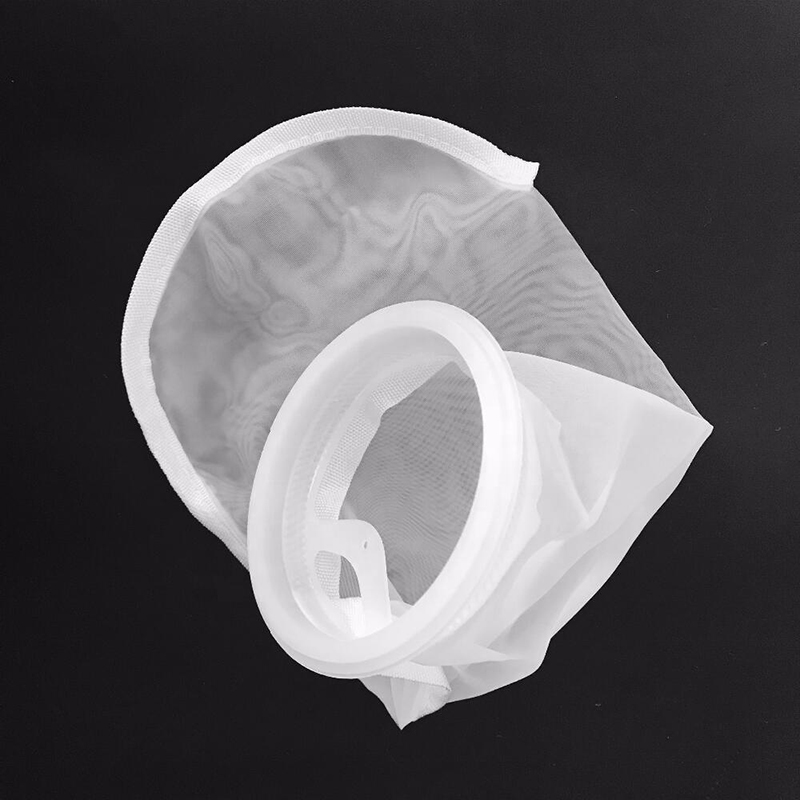
- The buyer wants a defined nylon mesh opening for surface filtration.
If a 75 micron bag reaches its changeout pressure too quickly, check whether the solids load is unusually high. A coarser upstream stage may be more effective than simply increasing bag quantity.
When 100 Micron Is the Better Middle Ground
A 100 micron filter bag provides a useful balance between retention and solids handling. It is often selected when 75 micron is tighter than required but 150 micron is too open.
Typical reasons to select 100 micron include:
- General industrial liquid filtration.
- Pre-filtration before finer cartridges.
- Batch transfer where larger suspended particles must be reduced.
- Applications where moderate retention is needed without creating unnecessary pressure drop.
When to Choose a 150 Micron Filter Bag
A 150 micron filter bag is the coarsest choice of the three. It is generally more suitable for screening, pre-filtration or high-solids liquids where the main objective is to remove larger debris.
150 micron may be appropriate when:
- The liquid contains a relatively high concentration of coarse solids.
- 75 or 100 micron bags load too quickly.
- The process only needs to remove larger contaminants before a second filtration stage.
- Maintaining flow is more important than retaining smaller particles.
75 vs 100 vs 150 Micron: A Practical Selection Method
- Define the smallest unacceptable particle. Determine what size particle must be removed to protect the process or final product.
- Identify the filtration stage. Decide whether the bag is being used for screening, pre-filtration, process filtration or final coarse polishing.
- Estimate solids loading. High solids generally favor a more open upstream stage.
- Check the media type. Nylon monofilament mesh and needle felt do not behave the same way even when the stated micron number is similar.
- Confirm bag dimensions and top construction. A correct micron rating will not compensate for poor sealing in the housing.
- Review operating conditions. Flow rate, temperature and chemical compatibility should be confirmed before ordering.
For a wider comparison, see our 1 to 500 micron liquid filter bag selection guide.
Nylon Mesh vs Felt at 75–150 Micron
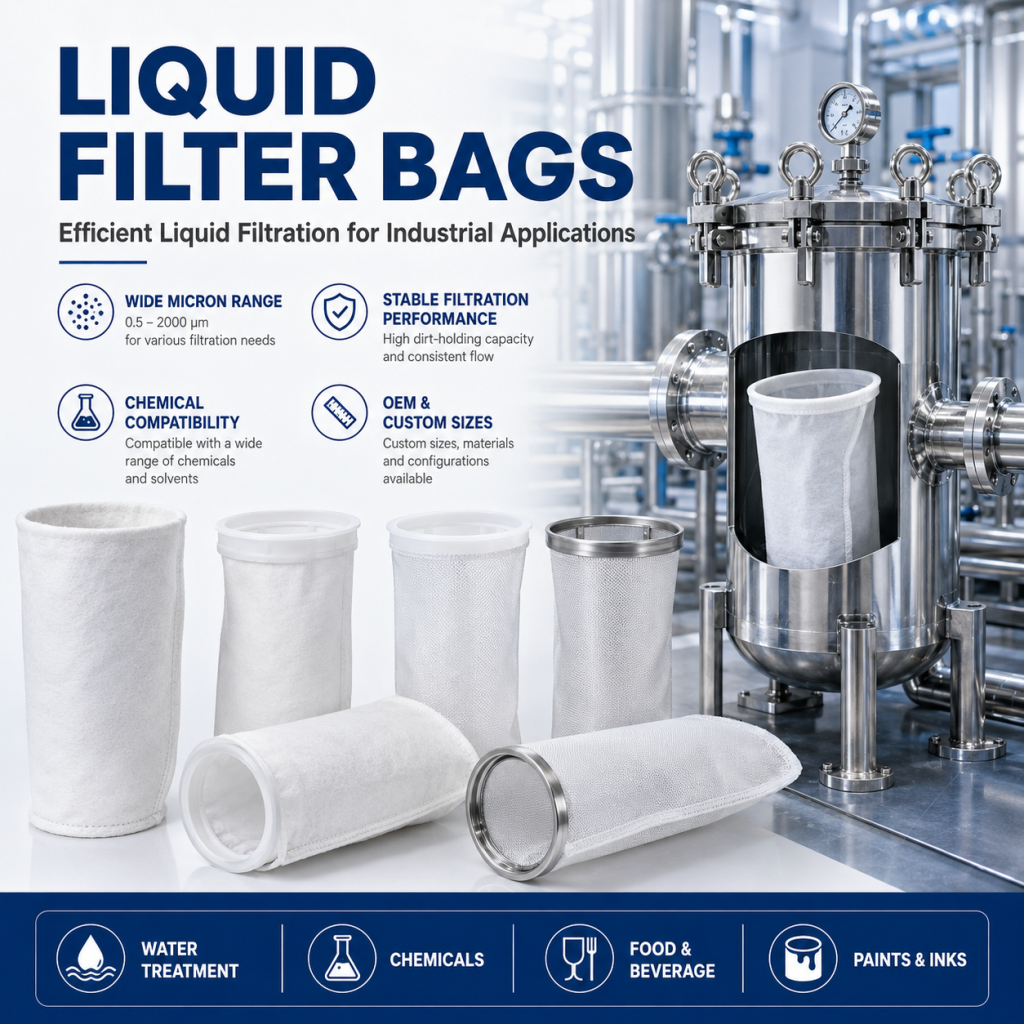
For coarse and medium filtration, buyers commonly compare nylon monofilament mesh with felt media.
Nylon Monofilament Mesh
- Uses defined openings for surface filtration.
- Well suited to visible particle removal and screening.
- Can be easier to clean in applications where reuse is practical.
- Useful when a predictable opening size is important.
Needle Felt
- Uses a fibrous depth structure rather than a single defined opening.
- Can hold particles within the media depth.
- Often selected where solids-holding capacity is important.
- Available in materials such as polypropylene and polyester for different process conditions.
Example Selection Scenarios
Scenario 1: 100 Micron Is Not Clean Enough
If the process is currently using 100 micron and downstream equipment still sees unacceptable particles, moving to 75 micron is a logical trial, provided the system can accept the additional loading and pressure drop.
Scenario 2: 75 Micron Bags Plug Too Quickly
If 75 micron bags require frequent changeout, determine whether the process truly needs 75 micron retention. A 100 or 150 micron pre-filter may extend service life if the final cleanliness requirement allows it.
Scenario 3: The Bag Is Only a Pre-Filter
If a finer cartridge or membrane follows the bag stage, 100 or 150 micron may be sufficient to remove larger debris before the downstream filter handles smaller particles.
What to Send for an Accurate Quote
- Micron rating: 75, 100, 150 micron or current specification.
- Media: nylon mesh, polypropylene, polyester or other.
- Bag size or dimensions.
- Ring/top style.
- Process liquid and chemical composition.
- Operating temperature.
- Flow rate and pressure if known.
- Current service life or changeout frequency.
- Required quantity and packing requirements.
Need Help Choosing 75, 100 or 150 Micron?
INCE filtration supplies industrial liquid filter bags in multiple micron ratings, materials and standard or OEM configurations. Send your existing bag specification, process liquid, dimensions and quantity for selection support and pricing.
Frequently Asked Questions
Is 75 micron finer than 100 micron?
Yes. A 75 micron rating is finer than 100 micron and therefore targets smaller particles.
Is 100 micron finer than 150 micron?
Yes. A 100 micron rating is finer than 150 micron.
Which micron rating gives the longest bag life?
There is no universal answer. A coarser bag may load more slowly, but service life depends on solids concentration, flow rate, filter area, media construction and the required outlet cleanliness.
Can I replace a 75 micron bag with a 100 micron bag?
Possibly, if the process can accept a coarser outlet particle profile. Confirm downstream equipment and product cleanliness requirements before changing the rating.
Should I choose nylon mesh or felt?
Choose based on filtration mechanism and process conditions. Nylon mesh is useful for defined surface openings, while felt is useful where depth loading and solids holding are important.
 WhatsApp