
Direct answer: a 1,200 m³/h line may require parallel bag vessels, a large multi-cartridge system, high-flow cartridges, or staged filtration, but no responsible supplier should choose among them from flow alone. Size 2 bags and pleated cartridges solve different solids-loading, retention and maintenance problems. Start with the process duty and calculate the number of online elements and housings from verified element data and allowable pressure drop.
Send minimum/normal/peak flow, liquid viscosity and temperature, solids data, micron target, run-time target, pressure-drop limits and available footprint.
This article answers a real quotation-stage question from EPC engineers and water-treatment integrators. It links to the high-flow filter housing, micron pleated housing and multi-bag housing commercial pages so the product pages remain the primary targets.
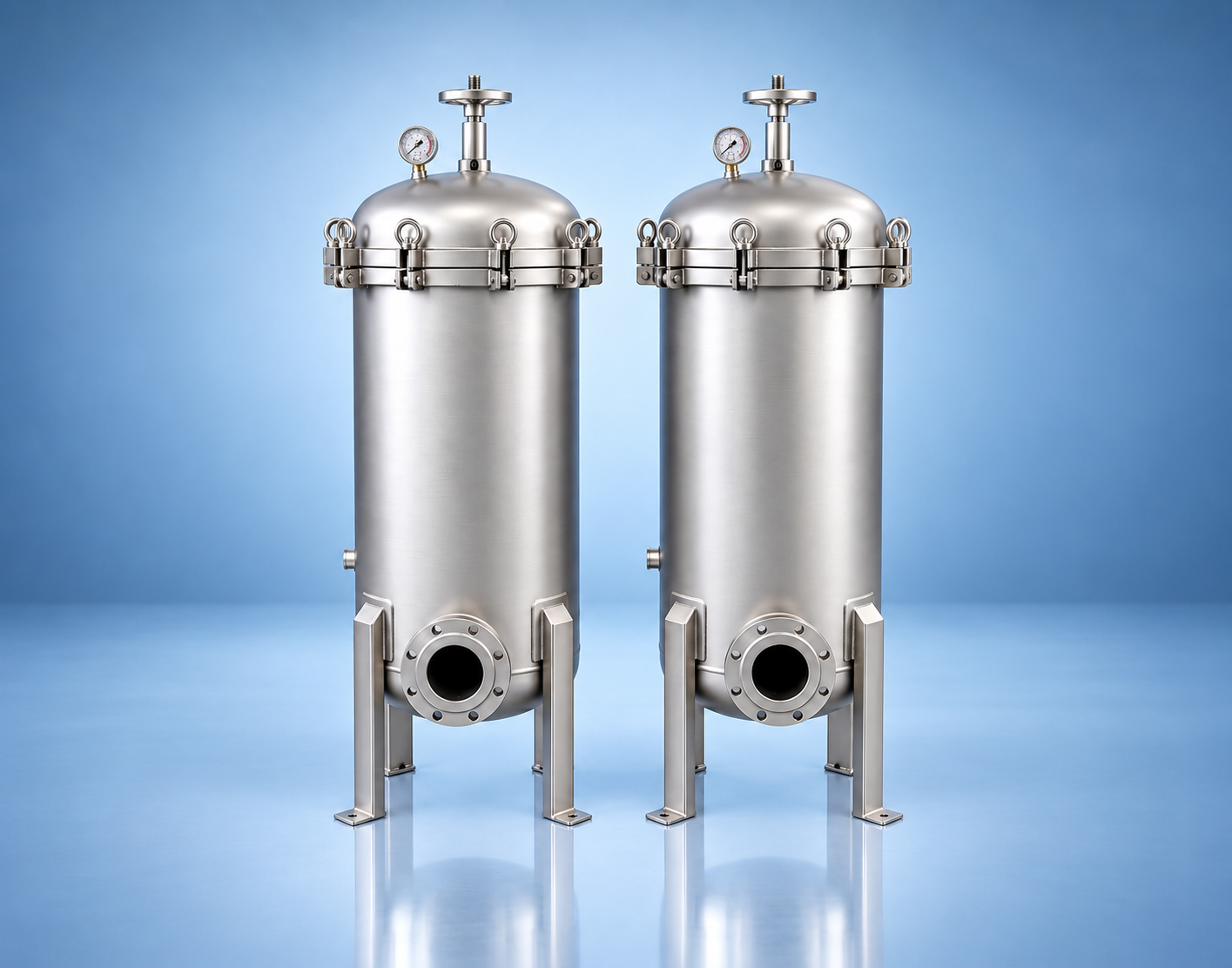
First define what “1,200 m³/h” means
State minimum, normal and peak flow and whether the full rate is required during element change. Confirm whether the value applies to one train or the total plant, and whether pumps can tolerate a rising differential pressure. Include viscosity and temperature at each case; water-flow assumptions can be misleading for oils, resins, coolants or concentrated chemicals.
| Decision input | What to provide | Selection impact |
|---|---|---|
| Contaminant | Particle-size distribution, solids concentration, deformable/fibrous material and batch variability | Drives bag vs depth/pleated media and prefiltration need |
| Filtrate target | Protected equipment, maximum particle, turbidity/SDI or other measurable acceptance | Defines retention grade and validation method |
| Hydraulics | Inlet pressure, clean and terminal ΔP, pump curve and available head | Sets element count, vessel count and pipe size |
| Operations | Target run time, changeout window, duty/standby philosophy and access | Sets online capacity and redundancy |
Compare three filtration routes
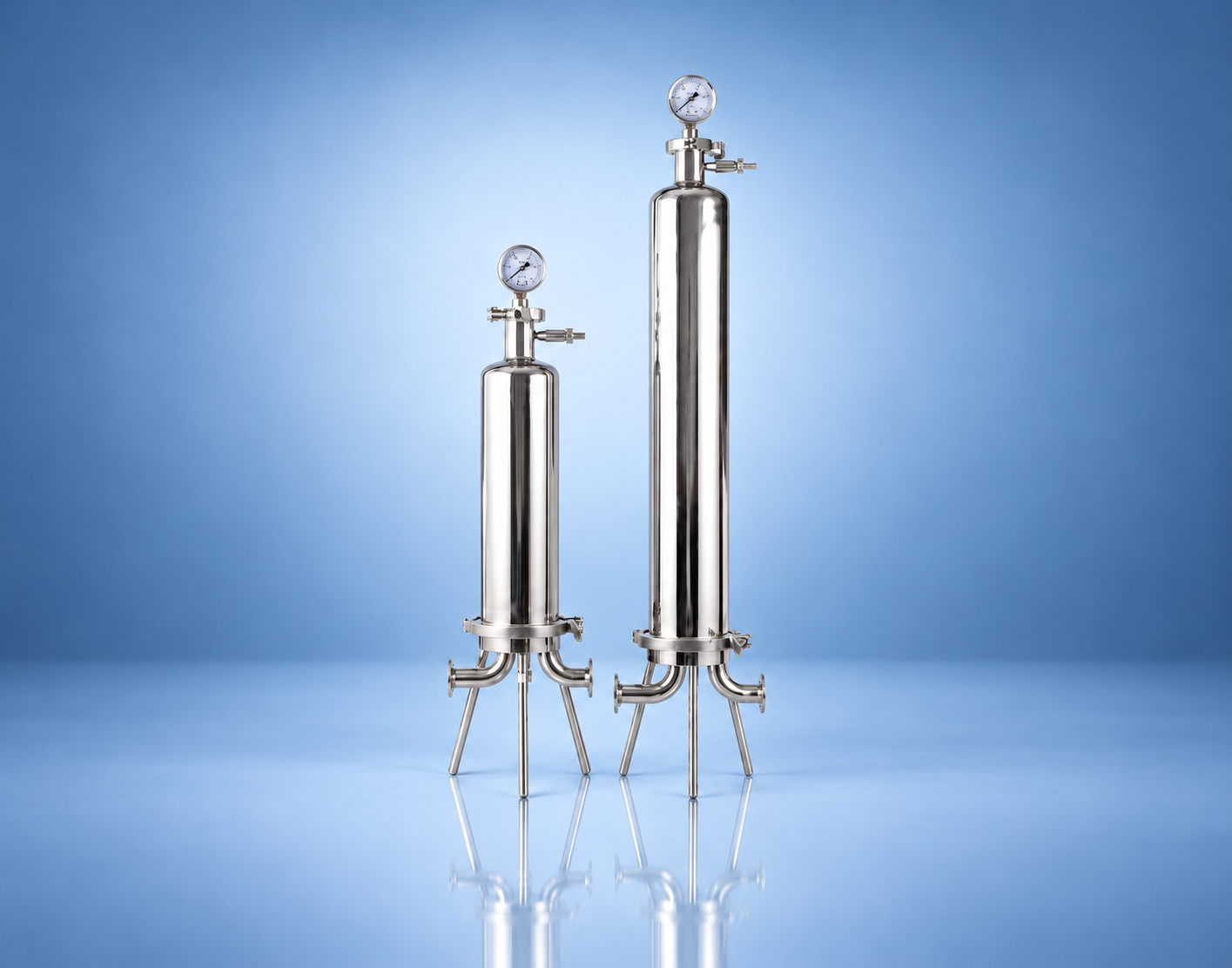
| Route | Often considered when | Critical RFQ question |
|---|---|---|
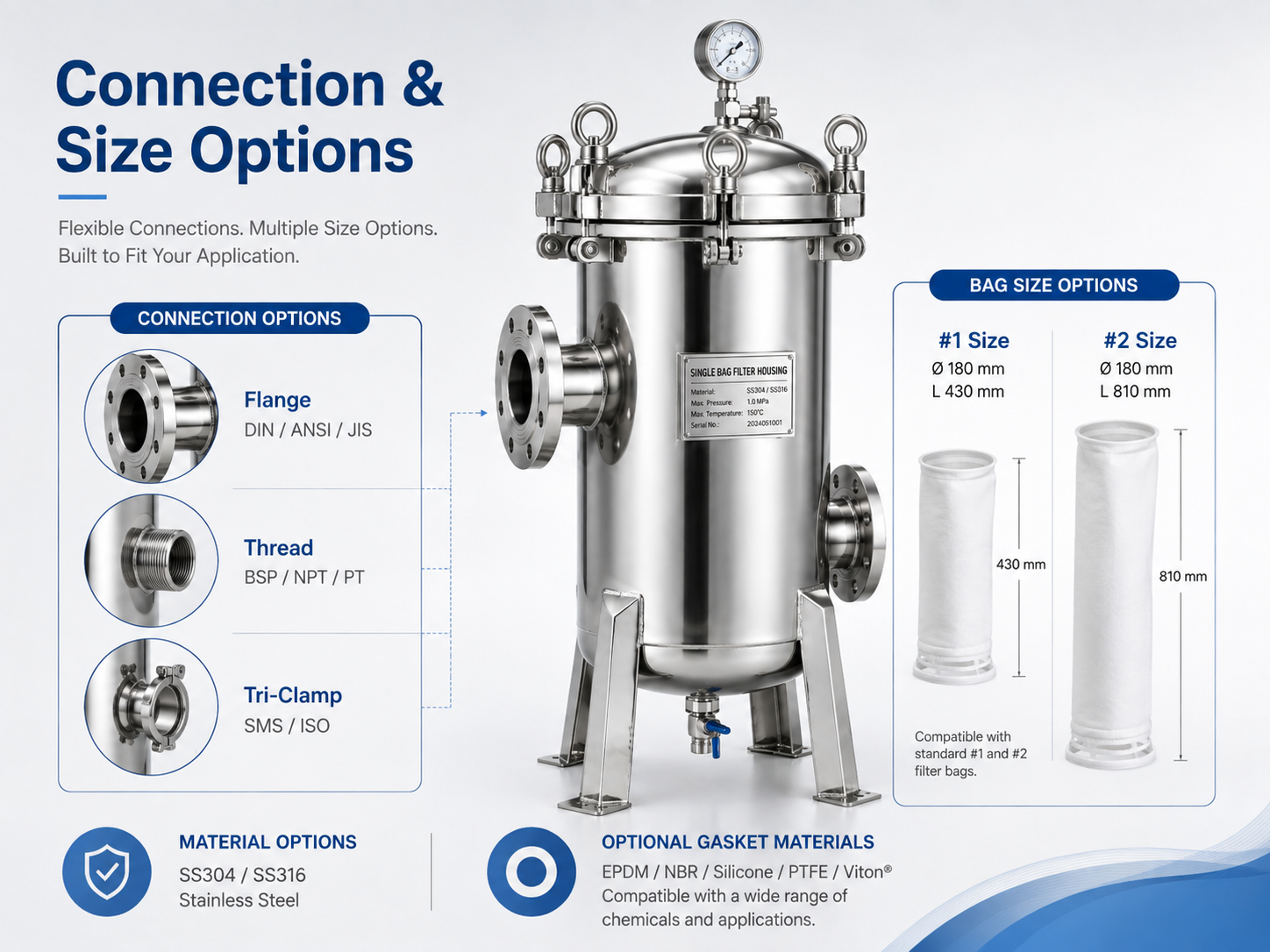
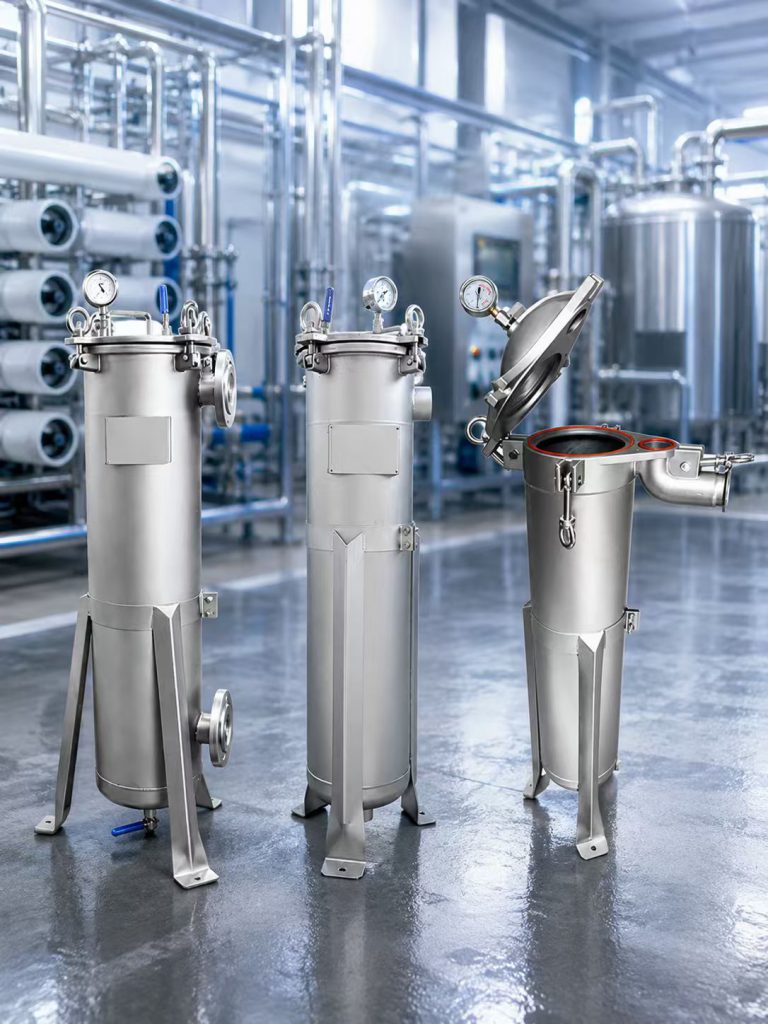
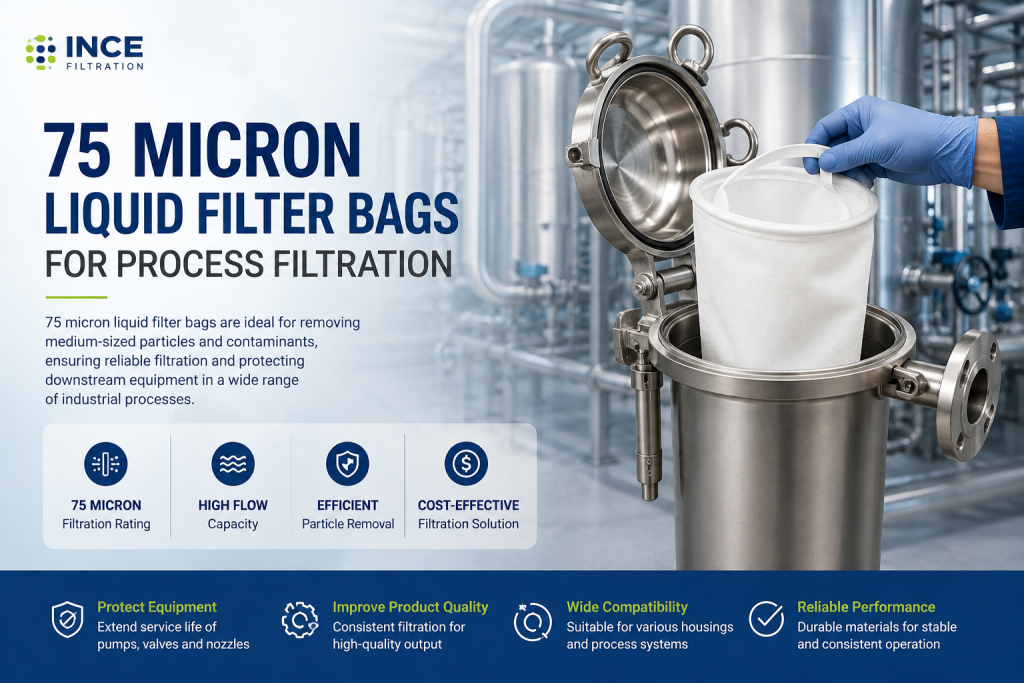
| Size 2 bag banks | Solids loading is substantial and economical changeout is important | How many bags remain online during service, and what is the verified pressure drop with the selected bag? |
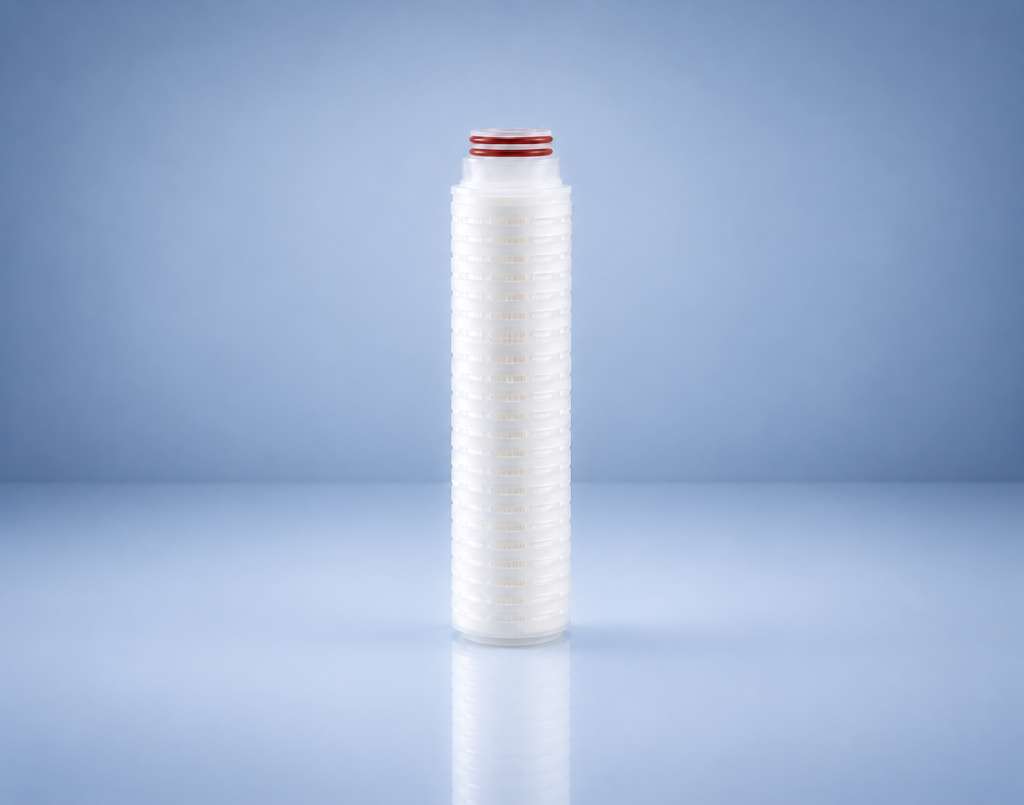
| Conventional pleated cartridges | Finer polishing, multiple media choices or a controlled seal interface is needed | What cartridge area, efficiency, end cap and flow per element are supported by the selected grade? |
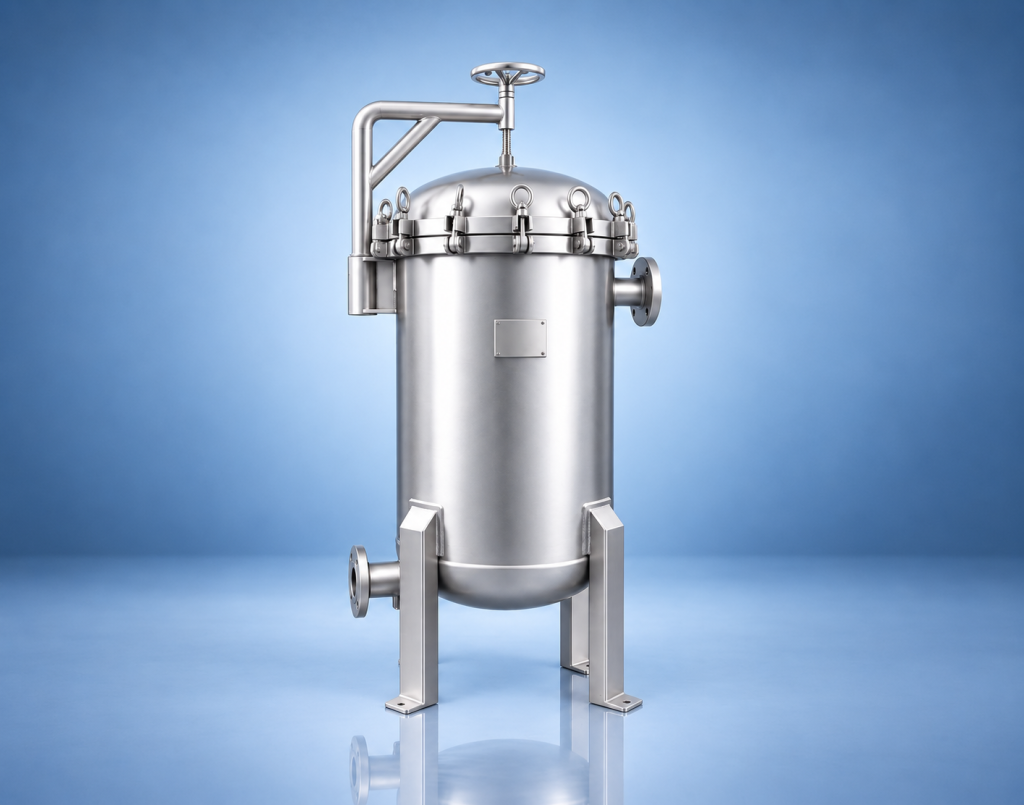
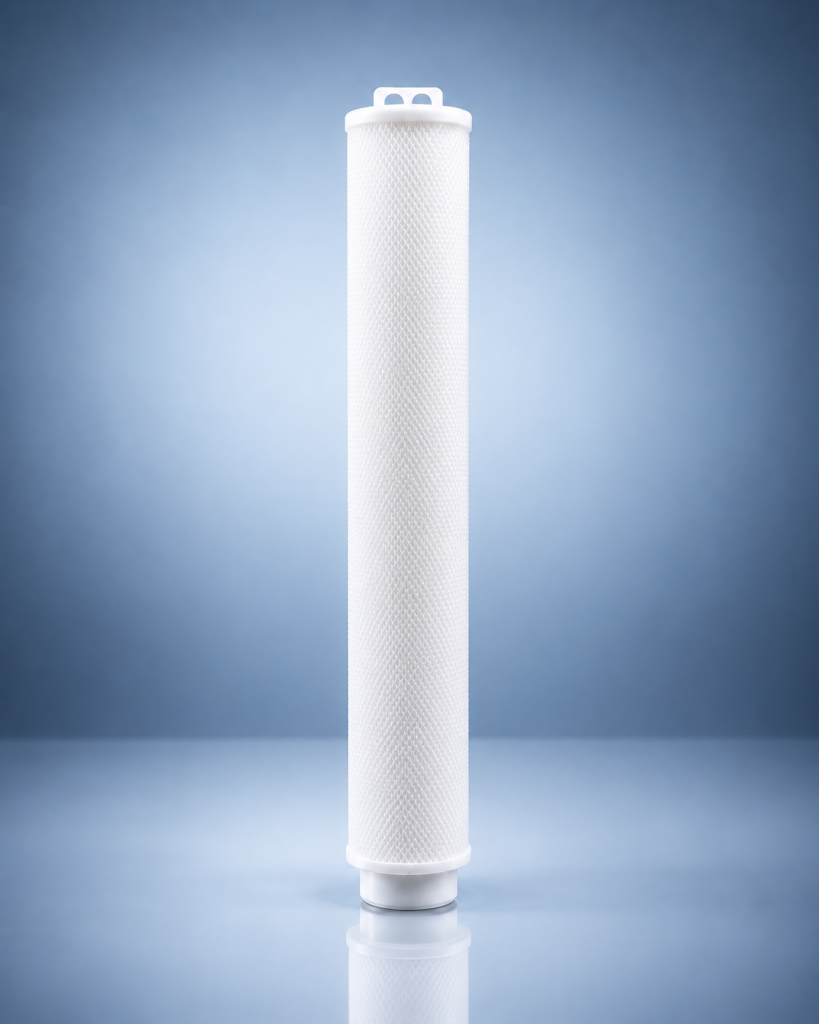
| Large high-flow cartridges | High throughput and fewer large-format elements may reduce vessel footprint or changeout count | Which exact cartridge geometry, flow direction and housing interface are being quoted? |
Do not add nominal catalog flow values blindly. Element flow depends on media, micron grade, viscosity, temperature, fouling and allowable differential pressure. A clean-water maximum is not a guaranteed process capacity or run-time prediction.
Require every offer to state the element model, quantity online, flow per element, clean ΔP basis, terminal ΔP and maintenance-mode capacity.
Use staged filtration when one element must do too much
At this scale, a coarse upstream stage may reduce the load on a finer final stage. The stages must be justified by representative particle and run data; adding filters without a defined purpose can increase pressure loss and maintenance. Ask the supplier to show which contaminant each stage is intended to remove and how performance will be checked.
Define maintenance-mode capacity and layout
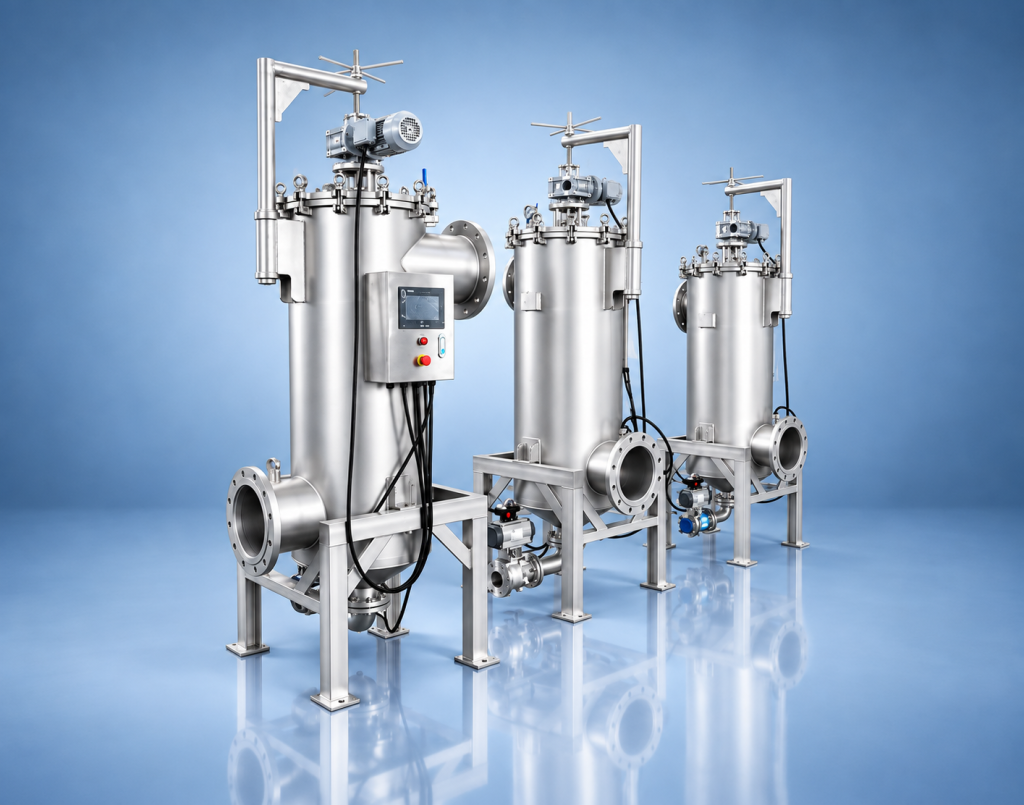
If the plant cannot stop, state the required capacity with one vessel or train isolated. A multi-element vessel does not automatically provide continuity: all elements in one pressure boundary are unavailable when that vessel is opened. The quotation drawing should show parallel headers, valves, vents, drains, lifting or cartridge-removal clearances, floor loading and routes for handling used elements.
RFQ package for a 1,200 m³/h review
- Process liquid composition, viscosity, temperature and corrosive constituents.
- Minimum, normal and peak flow, plus required flow during maintenance.
- Solids concentration and particle-size data, with sampling method.
- Required filtrate result and protected downstream equipment.
- Clean and terminal differential-pressure limits and pump data.
- Preferred bag or cartridge reference, or permission to propose alternatives.
- Materials, seals, piping standard, design conditions, footprint and orientation.
- Required drawings, calculations, tests, documentation, quantity and destination.
FAQ
Can a supplier select a 1,200 m³/h filter from flow alone?
No. Liquid properties, solids, target retention, clean and terminal pressure drop, operating interval, redundancy, element performance and piping losses are also required.
Are Size 2 bags and pleated cartridges directly interchangeable?
No. They use different elements, sealing interfaces, vessels and maintenance methods. Compare complete systems against the same process duty.
Does more element area guarantee the required run time?
No. Run time depends on contaminant loading, media architecture, face velocity, retention efficiency and the approved changeout condition.
What should be included in the RFQ?
Include process liquid, flow cases, particle or solids data, filtration target, element preference or sample, pressure and temperature, allowable differential pressure, duty/standby requirement, connections, footprint, power/controls if applicable, quantity and destination.
Submit the process basis and ask INCE to compare bag, conventional pleated and high-flow cartridge architectures without assuming a fixed element count.
 WhatsApp