
When choosing between Size 1 vs Size 2 filter bags, the biggest physical difference is length.
Both are widely used in industrial liquid bag filter housings and usually have a similar diameter, but a Size 2 bag is approximately twice as long as a Size 1 bag.
As a practical reference:
Size 1 filter bag: approximately 7 × 16–16.5 inches / 180 × 410–420 mm
Size 2 filter bag: approximately 7 × 32 inches / 180 × 810 mm
Because Size 2 uses considerably more filtration media, it generally provides more filtration area, greater solids-holding capacity and longer operating cycles in applications with higher flow or contamination loading.
However, Size 2 is not automatically better. The filter bag must match the housing basket, sealing system, flow requirement and available installation space.
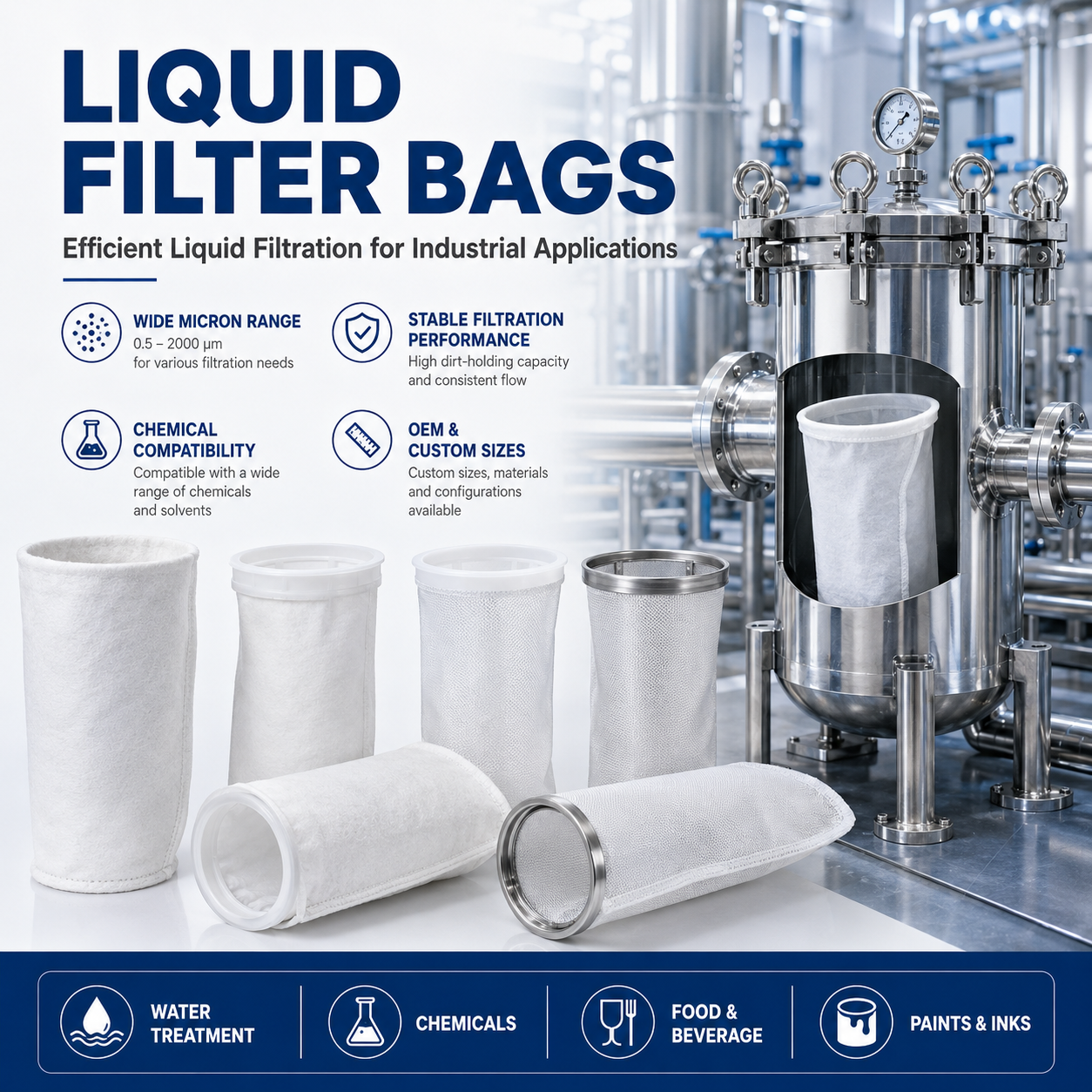
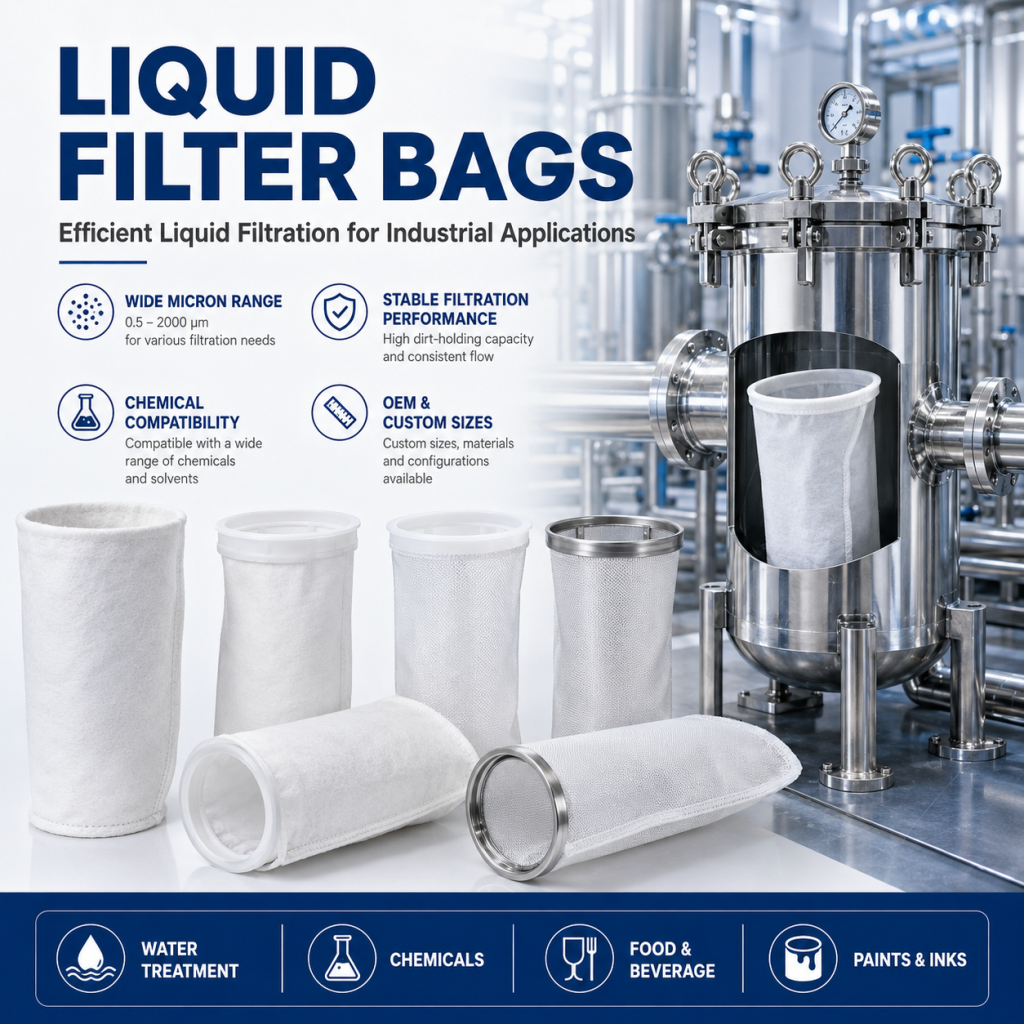
INCE filtration manufactures Size 1, Size 2 and custom industrial liquid filter bags in polypropylene, polyester, nylon and other filtration media.
Size 1 vs Size 2 Filter Bags: Quick Comparison
| Feature | Size 1 Filter Bag | Size 2 Filter Bag |
|---|---|---|
| Typical diameter | Approx. 7 in / 180 mm | Approx. 7 in / 180 mm |
| Typical length | Approx. 16–16.5 in / 410–420 mm | Approx. 32 in / 810 mm |
| Relative media area | Smaller | Approximately twice as large |
| Solids capacity | Lower | Higher |
| Typical process volume | Low to medium | Medium to high |
| Housing height | Shorter | Taller |
| Bag handling | Easier | Larger |
| Change-out frequency | Potentially higher | Potentially lower |
| Typical role | Compact / batch filtration | General industrial / higher-volume filtration |
Industry dimensions vary slightly by manufacturer and ring construction. Always confirm the actual bag dimensions and housing before ordering.
What Is a Size 1 Filter Bag?
A Size 1 liquid filter bag is one of the standard industrial bag-filter formats.
INCE filtration commonly supplies Size 1-type bags at approximately 180 mm diameter × 410 mm length, or about 7 × 16 inches.
Size 1 is commonly used where process flow is moderate, available vertical space is limited, solids loading is relatively low, batch volume is smaller, or a compact bag filter housing is preferred.
Because the bag is shorter, the complete filter housing can also be more compact.
What Is a Size 2 Filter Bag?
A Size 2 liquid filter bag has approximately the same diameter as Size 1 but is much longer.
INCE filtration commonly supplies this configuration at approximately 180 mm diameter × 810 mm length, or about 7 × 32 inches.
This additional length creates significantly more usable filtration area.
Size 2 is therefore commonly used for larger industrial process streams, higher solids loading, continuous production, process water filtration, chemical processing, paint and coating filtration, cooling-water systems and applications requiring fewer filter changes.
The Main Difference Is Filtration Area
Because Size 2 is almost twice the length of Size 1, it can provide roughly twice the filtration area when the same type of filter media and bag construction are used.
Typical industry references place Size 1 around 2.0–2.2 ft² of filtration area and Size 2 around 4.4 ft², although actual area depends on the exact construction.
More filtration area can provide lower filtration velocity per unit area, greater solids capacity, slower differential-pressure increase, longer intervals between bag changes and more stable process flow.
Does Size 2 Always Have a Higher Flow Rate?
Not automatically.
A larger bag provides more available filtration area, which can support higher system flow, but actual flow also depends on micron rating, filter media, liquid viscosity, solids concentration, pressure drop and housing design.
For example, a 100 micron mesh bag and a 5 micron felt bag will behave very differently even if both are Size 2.
Bag size determines available filtration area. Micron rating and media determine how easily the liquid passes through that area.
For help selecting filtration accuracy, use the Liquid Filter Bag Micron Size Chart: 1 to 500 Micron Selection Guide.
Which Holds More Dirt?
Under comparable conditions, Size 2 will generally hold more contamination because it contains more filter media.
This is useful when filtering liquids containing sediment, rust, metal particles, coating debris, process solids or precipitated contamination.
A Size 1 bag can still provide excellent performance if the solids loading is low. However, if a Size 1 bag plugs frequently, moving to a compatible Size 2 system may increase the operating cycle between filter changes.
Size 1 vs Size 2 for Process Water
Size 1
Size 1 can work well for small process-water systems, side-stream filtration, equipment wash water, batch operations and lower-flow circulation.
Size 2
Size 2 is generally more suitable for main plant process water, larger recirculation systems, cooling water, water-treatment pretreatment and higher-volume industrial filtration.
Where water flow and contamination loading are higher, the additional filtration area of Size 2 becomes increasingly useful.
Size 1 vs Size 2 for Chemical Processing
Chemical filtration is not determined by bag size alone. Material compatibility is equally important.
Both sizes may be manufactured from polypropylene, polyester, nylon and specialty filtration media.
Size 1 can be suitable for smaller chemical batches or lower-flow transfer systems. Size 2 is often more suitable for continuous chemical production, larger transfer volumes, higher solids loading and longer production runs.
For material selection, compare PP vs Polyester Liquid Filter Bags.
Size 1 vs Size 2 for Paints and Coatings
Paint and coating filtration can create high solids loading because the liquid may contain skins, agglomerates, pigment debris, tank contamination and dried coating fragments.
Size 1 may be practical for small production batches, color-change systems and low-volume filling lines.
Size 2 is generally more attractive for larger coating production, continuous transfer, high-volume filling and processes where frequent bag changes interrupt production.
Viscosity should also be considered because thicker coatings require more filtration area than water-like liquids.
Size 1 vs Size 2 for Oils and Metalworking Fluids
Industrial oils and metalworking fluids often contain suspended contamination such as metal fines, grinding particles, abrasive debris and process residues.
Size 2 may provide an advantage because more media area reduces the solids load per unit of filter surface.
For smaller machines or localized filtration loops, Size 1 may still be sufficient.
The best choice depends on flow rate + viscosity + solids concentration + required service interval.
Size 2 Can Reduce Filter Change Frequency
One of the strongest reasons to select Size 2 is maintenance.
If a Size 1 bag reaches its pressure-change limit frequently, a larger Size 2 system can provide more media capacity before the same pressure differential is reached.
Potential benefits include fewer bag changes, less operator labor, less production interruption, lower disposal frequency and more stable operation.
However, if the liquid is already very clean, doubling filtration area may provide little practical benefit.
Size 1 Can Be Better for Batch Processing
Larger is not always more economical.
For small batches, Size 1 can provide a smaller filter housing, lower internal liquid hold-up, easier cleaning, easier filter bag handling, less product remaining inside the filter and lower initial equipment cost.
This can be particularly important when filtering expensive liquids or switching frequently between products.
Product Hold-Up Matters
The amount of liquid remaining inside the filter housing after filtration is sometimes overlooked.
A larger Size 2 housing normally contains more internal volume than a Size 1 housing.
For water, this may not matter. For expensive chemicals, specialty coatings or high-value products, additional hold-up volume can increase product loss during cleaning or changeover.
In these cases, Size 1 may be preferable even when Size 2 could provide more flow.
Can a Size 1 Bag Be Used in a Size 2 Housing?
Generally, no.
Even though Size 1 and Size 2 often use similar diameters, their basket lengths are different.
A Size 1 bag is too short for a normal Size 2 support basket and can create poor mechanical support, incorrect sealing, bag movement, filtration bypass or potential bag failure.
Likewise, a Size 2 bag cannot be correctly installed in a normal Size 1 housing because it is too long.
Always match the bag to the housing design.

Ring and Collar Type Still Matter
Correct diameter and length do not guarantee compatibility.
The top sealing system must also match.
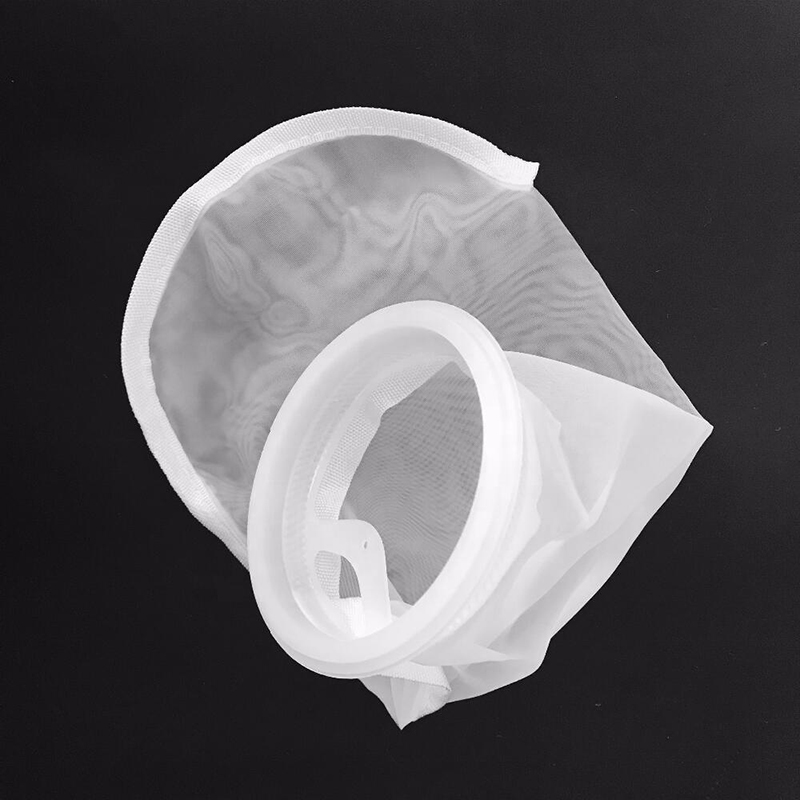
Common filter bag tops include polypropylene molded collars, stainless steel rings, galvanized steel rings, plastic ring designs and manufacturer-specific sealing flanges.
Two bags may both be described as Size 2 but still not fit the same filter housing if their sealing structures are different.
Before ordering a replacement, confirm size + ring/collar + material + micron rating.
How to Measure an Existing Filter Bag
Step 1: Measure Diameter
Measure straight across the bag opening. Do not measure circumference.
Step 2: Measure Length
Measure from the top sealing area to the bottom of the bag.
Step 3: Identify the Ring
Record whether the bag uses a plastic collar, metal ring, snap-seal style or another custom configuration.
Step 4: Check Any Existing Label
Photograph the product code, micron rating, manufacturer, material and housing model.
These details can help INCE filtration identify a compatible replacement.
Size 1 and Size 2 Do Not Determine Micron Rating
Bag size and filtration accuracy are independent.
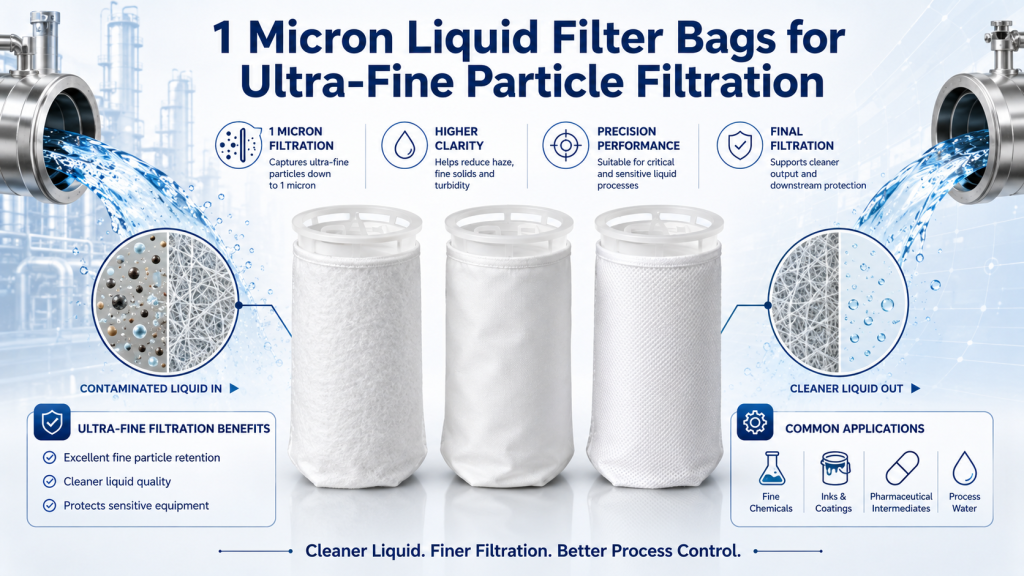
Both Size 1 and Size 2 may be available in 1, 5, 10, 25, 50, 100, 200 micron and other grades.
Size determines physical dimensions and filtration area. Micron rating determines the particle-size filtration target.
A customer may need a Size 1, 25 micron PP filter bag or a Size 2, 25 micron PP filter bag depending on system design.
Size 1 and Size 2 Material Options
Polypropylene
Useful for many water-treatment systems, acids, alkalis and chemical processes.
Polyester
Useful where higher temperature, mechanical strength or abrasion resistance is important.
Nylon Mesh
Useful for surface screening, defined openings, coarser filtration and selected reusable applications.
Material, micron rating and physical size should always be specified independently.
When Should You Choose Size 1?
- The existing housing is Size 1.
- Process flow is moderate.
- Solids loading is light to moderate.
- Installation space is limited.
- Batch volume is relatively small.
- Lower liquid hold-up is desirable.
- Compact equipment is preferred.
When Should You Choose Size 2?
- The existing housing is Size 2.
- Higher process volume is required.
- Solids loading is greater.
- Longer service intervals are important.
- Frequent Size 1 bag changes are causing downtime.
- More filtration area is needed.
Size 2 is particularly useful for continuous industrial filtration.
Size 1 vs Size 2 Selection Table
| Process Condition | Better Starting Choice |
|---|---|
| Small batch process | Size 1 |
| Compact installation | Size 1 |
| Low product hold-up required | Size 1 |
| Moderate process flow | Size 1 |
| Large continuous process | Size 2 |
| Higher solids loading | Size 2 |
| Longer filter life desired | Size 2 |
| Frequent filter changes | Size 2 may help |
| Existing Size 1 housing | Size 1 |
| Existing Size 2 housing | Size 2 |
Should You Upgrade from Size 1 to Size 2?
Changing bag size usually means changing the housing as well.
If a Size 1 system is creating high pressure drop, excessive bag changes, insufficient flow or short service life, a Size 2 housing may provide more filtration area.
However, first confirm that the problem is actually caused by insufficient bag area.
Other causes can include a micron rating that is too fine, high liquid viscosity, increased solids loading, unsuitable filter media or excessive pump flow.
For housing selection, see the Single Bag Filter Housing Buyer’s Guide.
Size 1 vs Size 2 Filter Bag FAQ
What are the dimensions of a Size 1 filter bag?
A common industry Size 1 bag is approximately 7 inches in diameter and 16–16.5 inches long. INCE filtration commonly supplies approximately 180 × 410 mm configurations.
What are the dimensions of a Size 2 filter bag?
A common Size 2 filter bag is approximately 7 inches in diameter and 32 inches long. INCE filtration commonly supplies approximately 180 × 810 mm configurations.
Are Size 1 and Size 2 the same diameter?
Typically yes. Both commonly use a diameter around 7 inches or 180 mm, but always confirm the actual product and housing.
Which has more filtration area?
Size 2. Because it is almost twice as long, it commonly provides roughly twice the media area of a comparable Size 1 bag.
Which holds more dirt?
Size 2 generally offers greater solids capacity because it contains more filter media.
Does Size 2 always have a higher flow?
It offers more media area, which can support higher flow, but actual system flow also depends on micron rating, media, viscosity and housing design.
Can I put a Size 1 bag in a Size 2 housing?
Normally no. The bag should match the housing basket dimensions and sealing system.
Is Size 2 always better?
No. Size 1 may be more economical and convenient for smaller batch processes, compact installations and low solids loading.
Can INCE filtration manufacture both Size 1 and Size 2 filter bags?
Yes. INCE filtration manufactures standard and custom industrial liquid filter bags in Size 1, Size 2 and other dimensions with multiple media, micron ratings and ring configurations.
Choosing the Correct Filter Bag Size
The difference between Size 1 vs Size 2 filter bags is primarily filtration area and system capacity.
Size 1 provides compact dimensions, lower liquid hold-up, easier handling and good performance for moderate flow.
Size 2 provides more filtration area, greater solids capacity, potentially longer filter life and better suitability for higher-volume industrial filtration.
But physical size is only one part of the specification.
A correct filter bag must match bag size + micron rating + filter material + ring or collar + housing.
INCE filtration manufactures approximately 180 × 410 mm / 7 × 16 inch Size 1-type bags and 180 × 810 mm / 7 × 32 inch Size 2-type bags, together with compact and customized industrial dimensions.
If you are unsure which size is installed, send INCE filtration the existing filter bag dimensions, ring photos and filter housing model.
Contact INCE filtration for Size 1 vs Size 2 filter bag selection, replacement matching, OEM production or custom liquid filtration solutions.
 WhatsApp