
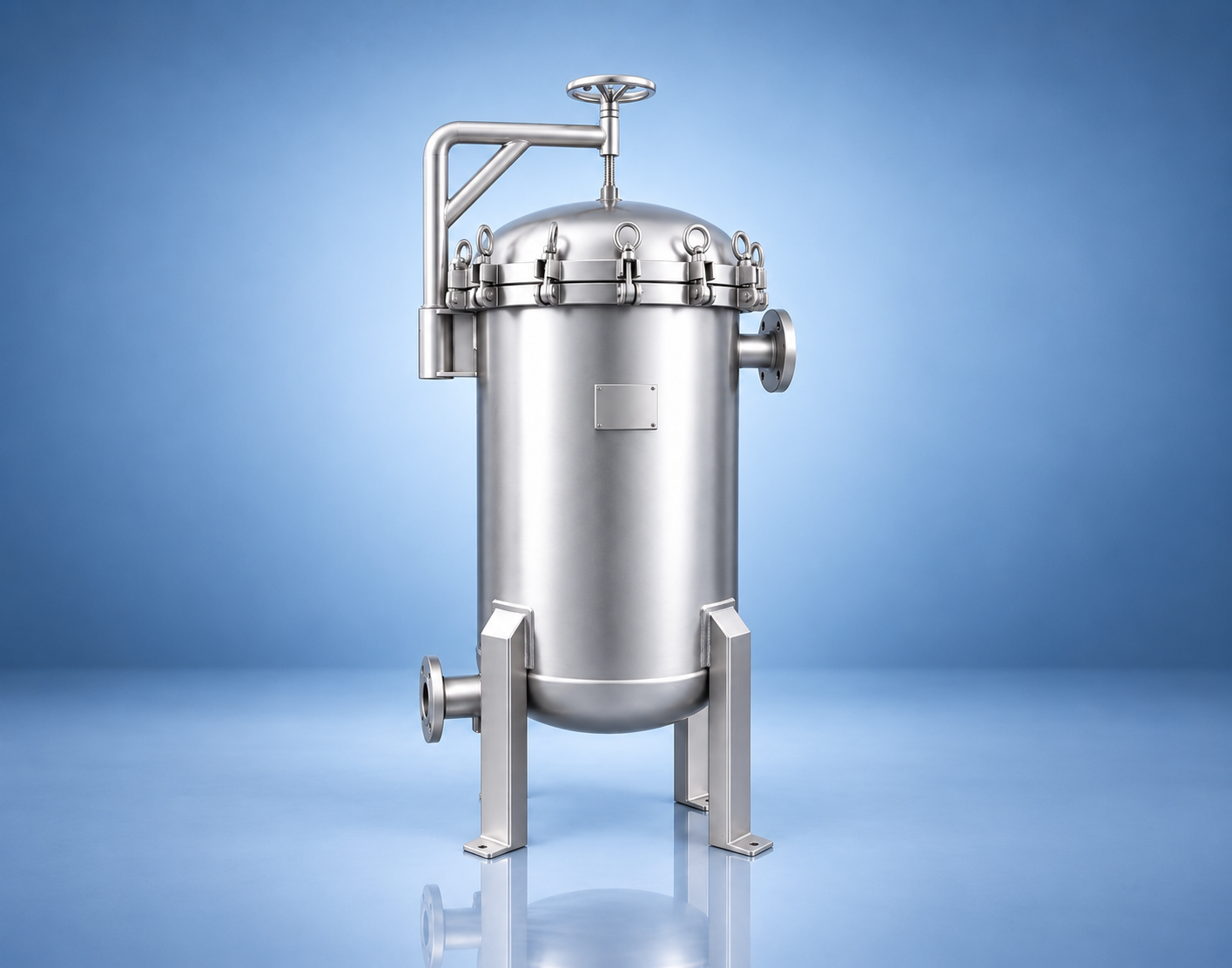
Direct answer: A data center buyer should specify a side-stream bag filter housing from the actual secondary-loop duty—not from pipe size alone. The RFQ should state the coolant or water chemistry, side-stream flow, operating and design pressure, temperature, contaminant type, target cleanliness, trial micron range, allowable differential pressure, housing material, connection standard, bag size or quantity, maintenance clearance and documentation requirements.
Planning a cooling-loop filtration package?
Send the loop design basis, water or glycol analysis, side-stream flow, pressure, temperature, target solids and piping drawing. INCE can review a single- or multi-bag housing configuration without assuming a fixed flow or micron rating.
Why use a side-stream bag filter?
A side-stream filter treats a controlled portion of a recirculating loop. It can remove suspended corrosion products, construction debris, pipe scale and other particles while the cooling system remains in service. It is not a substitute for water-chemistry control, corrosion inhibition, air separation or a root-cause repair when solids are generated by equipment failure.
Eaton’s public data-center application brief identifies bag or cartridge filtration as options in secondary cooling loops and illustrates a side-stream bag filter housing. That supports the application concept, but the final INCE selection still requires project-specific engineering data.
Technical reference: Eaton data center cooling filtration application brief. The referenced product data supports the selection framework; it does not imply that INCE products are identical to another manufacturer’s products.
RFQ data that determines the housing
| RFQ field | Why it matters |
|---|---|
| Loop type and fluid | State closed secondary loop, open cooling water or another circuit; provide water treatment chemicals and glycol concentration if used. |
| Side-stream and full-loop flow | Separates the filtration branch duty from the total circulation rate. |
| Operating/design pressure and temperature | Defines the vessel, closure, seal and documentation basis. |
| Particle evidence | Provide sample photos, particle analysis, existing strainer findings or a known contamination source. |
| Trial micron range | Use a controlled trial instead of assuming that the finest available bag is the best operational choice. |
| Allowable clean and change-out differential pressure | Supports bag-area and monitoring decisions. |
| Connection and layout | Include line size, flange/thread standard, nozzle orientation, drain, vent and available maintenance space. |
| Redundancy | State whether filtration can stop for bag change or whether isolation/parallel service is required. |
Single-bag or multi-bag?
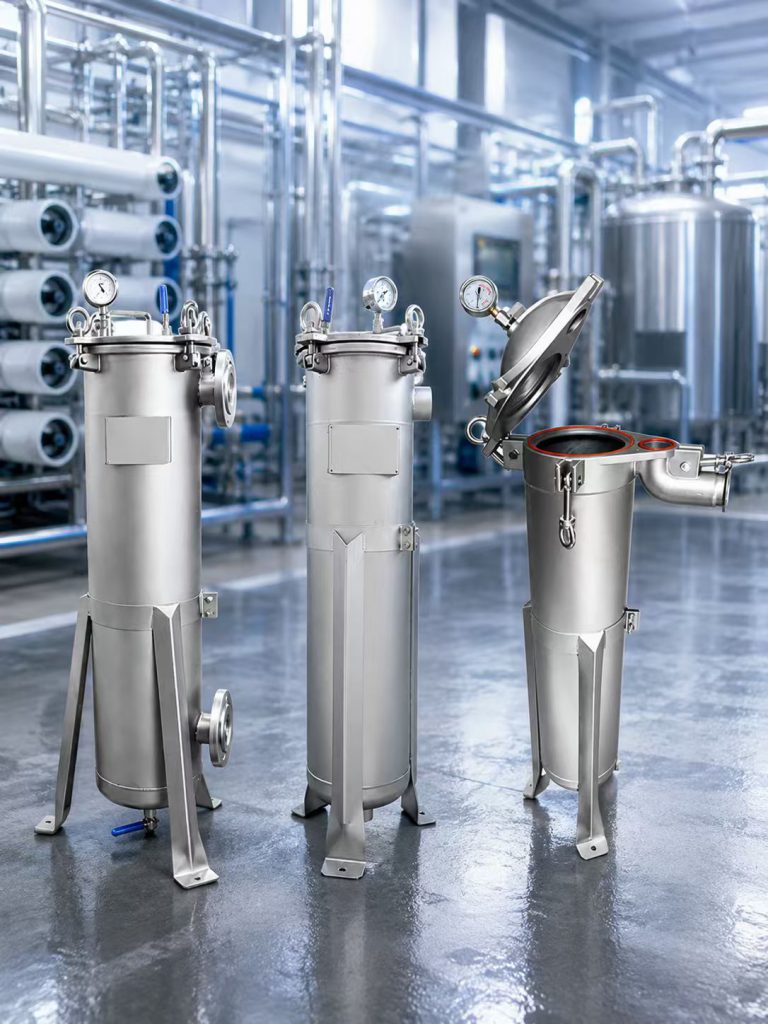
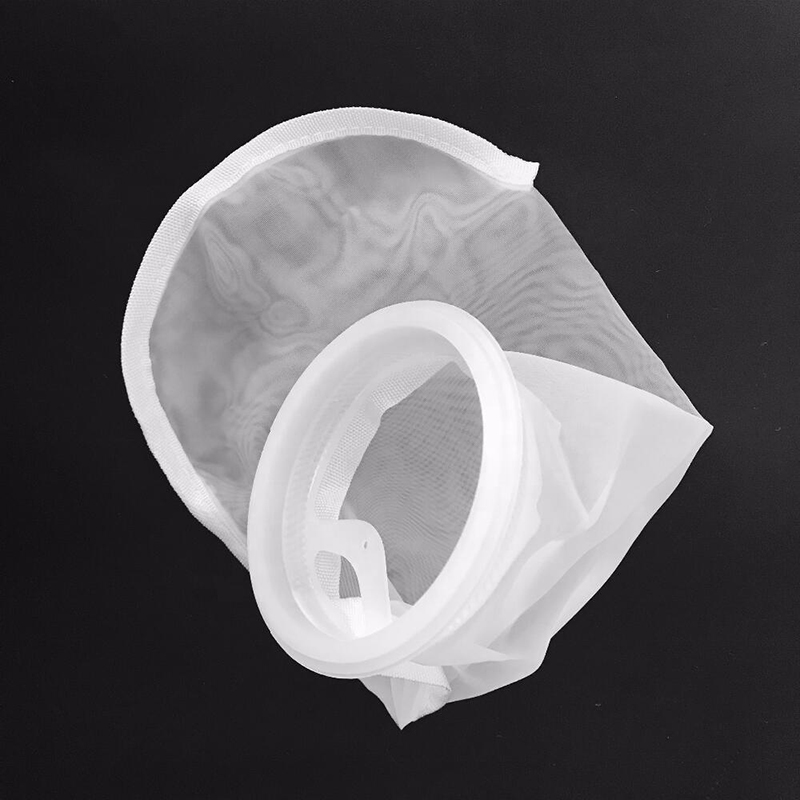
A single bag filter housing may suit a controlled side stream with manageable solids and an acceptable bag-change interval. A multi bag filter housing provides parallel filtration area for higher flow or longer service intervals. Do not select bag count from a generic flow chart alone: viscosity, solids loading, bag construction and allowable pressure loss all affect capacity.
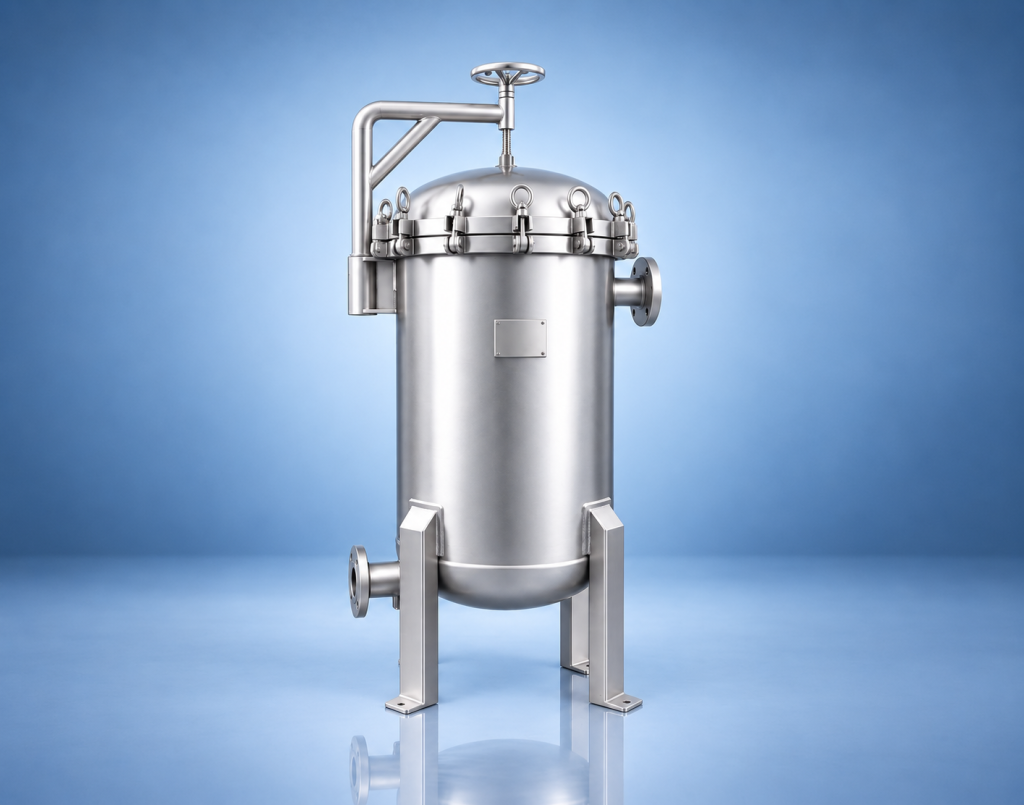
Bag-media and trial boundaries
- Start with the contaminant size distribution and the equipment-protection objective.
- Confirm compatibility between coolant chemistry, temperature, bag media, ring and seal.
- Record clean differential pressure and a defined change-out condition.
- Inspect captured solids during the trial; unexpected metal or elastomer fragments can indicate a maintenance issue.
- Do not claim microbiological control from particle filtration alone.
Send the cooling-loop specification
Include fluid composition, flow, pressure, temperature, target particle, existing filtration, allowable pressure drop, connection standard, footprint, quantity and destination.
Frequently Asked Questions
Can a bag filter replace cooling-water chemical treatment?
No. A bag filter removes suspended particles; water chemistry, corrosion, biological control and dissolved contaminants require separate treatment decisions.
Should a buyer select 75 or 250 micron first?
Only after reviewing the contaminant and protection objective. A trial may compare coarse and finer bags, but neither rating should be promised without process evidence.
What drawing should accompany the RFQ?
Send a piping or skid layout showing inlet/outlet size and standard, flow direction, isolation, vent, drain, available footprint and bag-removal clearance.
 WhatsApp