
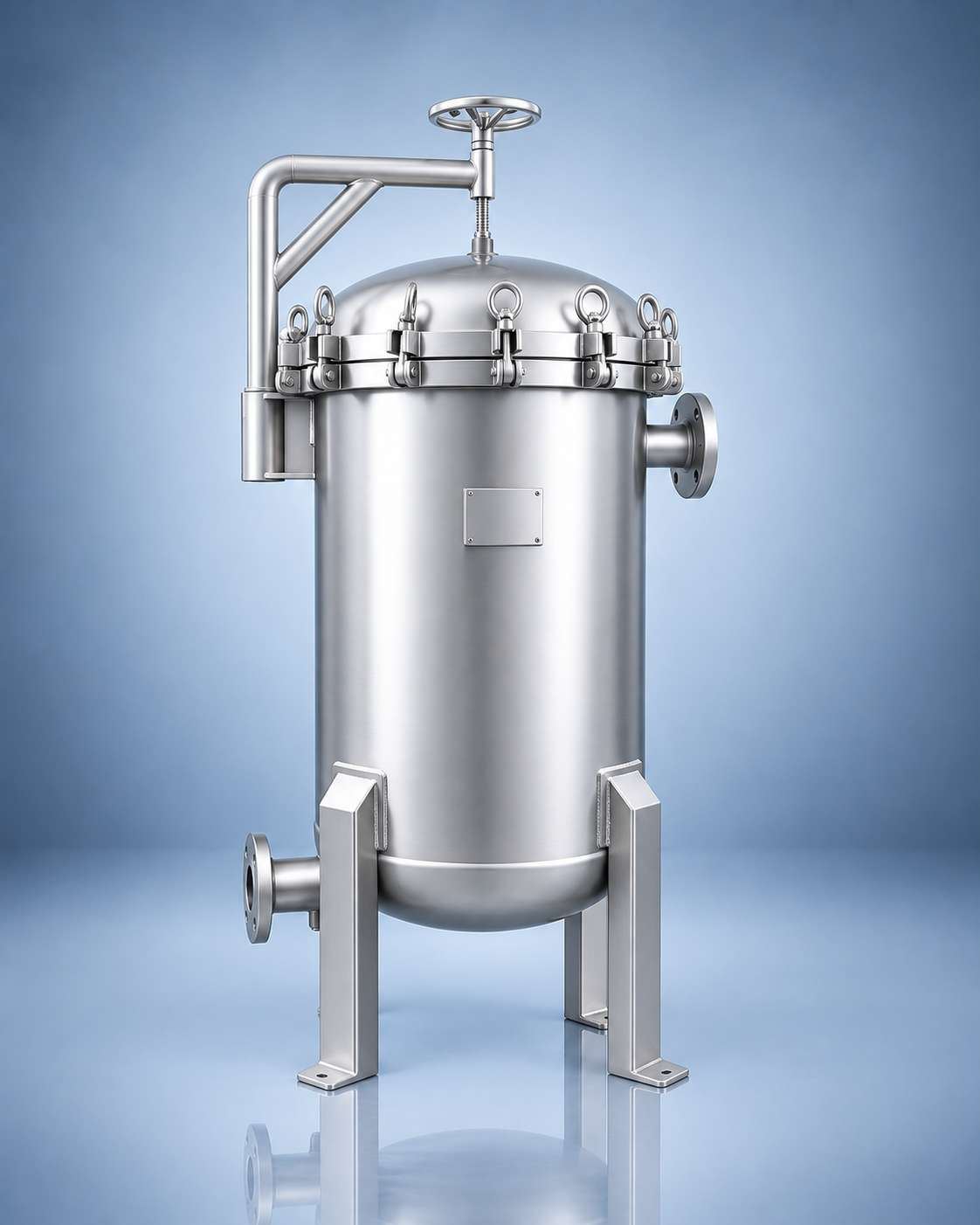
Direct answer: a multi-bag filter housing GA drawing should show the vessel envelope, bag count, inlet and outlet size and orientation, vent and drain, instruments, supports, lifting points, closure travel, maintenance clearance and connection datum. Approval should happen before fabrication or piping is frozen.
Send flow, liquid, solids, temperature, operating and design pressure, material, bag size/count preference, nozzle standard and orientation, available footprint, lifting clearance, documentation needs, quantity and destination.
Why the GA drawing is a purchasing control
A housing can be technically suitable for filtration but still be difficult to install if nozzle elevations, bolt patterns, cover travel or bag-removal clearance do not match the plant layout. A GA review aligns the buyer’s piping, civil, maintenance and procurement teams with the supplier’s proposed configuration.
Start with the multi-bag filter housing commercial page. Use the 2–24 bag sizing guide for capacity questions, then treat the approved GA as the project-specific interface record.
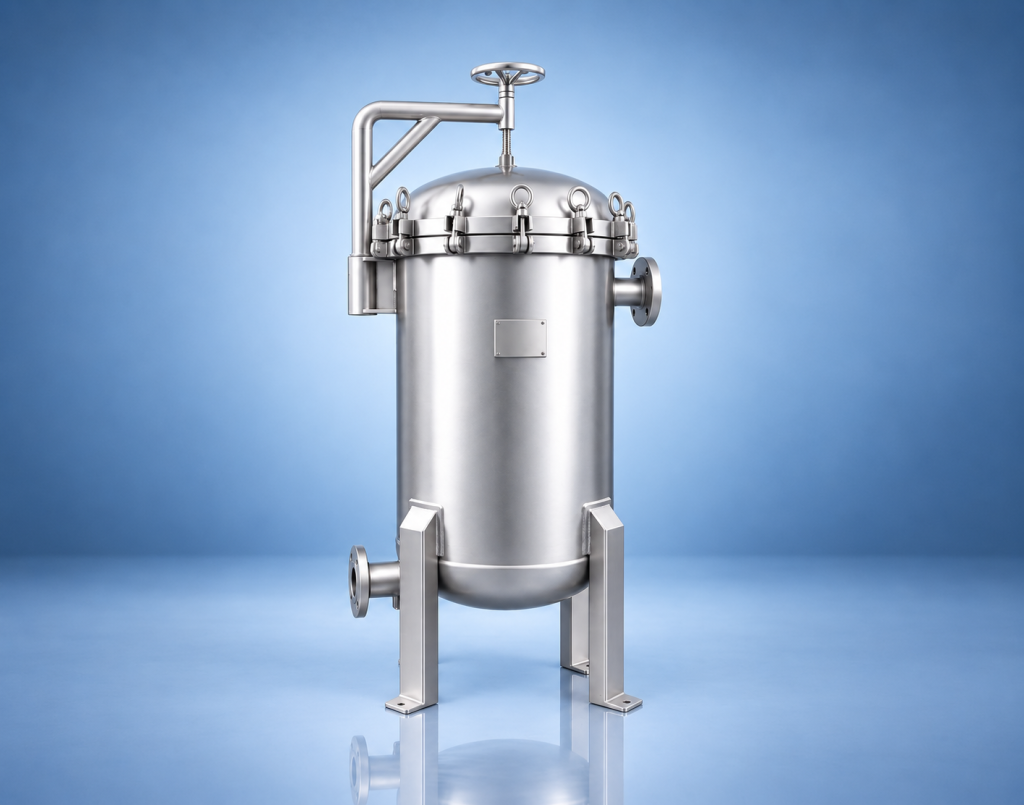
Minimum GA drawing content
| Drawing section | Buyer approval points |
|---|---|
| Identification | Project, tag number, model, revision, bag count and bag size |
| Envelope | Overall height, width/diameter, footprint and dry/operating weight when available |
| Connections | Inlet, outlet, vent, drain, gauge/tap and spare connection size, rating and standard |
| Orientation | Plan view, nozzle clocking or angular datum, flow direction and access side |
| Support | Legs/skirt, mounting-hole pattern, base elevation and anchoring interface |
| Operation | Closure type, cover swing or lifting path, bag removal direction and operator access |
| Materials | Body, wetted internals, basket, seals and surface-finish requirements |
| Design basis | Operating/design pressure and temperature plus applicable code or project specification |

Interfaces to coordinate before approval
- Piping: connection standard, nominal size, flange rating or thread, nozzle orientation and allowable loads.
- Maintenance: cover opening, bag removal height, basket lifting and space for tools or handling equipment.
- Instrumentation: upstream/downstream pressure taps, gauges or transmitters, vent and drain routing.
- Foundation: footprint, anchor locations, operating weight and center-of-gravity information where required.
- Safety and documents: design conditions, applicable code, material certificate, test and inspection requirements.
Use the existing guides for NPT/BSP/flange connections, maintenance clearance, and the housing documentation package.

RFQ package to send INCE
- P&ID or marked-up connection schedule
- Required flow and expected solids loading
- Complete liquid composition, concentration, temperature and viscosity
- Operating/design pressure and temperature
- Preferred material, bag size/count and seal material
- Available footprint, nozzle orientation and lifting/maintenance limits
- Required drawings, certificates, inspection and test documents
- Quantity, destination and project schedule
Send a sketch or marked-up layout. INCE will review the requested interfaces before a final quotation; no catalog drawing should be treated as the approved project GA.
Technical reference: Parker housing literature shows why GA reviews include dimensional callouts, inlet/outlet, vent, drain and mounting interfaces. Review the manufacturer drawing reference.
Buyer FAQ
Does a GA drawing replace the pressure vessel design review?
No. A general-arrangement drawing coordinates dimensions, interfaces and access. Design pressure, code requirements, calculations, materials and testing need their own approved documentation.
Should nozzle orientation be shown by clock position?
A clear plan view or agreed angular reference is preferable. The buyer and supplier should use the same datum and identify inlet, outlet, vent, drain and instrument connections.
What should be approved before fabrication?
Approve the model and bag count, overall dimensions, nozzle schedule and orientation, supports, lifting points, closure travel, maintenance clearance, materials, finish, design conditions and document requirements.

 WhatsApp