
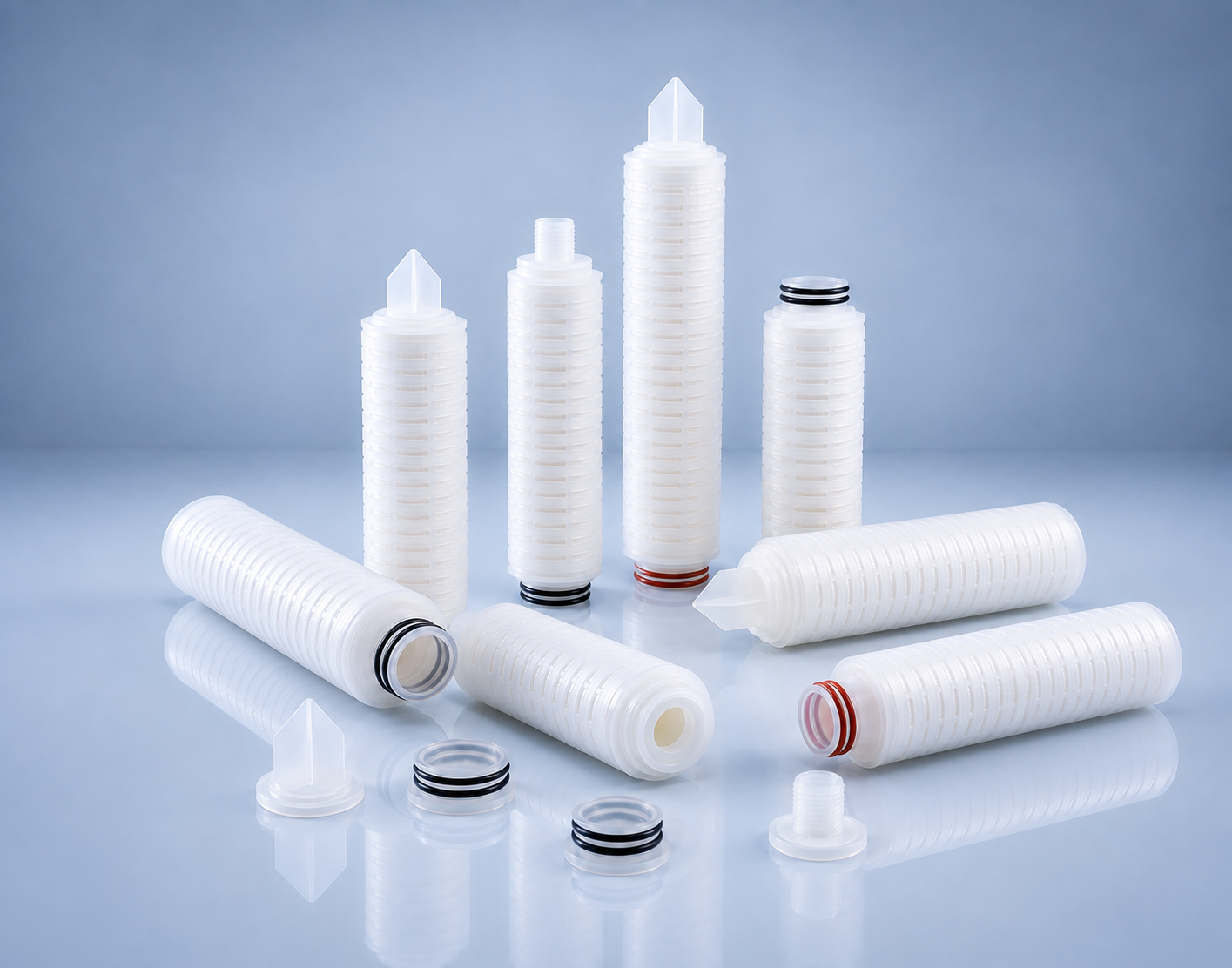
Direct answer: use a glass-fiber pleated cartridge as a prefilter when the process has a meaningful particle load and the downstream membrane or fine cartridge needs protection. Do not select it from “glass fiber” or micron rating alone. The quotation must also define the liquid, contaminant, required retention basis, cartridge dimensions, end interface, seals, flow, pressure-drop limits and the downstream element being protected.
Send the liquid, solids description, current and target micron grades, flow, pressure, cartridge dimensions, end cap, seal, quantity and destination.
What problem should the prefilter solve?
A buyer should first identify the failure mode of the downstream element: rapid differential-pressure rise, premature changeout, visible particles, unstable product quality or another measured issue. A glass-fiber prefilter can be evaluated when depth capture and pleated area are useful, but it is not automatically the best choice for every liquid. Chemical compatibility, fiber-control requirements, extractables requirements and disposal rules may make another construction preferable.
| RFQ field | Buyer input | Why it changes the quote |
|---|---|---|
| Liquid | Every component, concentration, viscosity and temperature | Controls media, support, end-cap and seal compatibility |
| Contaminant | Particle type, approximate size distribution and loading trend | Determines whether depth prefiltration is appropriate |
| Filtration target | Required outlet condition and rating/efficiency basis | A micron number alone does not state removal efficiency |
| Hydraulics | Normal/peak flow, clean and terminal differential pressure | Controls element count, area and changeout basis |
| Fit | Length, OD, ID, end cap, seal geometry and housing model | Prevents a technically suitable medium from being mechanically incompatible |
| Downstream stage | Membrane type, rating and current service-life problem | Defines the protection objective and trial success criteria |
Which published INCE options can start the review?
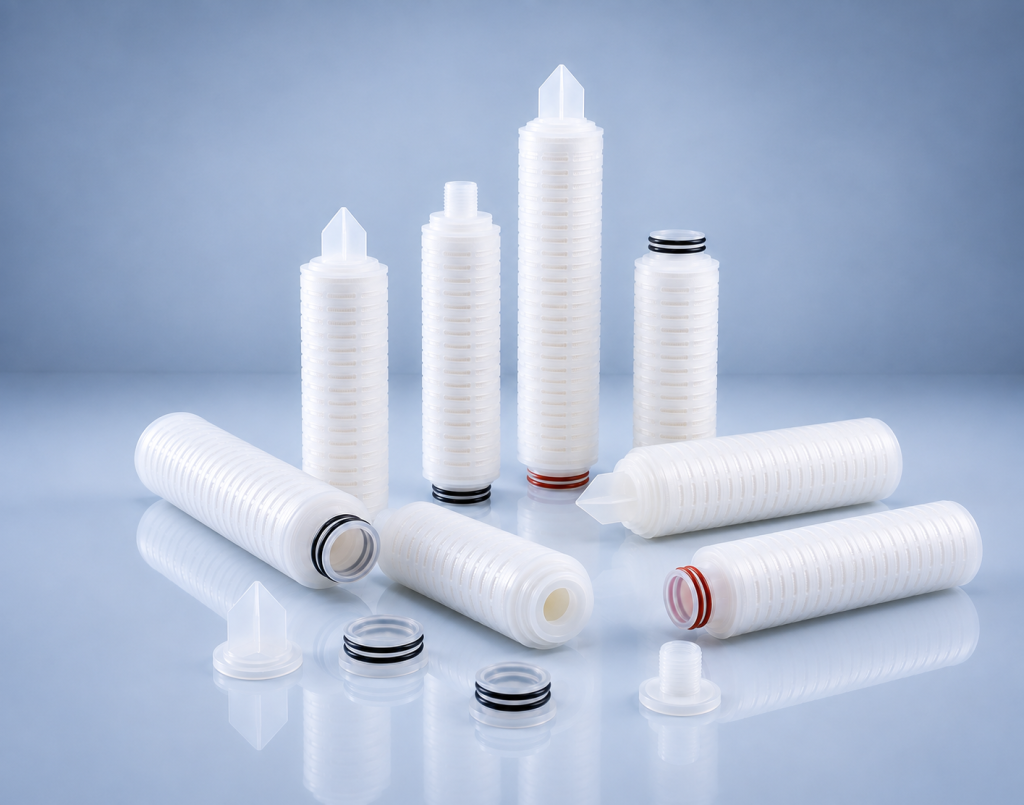
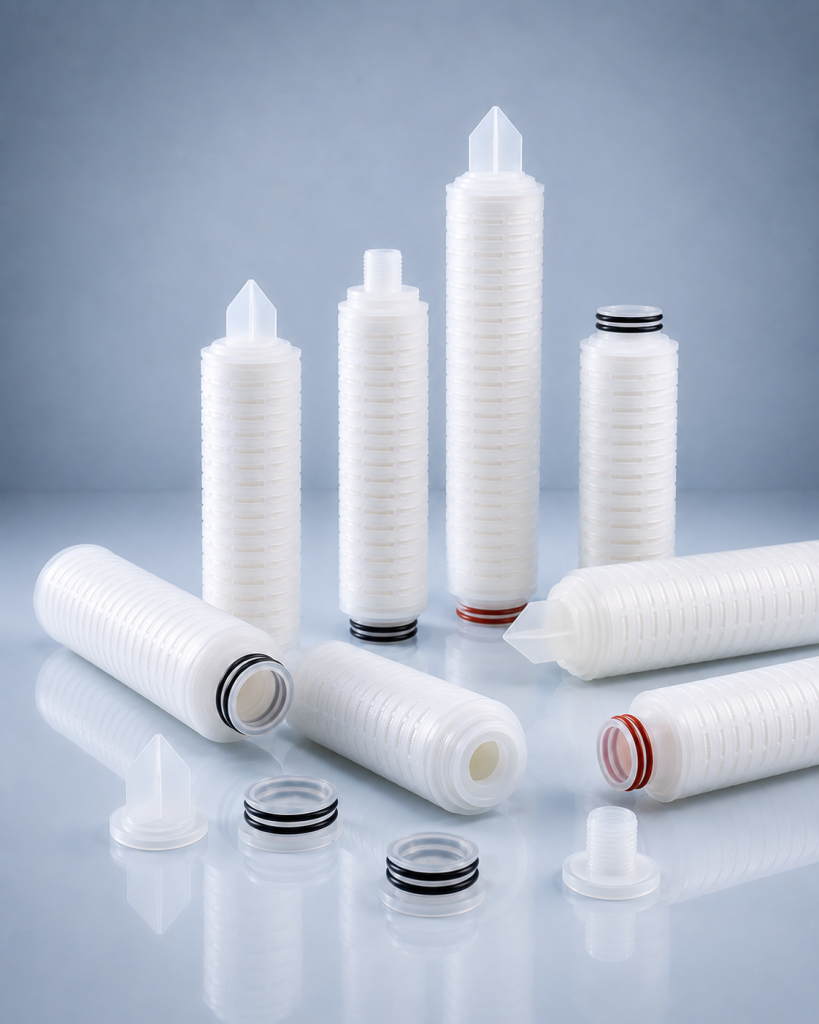
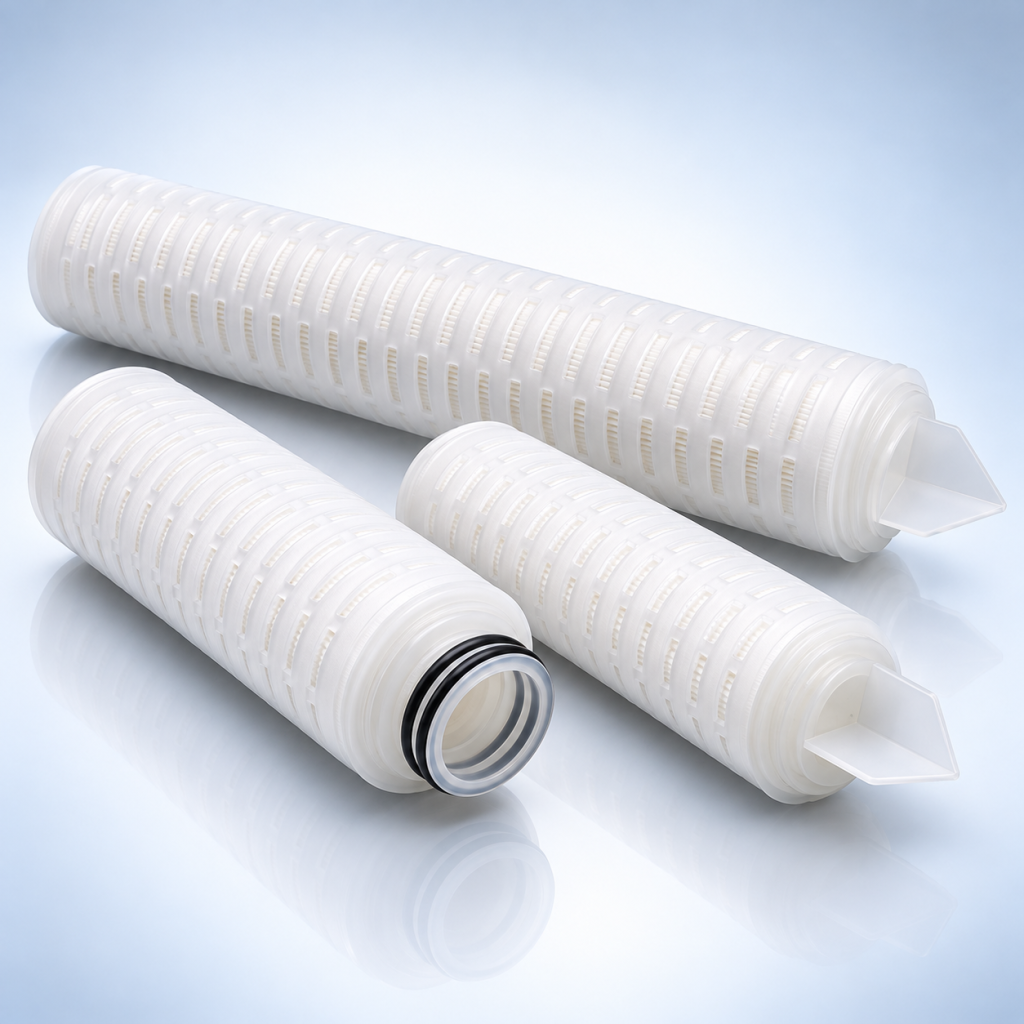
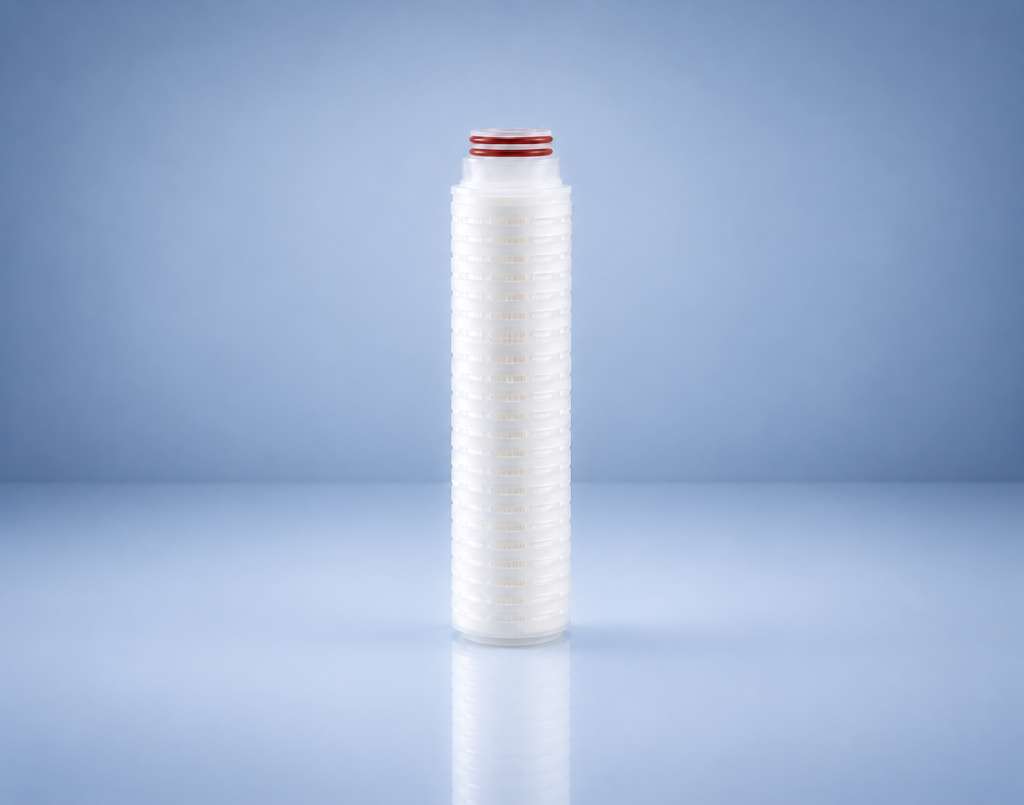
The current INCE glass-fiber pleated cartridge page lists 0.5, 1, 3, 5, 10, 20, 40, 50, 70 and 100 µm grades; 10–70 inch lengths; reference outside diameters of 60, 64, 68, 84 and 131 mm; a 28 mm reference ID; and flat, 215, 222, high-222, 226, threaded and fin-style interface options. These are configuration options, not proof that every combination is available or suitable for the buyer’s liquid.
How should a buyer set up a useful trial?
Record the current train, element count, flow, clean pressure drop, terminal changeout point, run time and downstream membrane change frequency before changing the prefilter. Trial one documented configuration against the same process window. Inspect the used element and record downstream results; do not declare success from a single low-solids batch.
Include the incumbent element model or sample, target trial quantity, acceptance metrics and forecast demand. Ask the supplier to identify assumptions and exceptions.
When is glass fiber not enough information?
- When the liquid contains chemicals not reviewed against the complete cartridge construction.
- When the buyer requires absolute retention, microbial claims or extractables limits without model-specific evidence.
- When the installed housing interface is unknown or only a brand name is provided.
- When the process cannot tolerate the proposed media or support materials.
- When pressure-drop and changeout criteria have not been defined.

Glass-fiber pleated cartridge RFQ checklist
- Complete liquid composition, temperature and viscosity.
- Particle description, loading trend and target outlet condition.
- Micron grade plus required rating or efficiency evidence.
- Normal and peak flow, clean pressure drop and terminal differential pressure.
- Cartridge length, OD, ID, end cap, seal and housing drawing/model.
- Downstream membrane or final element and current service-life problem.
- Trial quantity, annual quantity, destination, labeling, packing and documents.
Frequently asked questions
Is a glass-fiber pleated cartridge automatically an absolute-rated filter?
No. Media name and micron grade do not define retention efficiency. Ask for the rating basis and evidence for the exact offered construction.
Can I replace a PP pleated prefilter with glass fiber at the same micron?
Not automatically. Compare chemical compatibility, retention basis, pressure drop, dimensions, end caps, seals and trial results.
What dimensions are needed for a replacement quotation?
Provide overall and sealing length, OD, ID, end-interface dimensions, seal position/material, opposite-end geometry and the housing model or drawing.
Send liquid chemistry, particle load, micron/efficiency target, flow, pressure-drop limits, dimensions, end cap, seal, downstream membrane, quantity and destination.
Source basis: current INCE glass-fiber pleated cartridge and pleated-cartridge product pages. Final suitability is confirmed only in the quotation for the specified duty.
 WhatsApp