
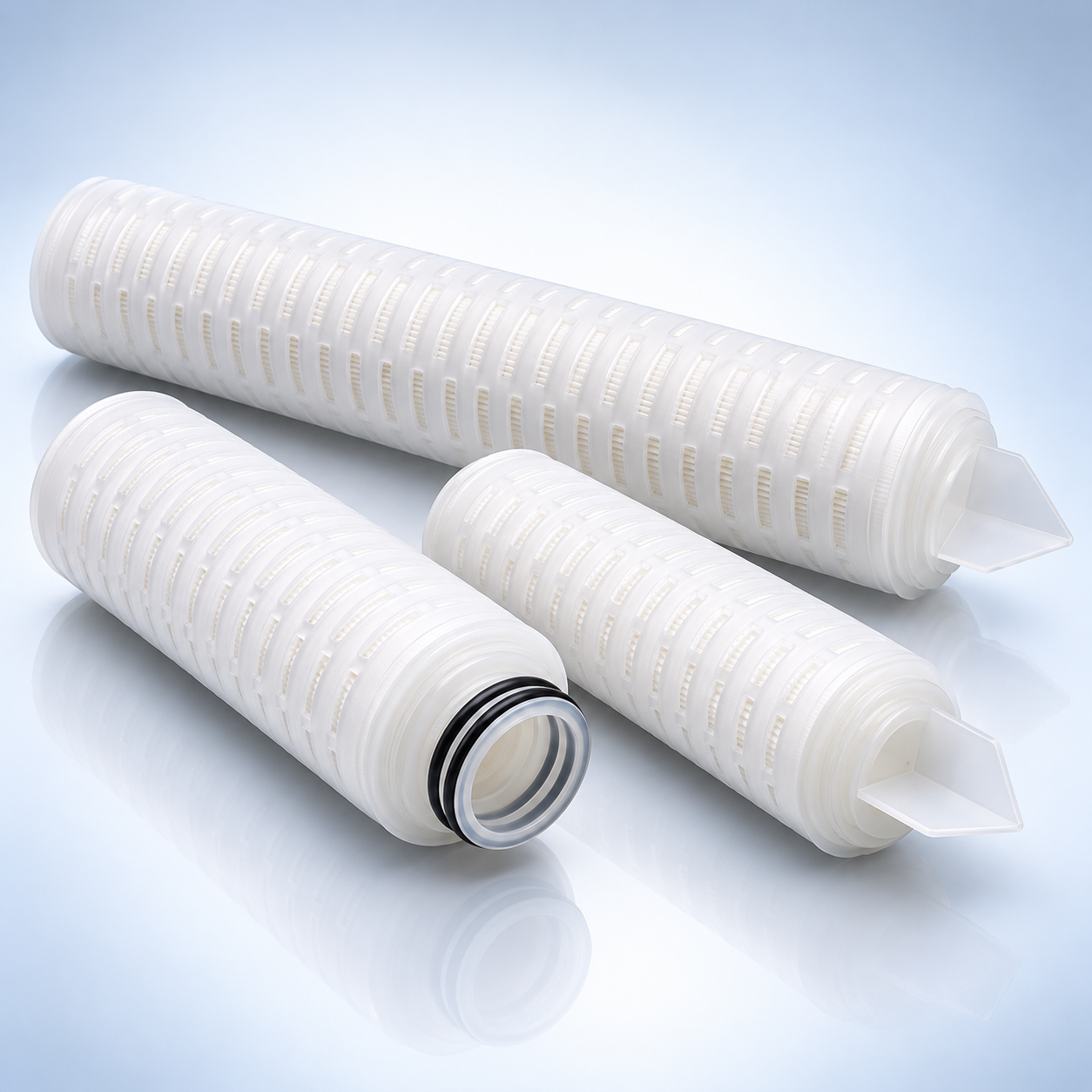
Direct answer: specify the complete sanitation cycle—not only “steamable cartridge.” State the medium, temperature, pressure, exposure and cooling time, number of cycles, flow direction, differential pressure, cartridge media, core/cage, end caps, seals, housing interface and required post-cycle acceptance evidence. Media chemistry alone cannot qualify the assembled element.
Send the production duty and the complete hot-water or steam cycle, current cartridge/housing dimensions, end cap, seal, quantity and required evidence.
What sanitation data belongs in the RFQ?
| Cycle field | Required buyer data | Reason |
|---|---|---|
| Medium | Hot water, clean steam, plant steam or chemical solution | Exposure and contamination conditions differ |
| Temperature | Normal, maximum and measured location | The element may see a different condition than the supply header |
| Pressure | Upstream/downstream pressure and differential pressure during heating and cooling | Reverse or high ΔP can deform an unsupported element |
| Time | Ramp, hold and cooling duration | A peak value without duration is incomplete |
| Cycles | Expected cycles per campaign and service life | Repeated thermal exposure can be more limiting than one cycle |
| Acceptance | Integrity, dimensions, pressure drop, retention or visual checks | Defines what “compatible” must prove |
Which cartridge components require confirmation?
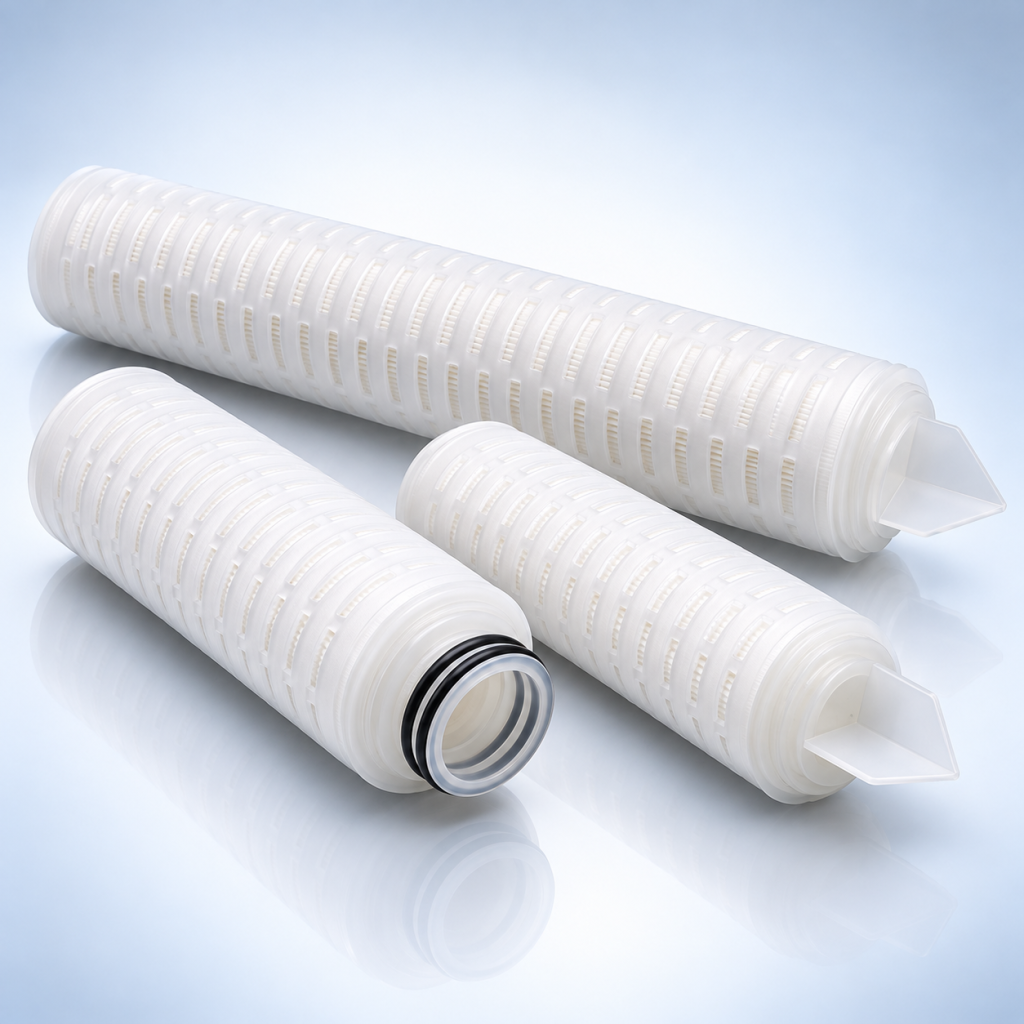
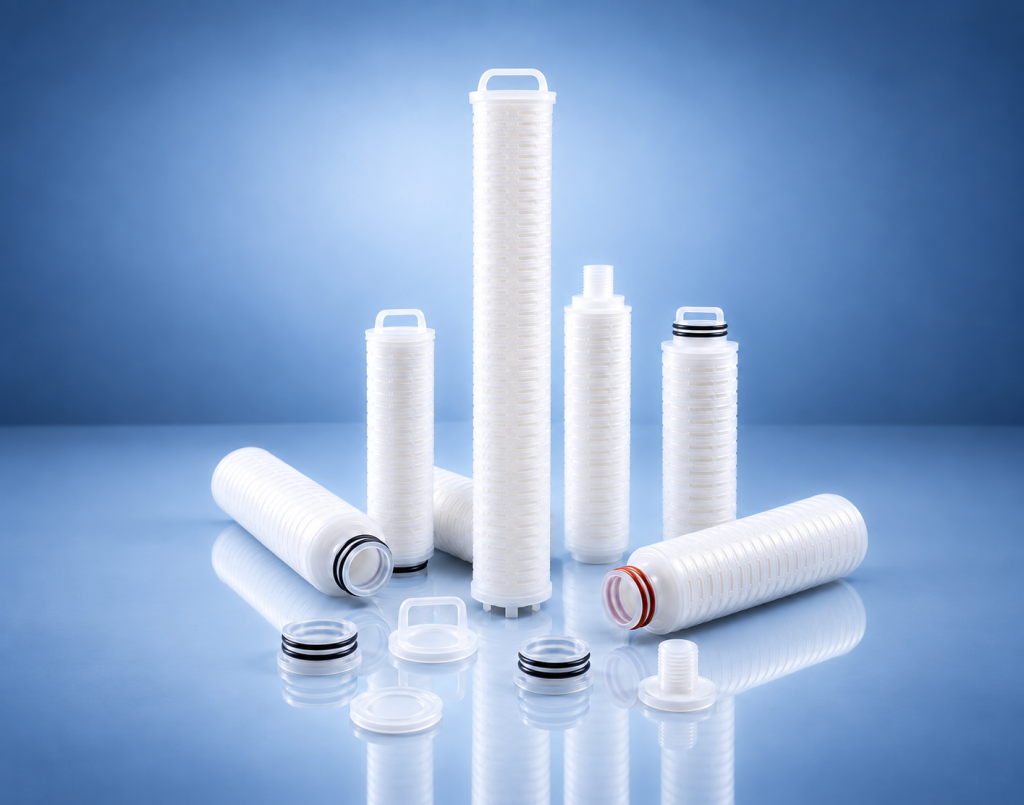
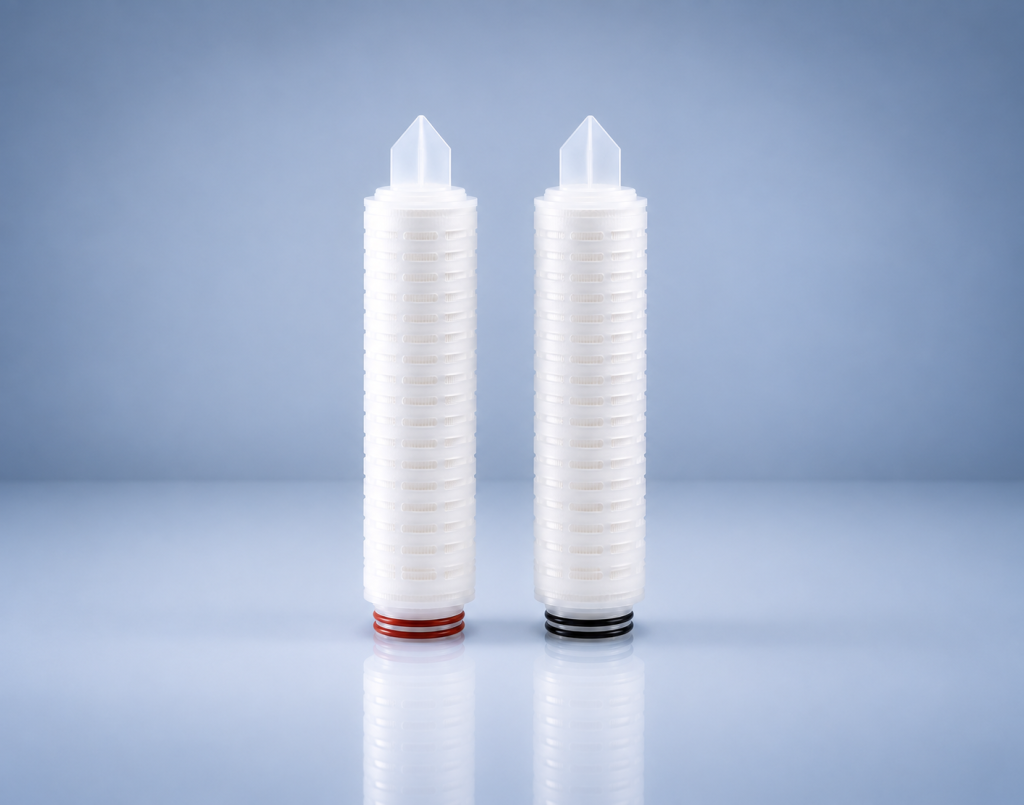
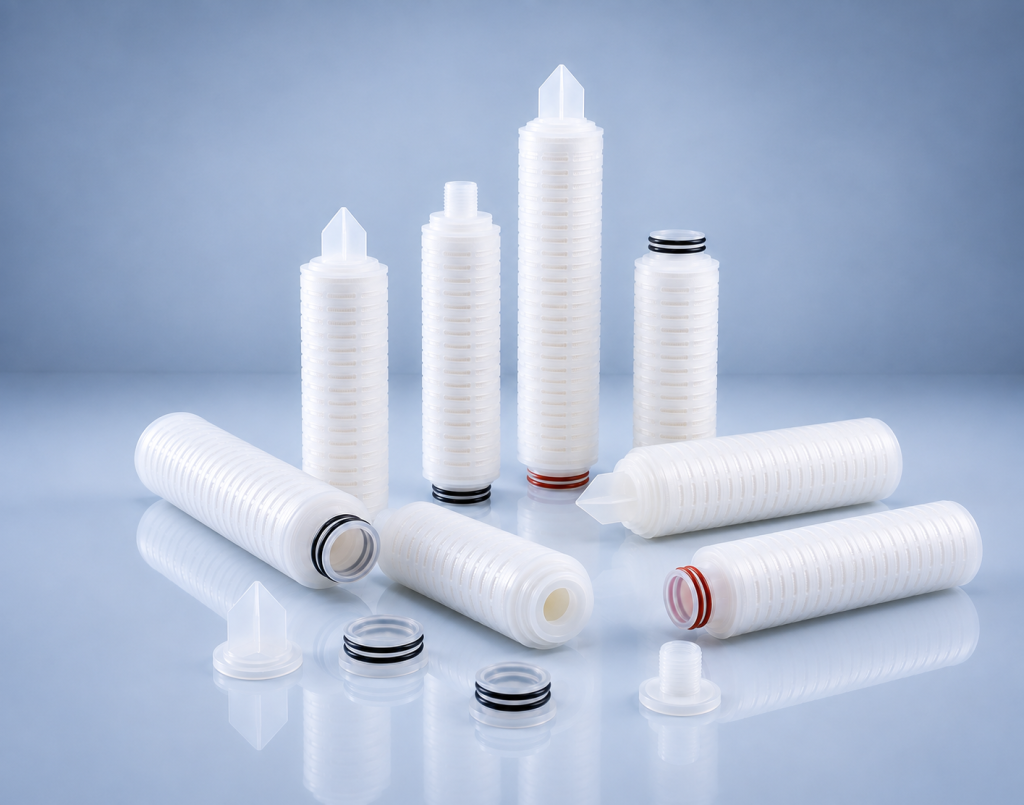
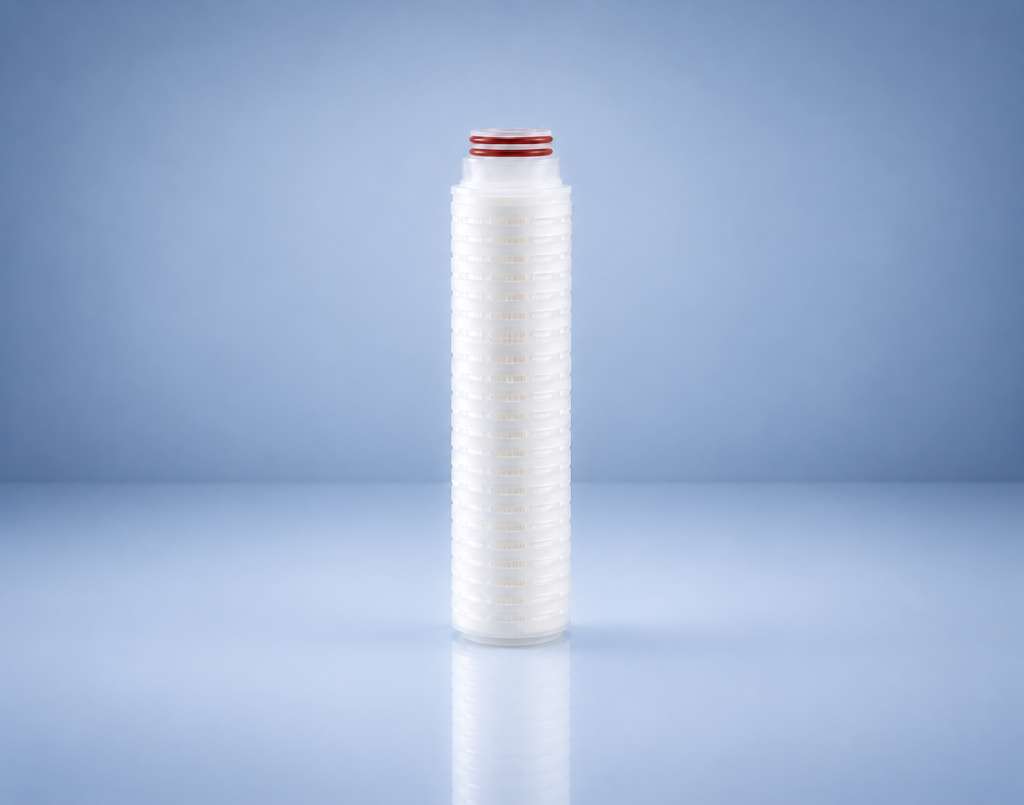
Review the pleated media, upstream/downstream support, inner core, outer cage, end caps, adapter, fin or closed end, O-rings or gaskets and every bonded or welded joint. The current INCE pleated cartridge range includes PP, PES, PTFE, PVDF, nylon and glass-fiber constructions with multiple end interfaces. Published product sheets also note that hot-water or steam versions may require a suitable reinforced or stainless-steel insert. That requirement must be confirmed for the exact quoted model and cycle.
Why the housing interface is part of the cycle
Thermal expansion, adapter retention, seal compression, flow direction and drainage depend on the installed housing. Submit the housing model, adapter-plate drawing, cartridge count, vent/drain arrangement and installation orientation. If a 222 or 226 adapter, fin end or DOE compression seal is used, record the exact geometry and seal material instead of relying on the interface name alone.
Upload the current element label, both end photos, measured dimensions and the housing drawing. Ask for a configuration-specific drawing and cycle statement.
What evidence should the buyer request?
Ask for evidence that matches the risk and claim: material/construction identification, dimensional check, cycle test, integrity-test method and values, retention evidence or extractables information only when genuinely required. Do not request “all certificates”; list the documents and acceptance criteria the quality or engineering team will use.

RFQ checklist
- Production liquid, composition, concentration, temperature, flow and target retention.
- Sanitation medium, ramp/hold/cool times, temperature, pressures, flow direction and cycle count.
- Media, rating basis, support layers, core, cage, end caps and seals.
- Length, OD, ID, adapter, fin/flat end and housing interface drawing.
- Normal and sanitation differential pressure, including reverse-pressure cases.
- Required evidence, test method, acceptance criteria and responsibility.
- Trial quantity, annual quantity, packaging, destination and requested delivery window.
Frequently asked questions
Does a stainless-steel core make every pleated cartridge steam compatible?
No. Media, support layers, end caps, seals and joints must also withstand the stated cycle.
Is maximum temperature enough to approve the cartridge?
No. Provide duration, pressure, differential pressure, flow direction, cooling and number of cycles.
Can a 222 cartridge be replaced by a 226 cartridge for sanitation?
Not without confirming the housing adapter, locking geometry, seal position, overall length and cycle performance.
Send production duty, sanitation cycle, complete element construction, dimensions, housing interface, trial quantity, evidence list and destination.
Source basis: current INCE pleated-cartridge family and material-specific product pages. Final limits belong to the exact quotation and approved validation plan.
 WhatsApp