Direct answer: a physical sample can start a custom filter-mesh replacement, but it should not become the only production specification. The buyer and supplier must convert the sample into a controlled record covering material, mesh construction, finished geometry, edges or seams, layers, tolerances, operating duty, inspection and an approved first article.
Send a clean sample, photos with a scale, mating-part or holder details, process conditions, required quantity and destination.
What can and cannot be learned from a sample?
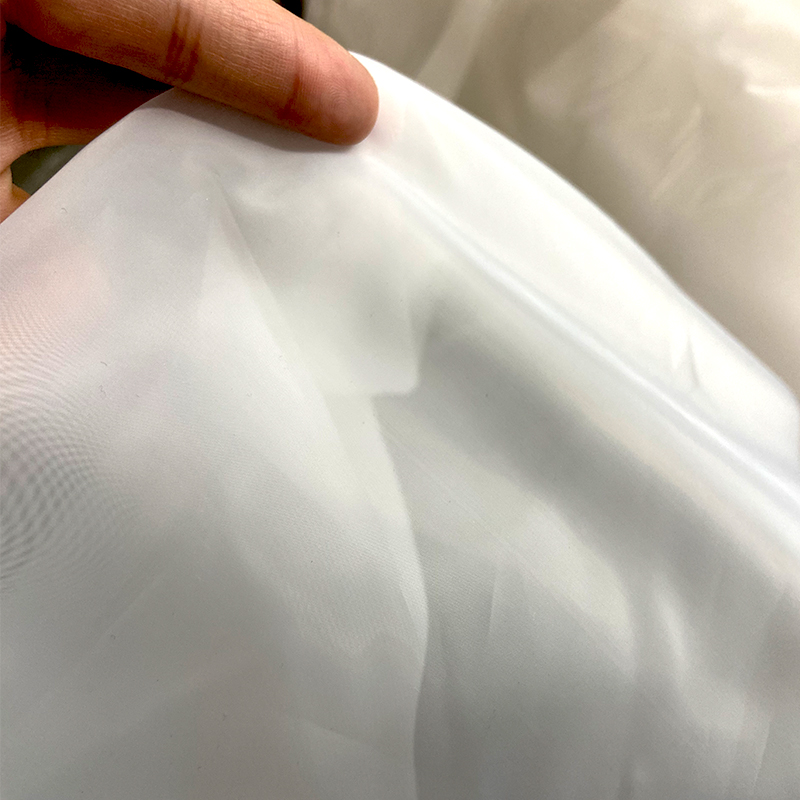
A sample can reveal shape, approximate dimensions, edge condition, seam position, layer arrangement and how the part fits a holder. It may also support material or mesh identification. It cannot reliably prove the original polymer grade, alloy, chemical history, rated pressure, food-contact status, filtration efficiency or an unwritten tolerance. Used samples may be stretched, clogged, chemically changed or damaged.
| Sample review item | What to record | Buyer decision |
|---|---|---|
| Material | Nylon, polyester, 304/316L or laboratory/approved identification | Is substitution allowed? |
| Mesh | Clear opening, mesh count, thread/wire diameter, weave and orientation | Which field controls acceptance? |
| Geometry | OD, ID, width, length, holes, form depth and datum | Which dimensions are critical to fit? |
| Edges/seams | Raw, sealed, folded, framed, sewn or welded condition | What visible or functional defects are unacceptable? |
| Layers | Filtering layer, support/drainage layers and assembly order | Must the layer stack be locked by drawing? |
| Duty | Liquid/air, chemistry, temperature, flow, pressure and cleaning | Is the proposed construction suitable? |
Use the sample to create a controlled drawing
The INCE custom filter mesh fabrication page covers cut pieces, discs, rings, tubes, cylinders, bags, sleeves, screens and drawing-based parts in nylon, polyester and stainless steel mesh. A replacement project should produce a dimensioned drawing or specification after sample review. Mark critical and reference dimensions separately and identify how flexible parts are measured—relaxed, supported in a fixture or installed.
How should the first article be approved?
- Confirm parent mesh material and construction against the agreed method.
- Measure critical finished dimensions using the stated fixture or method.
- Inspect edge, seam, weld, frame, loose threads/wires and layer orientation.
- Install the part in the actual holder or an approved gauge.
- Run a controlled process trial when filtration behavior matters.
- Record the approved drawing revision, sample identity, photos and deviations.
State sample quantity, production quantity and forecast demand separately. Ask the quotation to list tooling, inspection, packing and any unverified assumptions.
Do not infer unsupported compliance from the old part
If the replacement needs food-contact, material traceability, cleanliness, pressure, validation or another regulated claim, name the exact requirement and destination market. An old sample cannot demonstrate that the replacement carries the same evidence. Agree the document scope before production.
OEM sample-matching RFQ checklist
- Clean sample and count of available samples; identify any damaged or worn areas.
- Current part number, equipment model, holder or mating-part drawing and photos.
- Material, opening/mesh count, thread or wire diameter and weave if known.
- Finished dimensions, tolerances, edge/seam/frame, layers and orientation.
- Liquid or air, full chemistry, temperature, flow, pressure and cleaning.
- Required inspection, gauge/fit check, process trial and document package.
- Prototype quantity, production quantity, forecast, packing, destination and schedule.
Frequently asked questions
Can INCE quote from photos only?
Photos can support screening, but a reliable quotation needs measurements, duty information and preferably a sample or drawing.
Can the supplier copy the micron rating from a used sample?
Not safely from appearance alone. Agree a mesh-identification or measurement method and account for wear, clogging or deformation.
Should the approved sample replace the drawing?
No. Keep both where practical: the drawing controls measurable requirements and the approved sample helps compare workmanship and fit.
Provide the sample, equipment/holder data, critical dimensions, process duty, inspection plan, prototype and production quantities, packaging and destination.
Source basis: current INCE custom filter mesh fabrication and filter-mesh product pages. Final capability and tolerance are confirmed during drawing review.
 WhatsApp