
“Operating pressure” is not a complete filter-housing pressure specification. A responsible RFQ separates normal and maximum process conditions, vessel design conditions, element differential pressure, transients, temperature and the applicable code or jurisdiction. These values must be reviewed by the project’s qualified engineer; a supplier should not invent them from a catalog headline.
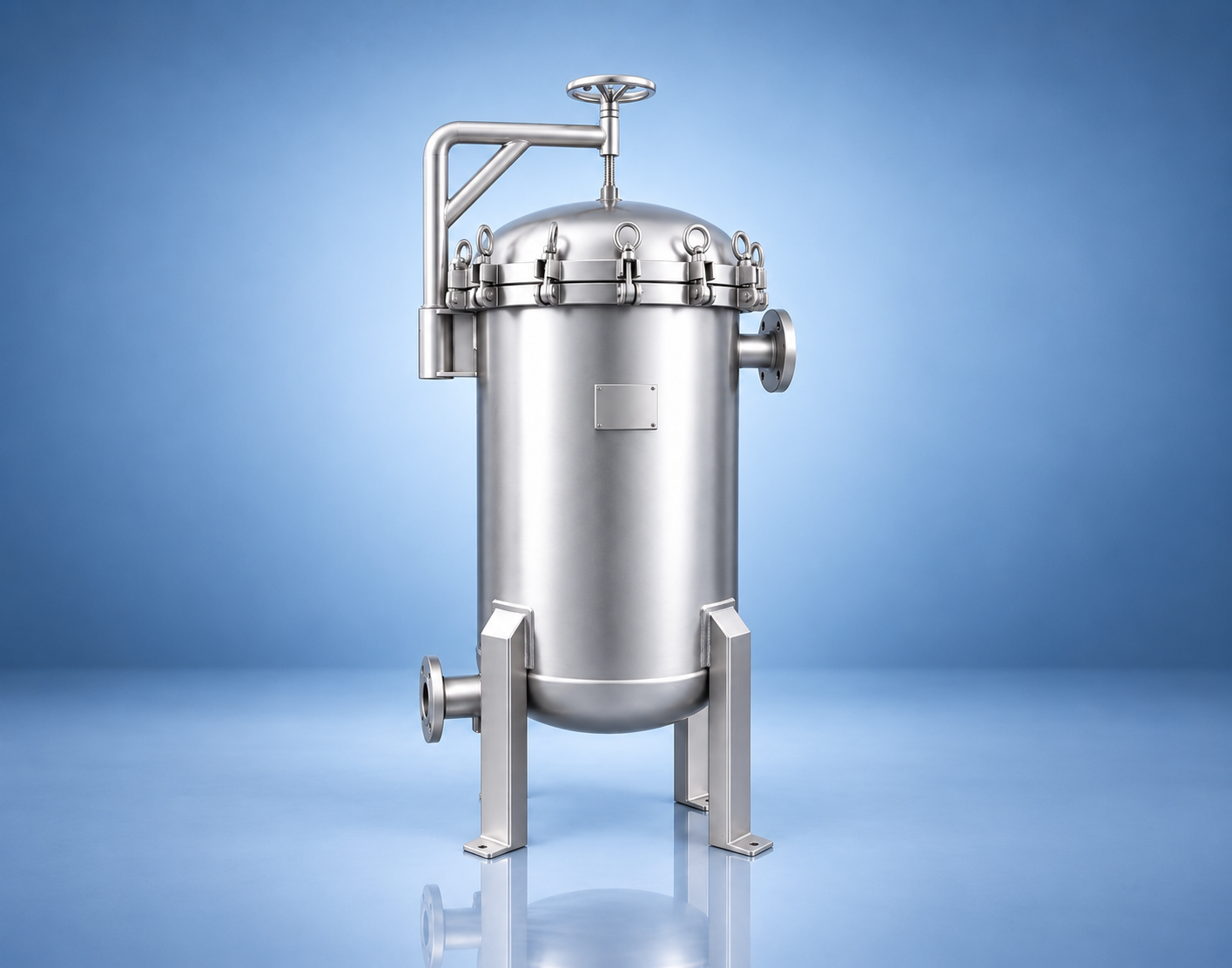
The image is a representative industrial multi-bag housing. It does not establish a pressure rating, code stamp or suitability for a particular installation.
Keep four pressure concepts separate
| Term | RFQ meaning | Common purchasing error |
|---|---|---|
| Normal operating pressure | Expected inlet and outlet pressure during stable operation | Sending one gauge reading with no flow or temperature context |
| Maximum credible process pressure | Highest condition the process and control review says can reach the housing | Assuming the pump’s normal discharge value covers every blocked or transient case |
| Vessel design pressure and temperature | Approved basis used for mechanical design under the selected code and jurisdiction | Copying a number from another site or choosing it from element differential pressure |
| Filter differential pressure | Inlet pressure minus outlet pressure across the element and internal flow path | Treating differential pressure as the pressure acting on the housing shell |
Differential pressure is essential for element selection and change-out planning, but it is not interchangeable with internal vessel pressure. A housing can have high line pressure while the element differential pressure is low. Conversely, a loaded bag or cartridge can have an unacceptable differential pressure even when line pressure is modest.
Temperature belongs on the same data sheet
Record normal, minimum, maximum and upset temperature together with the pressure cases. Material strength, gasket performance, fluid viscosity and corrosion behavior can change with temperature. “Stainless steel housing” is not enough: state the requested material grade, wetted-part scope, corrosion allowance or other corrosion basis, seal material and cleaning exposure.
If vacuum or external pressure is possible during draining, cooling, steam condensation or another operating step, state that condition explicitly. Do not assume an internally pressurized housing is automatically designed for full vacuum.
Code and jurisdiction are purchaser inputs
ASME’s current 2025 BPVC overview identifies Section VIII as covering pressure-vessel design, construction, inspection and certification, while Section XIII addresses overpressure protection. ASME’s Section VIII Division 1 scope page states that its rules apply to defined pressure vessels operating above the stated threshold. Whether a particular filter housing must comply, which edition applies and what local registration is required are decisions for the project’s code and jurisdiction review.
Therefore an RFQ should ask for the applicable design code, edition, certification mark or registration, inspection scope and documentation. Do not advertise a housing as “ASME” merely because its dimensions resemble a coded vessel. The quotation and approved drawing must identify the actual construction basis.
Pressure and mechanical RFQ checklist
- Process cases: normal, start-up, shutdown, blocked outlet, cleaning, steam or gas displacement, and other credible transients identified by the process team.
- Pressure: inlet/outlet normal values, maximum credible internal pressure, external pressure or vacuum case, and element clean/terminal differential pressure.
- Temperature: normal, minimum and maximum design cases, including cleaning or sterilization where relevant.
- Fluid: composition, concentration, vapor or gas presence, solids, viscosity and hazardous classification supplied by the purchaser.
- Code basis: jurisdiction, code and edition, certification/registration, design life and any customer specification.
- Materials: shell, head, basket or cartridge support, nozzles, fasteners, gaskets and requested material certificates.
- Connections: size, rating, facing/thread standard, orientation, vents, drains and instrument ports.
- Protection: the purchaser’s pressure-relief philosophy, relief-device scope and discharge destination. A housing quotation should not silently become the process relief design.
- Examination and testing: approved inspection plan, weld examination, pressure-test method and acceptance records. Test pressure must come from the applicable approved code/procedure, not an internet ratio.
- Deliverables: general arrangement, nozzle schedule, data sheet, calculations if contracted, material records, welding/inspection records, test certificate and nameplate details.
Apply the same discipline to each housing type
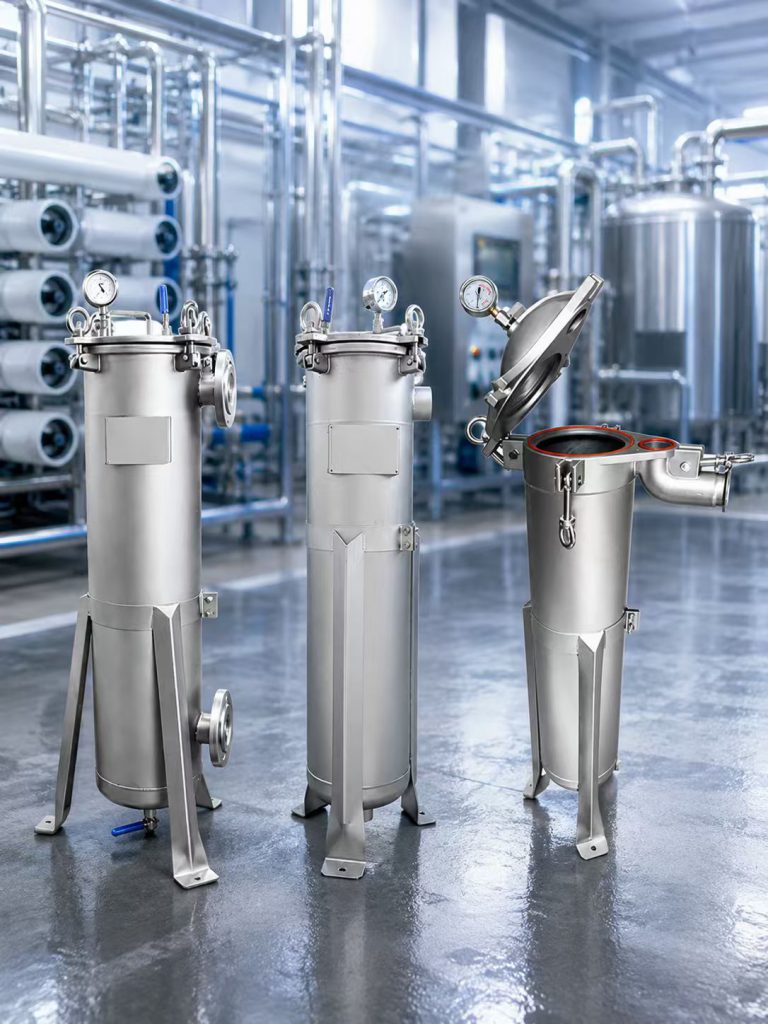
For a single-bag housing, state the bag size, closure arrangement and maintenance isolation. For a multi-bag housing, add cover-opening and lifting information, bag count and the flow distribution basis. For a high-flow cartridge housing, include cartridge quantity, series, length, flow direction and internal support arrangement.
Ask the supplier to return exceptions and assumptions in a deviation list. If a value remains “by others,” identify the responsible party and the date it must be resolved. A clean data sheet is more useful than a quotation filled with unreviewed default values.
Source notes
- ASME 2025 BPVC overview: identifies pressure-vessel and overpressure-protection sections.
- ASME BPVC Section VIII Division 1 scope: official scope and intended users.
Send your specification for review
Send the completed pressure/temperature cases, fluid data, code and jurisdiction, housing type, connections, materials, inspection requirements and required documents. INCE can return a housing quotation with assumptions stated for engineering review.
Frequently asked questions
Is filter differential pressure the same as housing design pressure?
No. Differential pressure is the inlet-to-outlet pressure loss across the element and internal flow path. Housing design pressure is a vessel design basis established under the applicable engineering and code review.
Can test pressure be calculated from a generic online multiplier?
It should not be. The test method and pressure must be taken from the applicable approved code, design basis and project procedure, with material and temperature considerations reviewed by qualified personnel.
What pressure information should be sent with a housing RFQ?
Send normal and maximum inlet/outlet conditions, credible transients, external pressure or vacuum, clean and terminal element differential pressure, temperature cases, fluid data, code/jurisdiction and the relief and documentation requirements.

 WhatsApp