
For coarse liquid filtration, the difference between 200, 250 and 400 micron filter bags can directly affect solids capture, bag life and downstream protection. The smallest micron number is not automatically the best choice. A finer bag captures smaller particles, but it can also load faster when the process contains a high concentration of coarse solids.
This guide compares 200 micron, 250 micron and 400 micron filter bags from an industrial selection and purchasing perspective. It is designed to help buyers decide which rating is appropriate before requesting a quotation.
Quick Comparison: 200 vs 250 vs 400 Micron Filter Bags
| Micron Rating | Typical Role | Main Benefit | Main Trade-Off |
|---|---|---|---|
| 200 micron | Coarse process filtration | Tighter particle retention than 250 or 400 micron | May load faster in high-solids service |
| 250 micron | Intermediate coarse filtration | Useful balance between coarse retention and solids handling | Allows more fine particles through than 200 micron |
| 400 micron | Pre-filtration / screening | Handles larger debris with relatively open flow path | Not suitable where smaller particles must be removed |
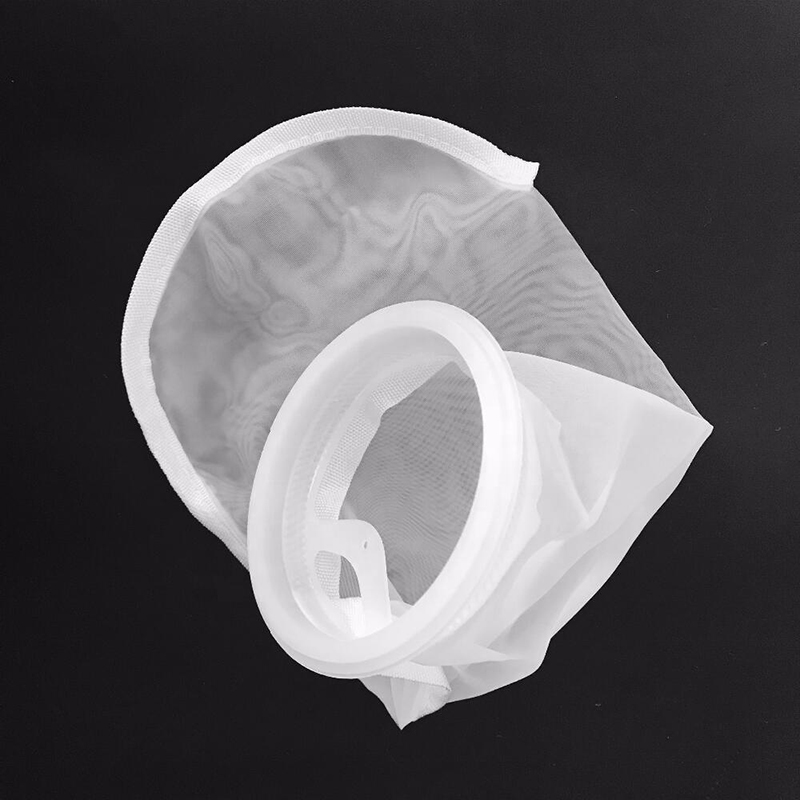
A micron rating should always be considered together with the filter media. Monofilament nylon mesh behaves differently from needle felt because mesh uses defined openings for surface filtration, while felt media captures particles through a depth structure.
When to Choose a 200 Micron Filter Bag
A 200 micron filter bag is a good starting point when the process requires meaningful coarse-particle control but does not need fine filtration.
It may be appropriate when:
- The process contains visible suspended solids that must be reduced before downstream equipment.
- A 250 or 400 micron bag allows too many particles through.
- The filtration stage is used before a finer bag, cartridge or membrane.
- The process needs a relatively coarse rating but still requires tighter retention than screening-only applications.
If a 200 micron bag plugs too quickly, first check the incoming solids load and particle-size distribution. The best solution may be adding a coarser upstream stage rather than simply increasing the micron rating.
Why 250 Micron Is a Useful Middle Ground
A 250 micron nylon filter bag sits between 200 and 400 micron in this comparison. It is especially useful where the buyer wants a monofilament mesh bag for coarse particle separation without moving as open as 400 micron.
Typical reasons to consider 250 micron include:
- 200 micron retention is tighter than the process actually needs.
- 400 micron is too open for downstream protection.
- The process needs reusable or cleanable mesh-style filtration.
- The filtration goal is to remove larger process debris while maintaining practical flow.
For buyers comparing filter media, 250 micron nylon mesh is a surface-filtration option with a defined mesh opening. If polypropylene compatibility is preferred for the process, review the 250 micron PP filter bag option separately because the media structure and operating behavior are different.
When a 400 Micron Filter Bag Makes More Sense
A 400 micron mesh filter bag is a coarser choice. It is generally considered when the filtration stage is acting more like a screen or pre-filter than a polishing step.
It may be appropriate for:
- Removing large debris before a finer filtration stage.
- High-solids liquids where a finer bag would load unnecessarily fast.
- Batch transfer or process protection where only relatively large particles are a concern.
- Applications where maintaining flow is more important than removing smaller suspended solids.
If 400 micron allows unacceptable solids through, move toward 250 or 200 micron rather than assuming that a different bag material alone will solve the problem.
200 vs 250 vs 400 Micron: How to Decide
Use the following sequence when selecting the rating:
- Define the smallest unacceptable particle. What particle size must not reach the downstream process?
- Identify the filtration role. Is this screening, pre-filtration, process filtration or a final coarse-polishing stage?
- Check solids loading. High solids can shorten the life of a tighter bag.
- Choose the media type. Nylon mesh, polypropylene and polyester have different filtration structures and chemical compatibility.
- Confirm bag size and top construction. The bag must fit and seal correctly in the housing.
- Review flow and changeout frequency. The best rating should meet retention needs without creating unnecessary operating cost.
For a wider micron comparison, see the 1 to 500 micron liquid filter bag selection guide.
Mesh vs Felt at Coarse Micron Ratings
Micron number alone does not make two filter bags equivalent. A 250 micron monofilament nylon mesh bag and a coarse felt bag may both be described using micron ratings, but they capture particles differently.
Nylon Monofilament Mesh
- Surface filtration through defined mesh openings.
- Well suited to coarse screening and visible-particle removal.
- Often selected where cleaning or reuse is practical.
- Available in multiple mesh opening sizes.
Needle Felt
- Depth-style filtration through a fibrous structure.
- Can hold particles within the media depth.
- Common in industrial liquid filtration where depth loading is useful.
- Material selection depends on liquid chemistry and operating temperature.
If the application calls for a predictable coarse opening, nylon mesh is often easier to specify. If solids-holding capacity through a depth structure is the priority, felt media may be more appropriate.
Example Selection Scenarios
Scenario 1: 400 micron is too coarse
If large debris is removed successfully but too many medium-size particles still reach downstream equipment, moving from 400 to 250 micron is a logical intermediate trial before going directly to 200 micron.
Scenario 2: 200 micron bags load too fast
If 200 micron bags reach the changeout pressure too quickly, check whether the process truly requires 200 micron retention. A 250 micron stage may extend operating time if the outlet quality remains acceptable, or a 400 micron pre-filter can be added upstream.
Scenario 3: The bag is protecting a finer cartridge
When a bag is used only to protect a downstream cartridge, the best rating depends on which particle fraction is causing cartridge fouling. In some systems, 250 or 400 micron pre-filtration is sufficient; in others, 200 micron or finer is needed.
What to Send for a Quote
For faster selection and pricing, send the following information:
- Required micron rating or current bag rating.
- Preferred material: nylon, polypropylene, polyester or other.
- Bag dimensions or housing model.
- Top construction or ring style.
- Process liquid and chemical composition.
- Operating temperature.
- Flow rate and pressure if known.
- Expected solids loading or photos of the retained material.
- Required quantity.
Need Help Choosing 200, 250 or 400 Micron?
INCE filtration supplies industrial liquid filter bags in multiple materials, micron ratings, standard sizes and OEM configurations. Send your current bag specification, process conditions or a sample photo and we can help narrow the correct configuration for quotation.
Frequently Asked Questions
Is 200 micron finer than 250 micron?
Yes. A 200 micron rating is finer than 250 micron, so it targets smaller particles.
Is 250 micron finer than 400 micron?
Yes. A 250 micron opening is smaller than a 400 micron opening and therefore provides tighter coarse filtration.
Which rating is best for pre-filtration?
There is no single best rating. For heavier solids and large debris, 400 micron may be suitable. When tighter downstream protection is needed, 250 or 200 micron may be more appropriate.
Can I replace a 200 micron bag with a 250 micron bag?
Possibly, if the process can accept a coarser outlet particle profile. Confirm downstream cleanliness requirements before changing the rating.
Is nylon mesh better than felt for 250 micron filtration?
Neither is universally better. Nylon mesh is useful when a defined surface opening is important, while felt media is useful when depth loading is desired. Chemical compatibility and process conditions must also be considered.
 WhatsApp