
A nylon filter mesh cut part needs two specifications: the mesh and the finished component. Correct opening size does not define the contour, edge condition, usable filtration area or fit in a holder. Agree those details before selecting a cutting route or comparing OEM prices.
Start with the nylon filter mesh specification, then use custom filter mesh fabrication for drawing review. This article concerns cut-part edges and assembly acceptance, not a claim that every cutting process or tolerance is available from INCE.
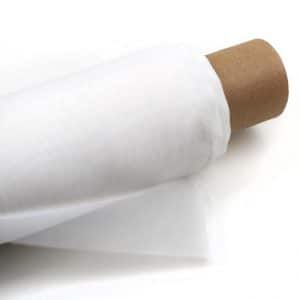
Define the functional area before the outer contour
Mark the area through which liquid must pass and the area held, bonded, clamped or overmolded. State whether any edge treatment is allowed to enter the active area. A part can meet its overall diameter yet provide the wrong usable opening if the edge and holder boundary were not defined.
For a 75 micron or 250 micron nylon mesh request, identify the approved fabric reference and opening basis as well as thread diameter or another agreed construction identifier. Do not assume that changing the cutting method permits substitution of a different fabric. The mesh open-area guide explains why fabric construction remains a separate selection decision.
Compare edge outcomes, not just machine names
Sefar’s fabrication documentation describes cold, laser and ultrasonic processes for mesh parts. Its ribbon documentation also describes heat and ultrasonic slitting. For polymer mesh, compare raw and sealed edge requirements explicitly before selecting a route. These examples show that edge treatment is process- and product-dependent, not a universal guarantee for every nylon mesh.
| Proposed route | Ask the fabricator to demonstrate | Acceptance question |
|---|---|---|
| Cold cutting or stamping | Actual edge on the specified mesh | Are loose threads or edge movement acceptable in this assembly? |
| Laser cutting | Finished contour and treated boundary on a sample | Does the edge meet the drawing without obstructing the active area? |
| Ultrasonic cutting | Suitability for this polymer and construction | Is the resulting edge and dimension acceptable after handling? |
| Heat slitting for ribbons | Finished width, edge condition and winding | Will the ribbon feed and fit consistently in the next operation? |
Do not rank these routes by an unsupported promise that one is always cleaner, cheaper or more precise. Shape, fabric, layer count, quantity, tooling and downstream assembly can change the comparison. Request a process proposal and physical samples made from the intended construction.
What the drawing should control
- Outer contour, holes, slots, datum and units, with critical tolerances identified.
- Active filtration area and the maximum permitted edge-treatment zone.
- Fabric reference, opening specification, orientation if functionally relevant, and number of layers.
- Edge condition: raw, sealed, folded or another drawing-defined requirement.
- Holder interface, assembly method and any limits on extra thickness at the boundary.
- Agreed cleanliness, packaging, quantity and labeling requirements.
A numerical tolerance needs a measurement basis. State whether dimensions are checked relaxed, supported in a fixture or after assembly. If your drawing is only a preliminary outline, mark it as such and identify which details require confirmation before production.
Use a sample to expose assembly issues
Review dimensions and the edge under an appropriate agreed inspection method, then install the sample in the intended holder. Check whether the mesh shifts, wrinkles, leaves an unintended flow path or interferes with sealing. Repeat any handling or cleaning exposure that is part of the approved qualification plan.
Record acceptance of both the mesh and the fabricated part. If a trial reveals an issue, change one identified feature at a time and retain the drawing revision. Avoid approving a photograph alone when the critical question is how the edge behaves in the actual assembly.
Scope the OEM quotation clearly
Separate sample quantity from production quantity and state expected reorder volume. Ask which tooling, inspection and packaging items are included and whether a proposed process change would require reapproval. Where the requirement is a circular component, use the filter mesh discs inquiry path with the same finished-edge details.
Send a cut-part drawing for review
Provide the nylon mesh specification, drawing or sample, active-area boundary, edge requirement, holder details and quantities. Ask for the proposed fabrication route, achievable tolerances, sample plan and OEM pricing to be confirmed in the quotation.
Frequently asked questions
Does a sealed edge prove that the part cannot shed material?
No. Qualify the finished component under the agreed handling and application conditions. An edge description is not a particle-release test result.
Can I specify only the mesh opening and outer diameter?
Usually that leaves important details unresolved. Define the active area, edge condition, tolerances, fabric construction and holder interface.
Are all cutting methods available for every nylon mesh?
Do not assume so. Availability and suitability depend on the fabric, geometry, quantity and fabrication capability and must be confirmed.
Technical references
Sefar: Shapes & Stamped Pieces; ribbon slitting methods. Their branded capabilities, dimensional limits and compliance claims are not INCE specifications.


 WhatsApp