
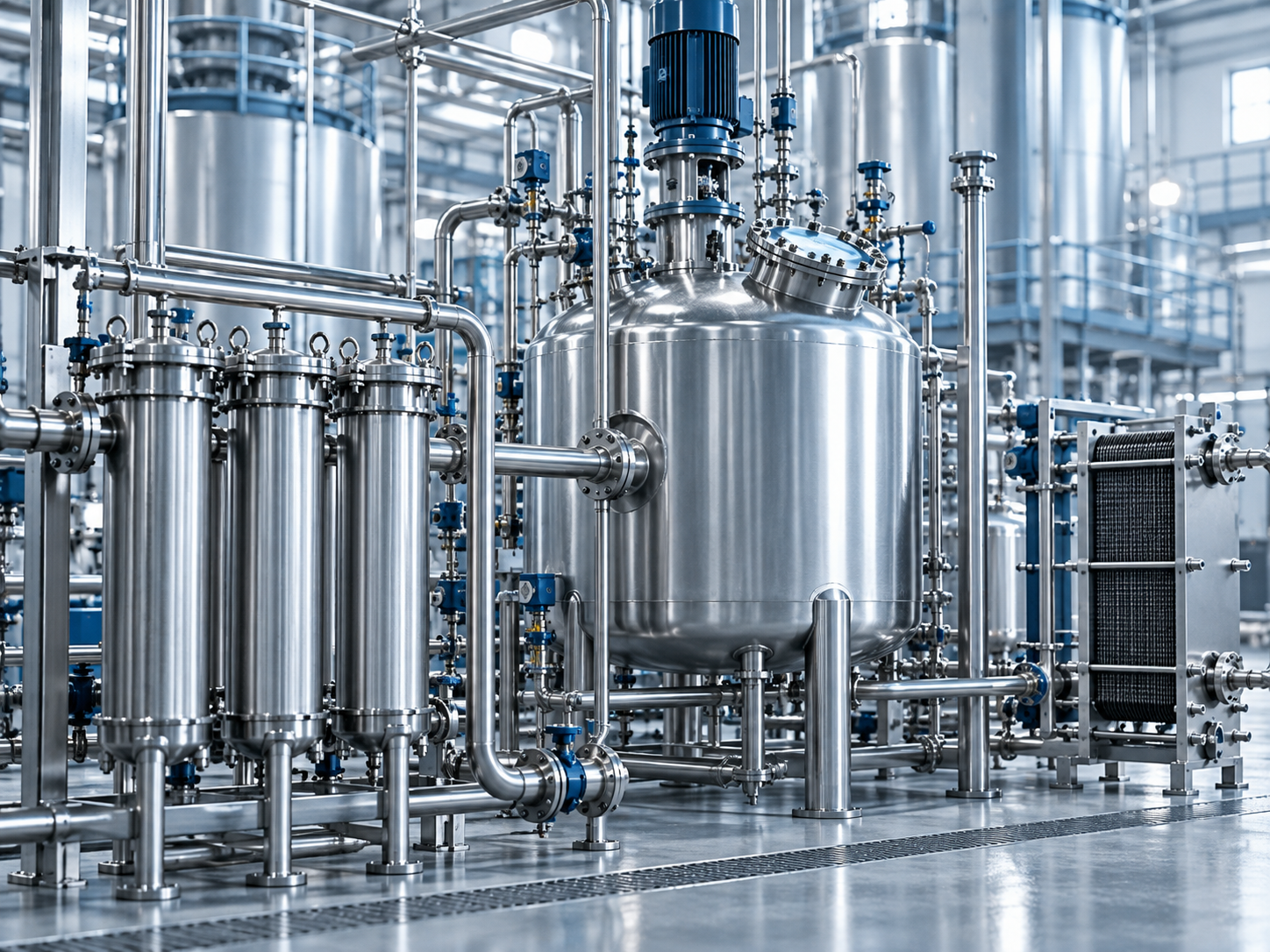
Amine and glycol circulation systems can carry corrosion products, pipe scale, carbon fines and other suspended solids. Filtration is used in oil, gas and petrochemical service, but a bag filter should not be selected from fluid name and micron rating alone. The correct system depends on contamination source, solids concentration, foaming or fouling symptoms, flow, viscosity, temperature, pressure and the location of the filtration loop.
Eaton lists filtration of amine solutions and glycol fluids among filter-bag applications. Pall and Parker also publish application-specific amine filtration systems using bags, cartridges, carbon stages and coalescers. These references confirm the application, while also showing that a bag is only one possible stage in a complete contamination-control plan.
Define the process and problem
- Amine or glycol type, concentration and additives
- Rich or lean side, slipstream or full-flow location
- Normal and upset temperature and pressure
- Minimum, normal and maximum flow
- Viscosity at operating temperature
- Suspended-solids data and particle-size distribution if available
- Foaming, fouling, exchanger plugging, color or carryover symptoms
- Existing carbon bed, prefilter, cartridge, coalescer or separator
- Current filter rating, service interval and failure mode
Do not state that solids removal will automatically cure foaming. Foaming can have several causes, including degradation products, hydrocarbons, additives and fine solids. The process licensor or treatment-chemical specialist should evaluate root causes, while filtration trials verify the effect of removing suspended material.
Choose a trial objective
A coarse bag may protect a finer downstream element or carbon bed from bulk solids. A higher-efficiency bag may be evaluated for polishing where the housing, seal and flow permit it. Pall’s refinery amine guidance discusses both nominal and absolute-rated elements, and Parker application literature may recommend a micron level for a specific process arrangement. Those values are not universal specifications for another plant.
Define one measurable objective per trial: lower suspended solids, protect a carbon stage, extend downstream cartridge life, reduce exchanger deposition, or remove carbon fines. If several changes are made at once, the team may not know which change produced the result.
Media and construction questions
| RFQ item | Required information |
|---|---|
| Retention | Nominal or absolute basis, test method and efficiency data |
| Media | PP, polyester or other quoted construction with compatibility review |
| Bag size | Diameter, length, ring/collar and housing fit |
| Seam | Welded or sewn construction and bypass-control features |
| Seal | Bag collar plus housing O-ring/gasket material |
| Clean ΔP | At stated fluid, viscosity, temperature and flow |
| Terminal criterion | Supplier recommendation subject to housing and process limits |
| Traceability | Lot code, certificate and change-control requirements |
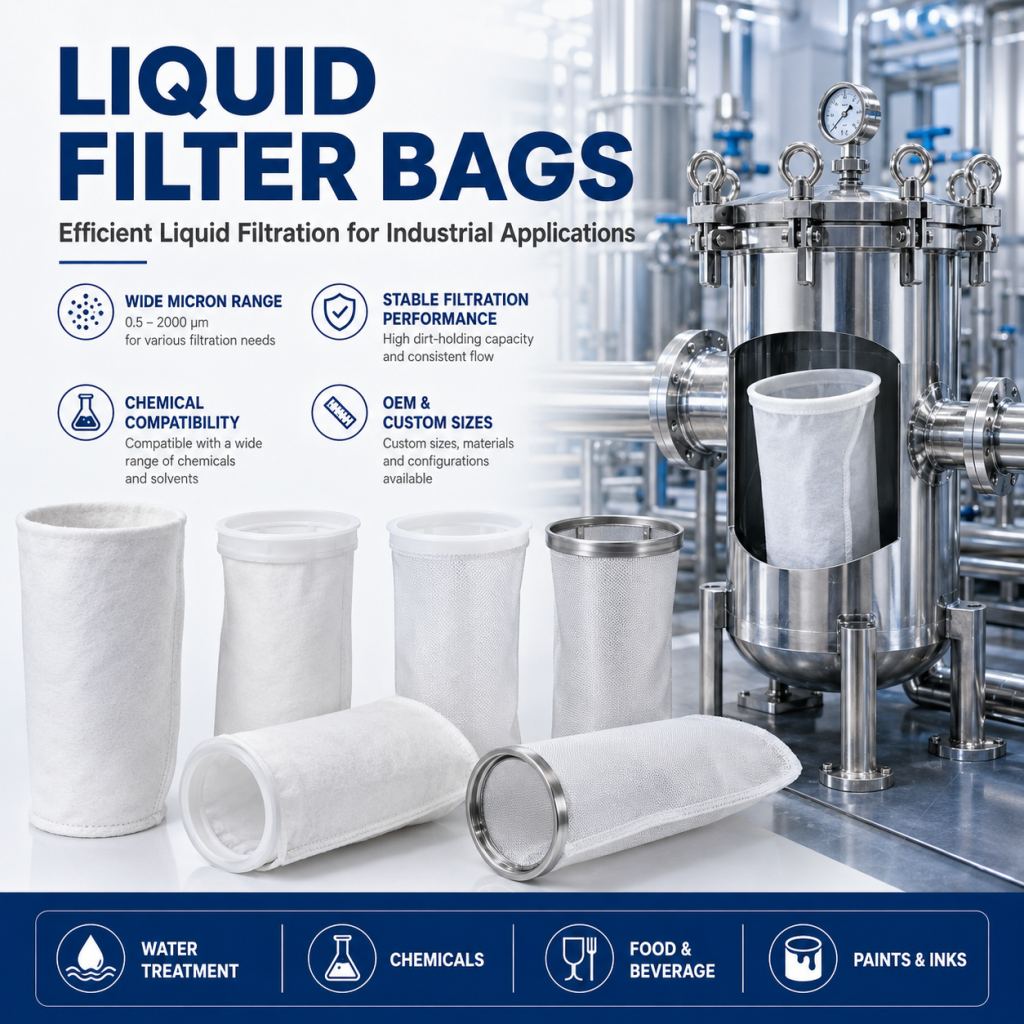
Polypropylene is often considered for chemical service, but compatibility must be checked for the whole bag and housing. Review PP filter bags, efficiency-test documentation and the housing seal-material guide before approving a trial.
Trial plan
- Establish baseline solids, flow, temperature, pressure, ΔP and change interval.
- Record the existing element and every upstream/downstream treatment stage.
- Install the approved bag with correct basket support and seal fit.
- Start and vent the housing under the approved site procedure.
- Log inlet/outlet pressure, flow and temperature at fixed intervals.
- Sample upstream and downstream using consistent locations and methods.
- Inspect retained material and the used bag for blinding, deformation, seam condition and bypass.
- Compare performance, labor, disposal and downstream protection—not only bag life.
Keep carbon fines separate from corrosion debris during diagnosis if possible. A post-carbon filter has a different purpose from a general solids prefilter. If oil or gas carryover is the main issue, a liquid/liquid or gas/liquid coalescer may be more appropriate than a bag filter. A complete process review should decide the stage.
Housing and safety data
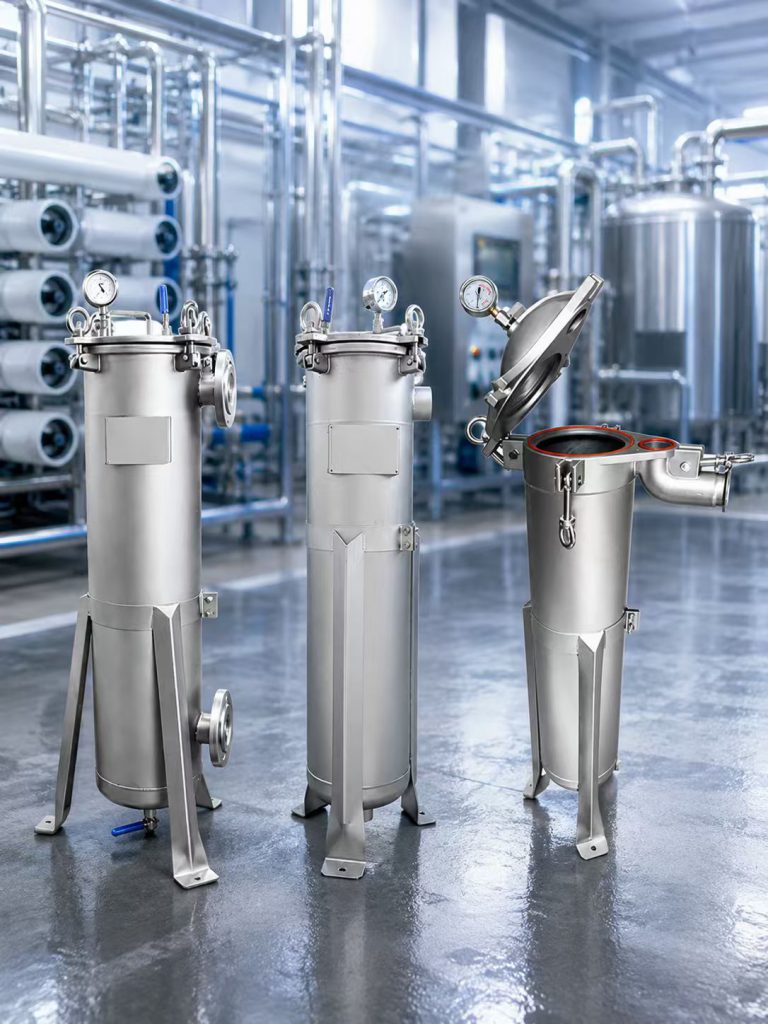
Amine and glycol systems can involve hazardous chemicals, temperature and pressure. Provide the applicable vessel code, design conditions, corrosion allowance, wetted metallurgy, connections, vent/drain arrangement, hazardous-area instrumentation and isolation philosophy. The housing supplier should not infer these from flow alone.
Use a single bag housing only when the validated area and change frequency support it; review a multi-bag housing for larger area. Continuous service may require duplex isolation or another arrangement that permits safe element change without compromising the process.
Request a process-specific trial quotation
Send Your Specification with the amine/glycol type, concentration, loop location, flow, temperature, pressures, viscosity, solids data, current treatment stages, housing dimensions and trial objective. Ask INCE to quote sample bags, fit details, documentation and a proposed monitoring sheet. Process performance must be verified in the actual plant.
FAQ
What micron bag should be used for amine filtration?
There is no universal value. Select a trial rating from solids data, process objective, existing stages, housing limits and documented efficiency.
Can bag filtration eliminate amine foaming?
Not necessarily. Solids can contribute to foaming and fouling, but the process owner should investigate all chemical and mechanical causes.
Should a carbon bed have a downstream filter?
Many systems use a post-carbon filtration stage to control carbon fines, but the element type and rating must be engineered for the specific system.
 WhatsApp