A paint or coating filter bag trial should show that unacceptable contamination is removed without causing unacceptable changes to the product. A micron label alone cannot demonstrate that balance. Define the defect, the desired formulation components and the transfer conditions before selecting trial bags.
This checklist is for batch transfer, filling preparation and other suitable industrial coating duties. It is not a claim that one bag grade is suitable for every paint, ink, resin or automotive coating process.
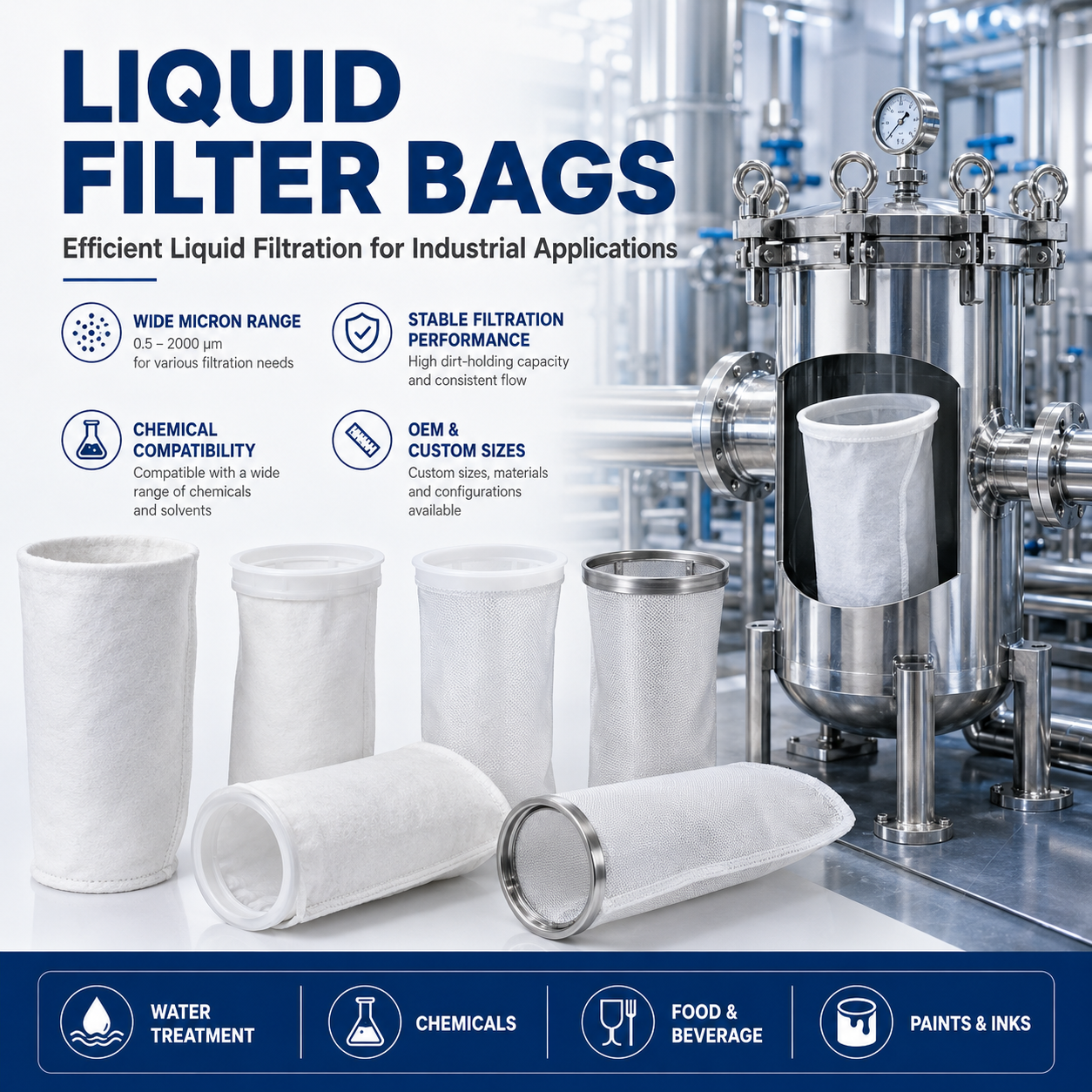
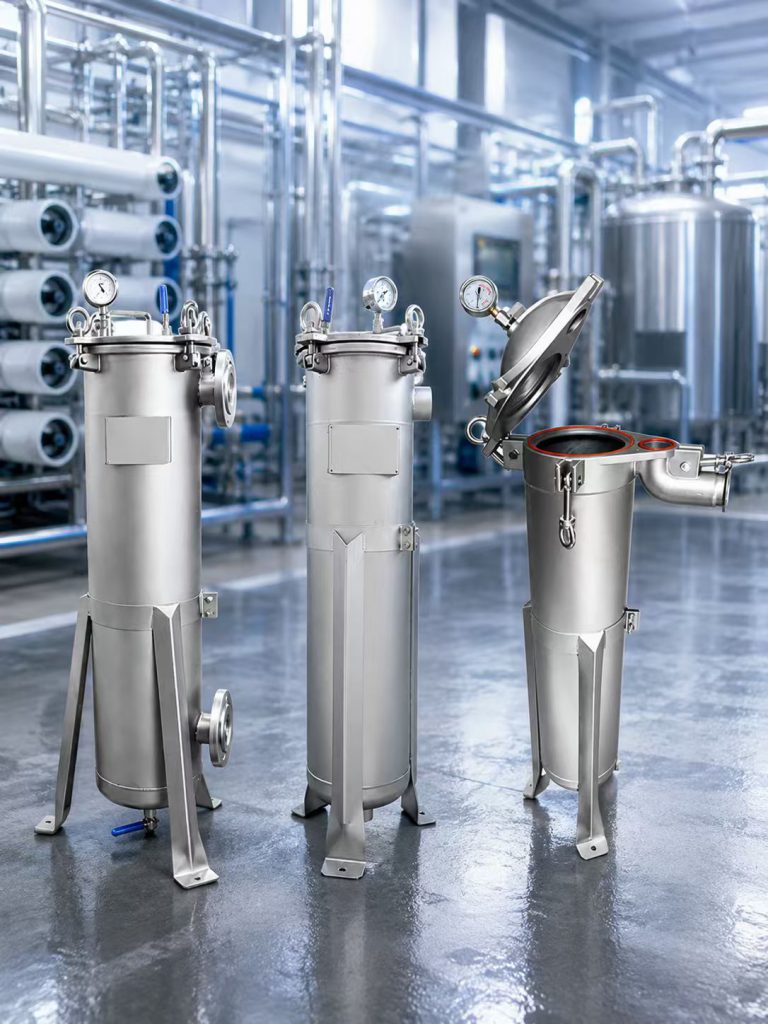
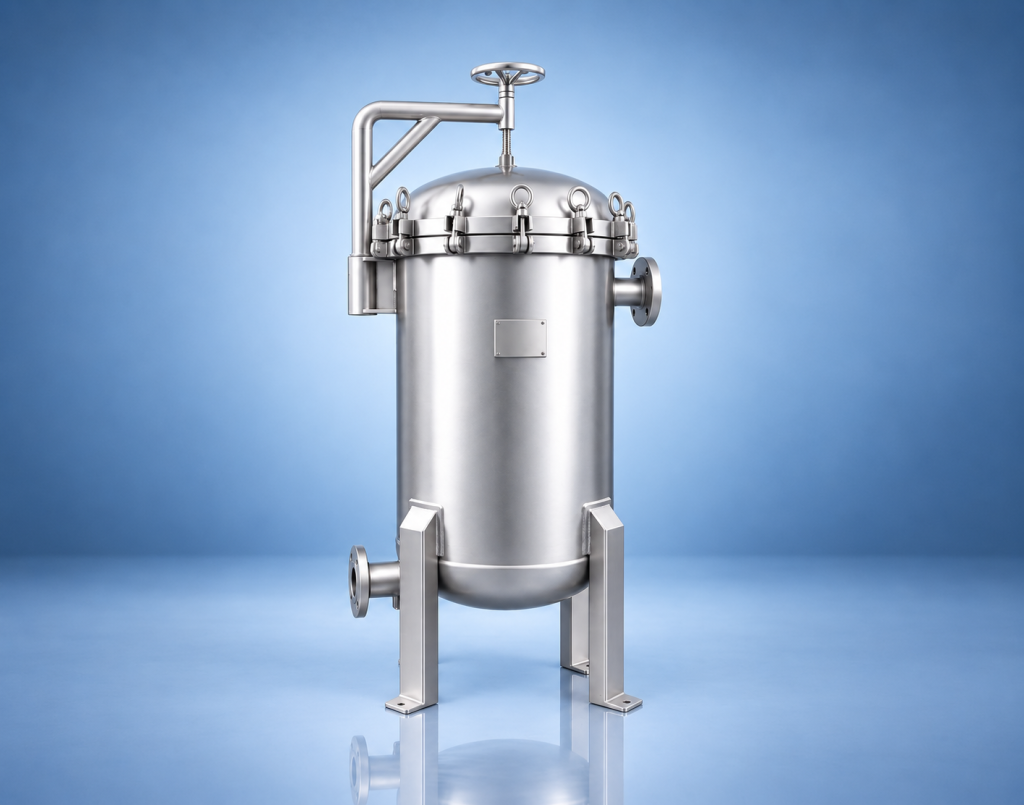
Representative liquid filter bag constructions. The final medium, collar and grade must be qualified for the particular coating recipe and transfer system.
Start with the defect and what must remain in the coating
Describe the observed problem: visible debris, dried skins, agglomerates or another identified contaminant. Record where it is detected and how its presence is judged. Also identify intentional solids or formulation components that the filtration step must preserve.
“Make it finer” is not a complete trial objective. Set acceptance criteria for the finished coating and its application, not just visual clarity in a container. A filter that retains more solids is not automatically the better choice if the process requires those solids to remain.
Keep the trial conditions comparable
| Trial variable | Record before starting | What it helps explain |
|---|---|---|
| Recipe and batch | Product identity, batch size and relevant composition | Whether two trials are meaningfully comparable |
| Liquid condition | Temperature and viscosity information | Differences in flow resistance |
| Transfer duty | Actual flow, pump conditions and filtration stage | Whether a trial represents production |
| Bag and housing | Media, rating basis, dimensions, seams, collar and basket | Whether fit or construction changed |
| Acceptance | Agreed defect test and product-quality checks | Whether the filtration objective was achieved |
Include the sampling method in the trial plan. Take and compare representative samples using the site’s quality procedure. Record the clean-system pressure-drop baseline and trend it during the same transfer duty. Do not infer a service-life improvement from trials run at different flow or liquid conditions.
Choose trial media for the actual problem
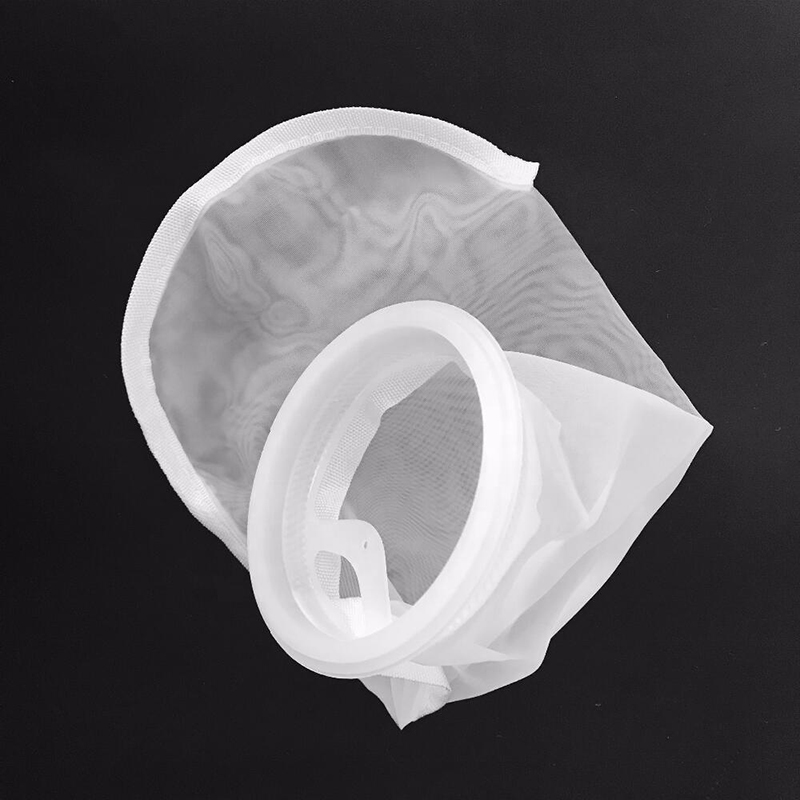
PP felt filter bags and nylon mesh filter bags offer different constructions. Ask for their proposed role in your application rather than assuming that equal nominal ratings mean identical performance.
If 75 µm and 250 µm are among the candidate openings, use the existing 75 micron nylon bag and 250 micron nylon bag specifications to start the discussion. Neither value is a general recommendation for coatings. Define what each trial is intended to retain, and assess the finished product.
Do not confuse particle removal with oil adsorption
Removing unwanted particles and reducing an unwanted oil contaminant are different requirements. Eaton’s automotive LOFCLEAR product information distinguishes models by their particular paint and varnish functions, including oil adsorption and applications where pigment removal is not an issue. That is evidence for application-specific selection, not proof that a standard felt bag adsorbs oil.
If silicone sensitivity, extractables, fiber release or another cleanliness requirement matters to your recipe, put it in the RFQ and request supporting information for the exact construction. A competitor’s silicone-free statement or retention test cannot be transferred to an INCE product. Confirm compatibility with all liquid components and cleaning agents.
Approve the sample before fixing the recurring-order specification
Compare trial candidates against the same acceptance criteria and suitable operating conditions. Review downstream defects, product-quality results, pressure-drop behavior, handling and fit. Document the approved media and rating basis as well as bag dimensions, collar and seam arrangement, so a later bulk quote does not silently substitute a different construction.
For coating duties involving hazardous liquids, the site must determine the appropriate equipment, handling controls and operating procedure. This article does not authorize solvent substitutions, changes to pressure equipment or an unreviewed trial on a live production line.
What a useful coating RFQ contains
- Coating type, relevant composition and unwanted contamination.
- Intentional solids and the product-quality acceptance criteria.
- Normal and maximum liquid temperature, viscosity and transfer flow.
- Existing bag model, nominal or absolute requirement and housing details.
- Trial quantities, expected recurring demand, packaging and destination.
- Any specifically required cleanliness or material documentation.
Planning a Paint or Coating Bag Trial?
Send the defect description, bag model, recipe conditions and acceptance criteria. INCE can review a sample specification and OEM quotation; final suitability requires your process approval.
Frequently Asked Questions
What micron rating should I use for paint transfer?
There is no universal grade. Identify unwanted contamination, desired formulation components and transfer conditions, then qualify candidates against product-quality criteria.
Does a standard PP felt filter bag remove oils from paint?
Do not assume oil adsorption from a material name. Specify that requirement separately and request evidence for the exact product.
What should I compare during a coating filter bag trial?
Compare downstream defect and product-quality results, flow and pressure-drop behavior, fit and handling under suitably comparable batch conditions.
Manufacturer example: Eaton LOFCLEAR 100 automotive product information, reviewed 16 October 2026. Its specialized construction and performance claims do not describe standard INCE bags. The trial checklist is procurement guidance, not a validated coating recipe.
 WhatsApp