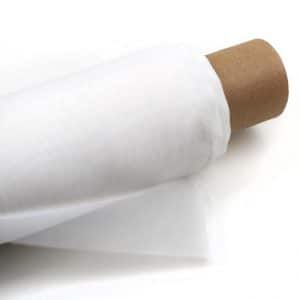
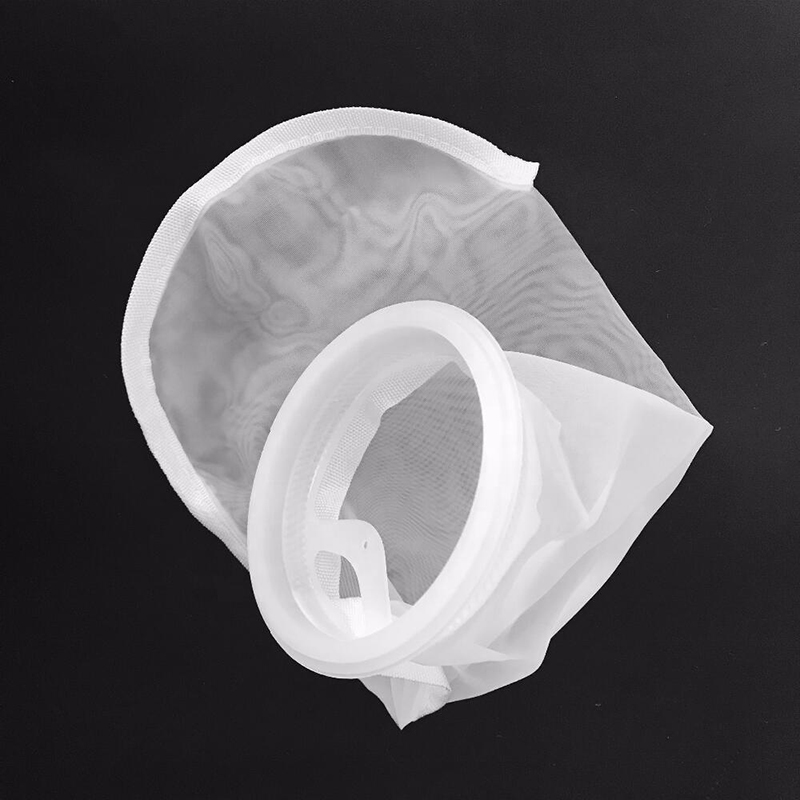
Choose nylon or polyester filter mesh by the complete service conditions, not the micron opening alone. Two fabrics with the same nominal aperture can differ in thread diameter, open area, stiffness and response to moisture. A roll sample also does not establish how a finished bag or supported insert will behave.
INCE filtration offers nylon filter mesh and polyester filter mesh. This guide provides a purchase comparison and a proposed trial plan; it does not assign universal chemical or temperature limits to either material.
Understand the material distinction
Nylon is polyamide, commonly identified by a grade such as PA6 or PA66. Polyester filtration mesh is commonly PET. State the polymer explicitly on the purchase order rather than relying on an abbreviation that could be confused with another plastic.
Sefar’s published sifting-fabric guidance describes greater moisture absorption for polyamide than polyester and lower humidity influence for the polyester fabrics discussed. Sefar also describes PETEX polyester mesh as dimensionally stable. These are useful material-selection pointers, not test results or dimensional tolerances for INCE mesh in your liquid.
Compare the complete fabric construction
| Decision factor | What to request for both candidates |
|---|---|
| Particle separation | Aperture, tolerance, weave and an agreed retention test where needed |
| Flow resistance | Thread diameter, open area, thickness and trial data at the intended duty |
| Dimensional behaviour | Dry reference condition and measurements after agreed liquid exposure |
| Chemical exposure | Full liquid composition, concentration, temperature and contact duration |
| Mechanical duty | Support arrangement, flexing, abrasion and installation tension |
| Cleaning | Cleaning chemical, concentration, temperature and expected number of cycles |
| Finished component | Edge, seam, collar, orientation and fit requirements |
For a plain square weave, aperture and thread diameter together influence open area. A material substitution that changes yarn diameter may therefore change the fabric geometry even when the aperture label stays the same. Use the open-area calculation guide to describe the geometry consistently.
A practical wet-service comparison trial
Agree the following procedure with the supplier and the team responsible for product acceptance. Select exposure conditions representative of the actual process; no fixed soak time suits every liquid or application.
- Identify the samples. Record supplier, polymer grade, aperture, thread diameter, finish and lot.
- Define the reference condition. Document temperature, humidity or conditioning method before taking dry measurements.
- Expose samples consistently. Use the intended liquid and agreed temperature and duration. Include the cleaning cycle where relevant.
- Measure the characteristics that matter. Record dimensions and any agreed aperture or mechanical checks using the same method before and after exposure.
- Test the finished shape. Fit a production-intent bag, disc or insert in the actual support. Evaluate flow and the required outlet quality.
- Set written acceptance limits. Approve the material only against those limits and record deviations.
This trial plan is a proposed purchasing method, not an accredited test standard. For a tight dimensional requirement, involve the relevant test laboratory or equipment engineer in choosing the method.
When should each material enter the shortlist?
When moisture-related dimensional change is important, include polyester in the comparison. When an established nylon component performs well, document its exact grade and construction before substituting another polymer. In both cases, chemical exposure and cleaning conditions can outweigh a general material preference.
Do not use a generic melting temperature or dry-air rating as a liquid-service operating limit. Obtain limits for the actual fabric, seams and supporting assembly under the intended conditions.
Request matched nylon and polyester samples
Send your filter mesh specification with liquid composition, temperature, target aperture, dimensions, support, flow, cleaning procedure and order quantity. Ask INCE filtration to identify any construction differences between the proposed samples before testing custom mesh components.
FAQ
Does equal mesh count mean equal opening?
No. Thread diameter and weave must also be specified.
Can a dry sample approve wet-service fit?
It can establish a dry reference, but wet-service fit should be checked under the agreed exposure and installation conditions.
Technical references
- Sefar: Take Care of Your Sieve, IAOM SEA presentation — material and humidity guidance for the sifting fabrics discussed.
- Sefar sifter and screener product overview — PETEX material description.
 WhatsApp