
Reusable nylon mesh filter bags can reduce consumable changes in suitable liquid-screening processes, but “washable” does not mean unlimited reuse. Before approving a cleaning procedure, industrial buyers should verify mesh opening, contaminant type, chemical compatibility, temperature, seam construction and filtration performance after cleaning.
This practical checklist is for purchasing teams and process engineers qualifying nylon mesh filter bag cleaning and reuse. For product sizes, mesh options and OEM construction, see Nylon Mesh Filter Bags.
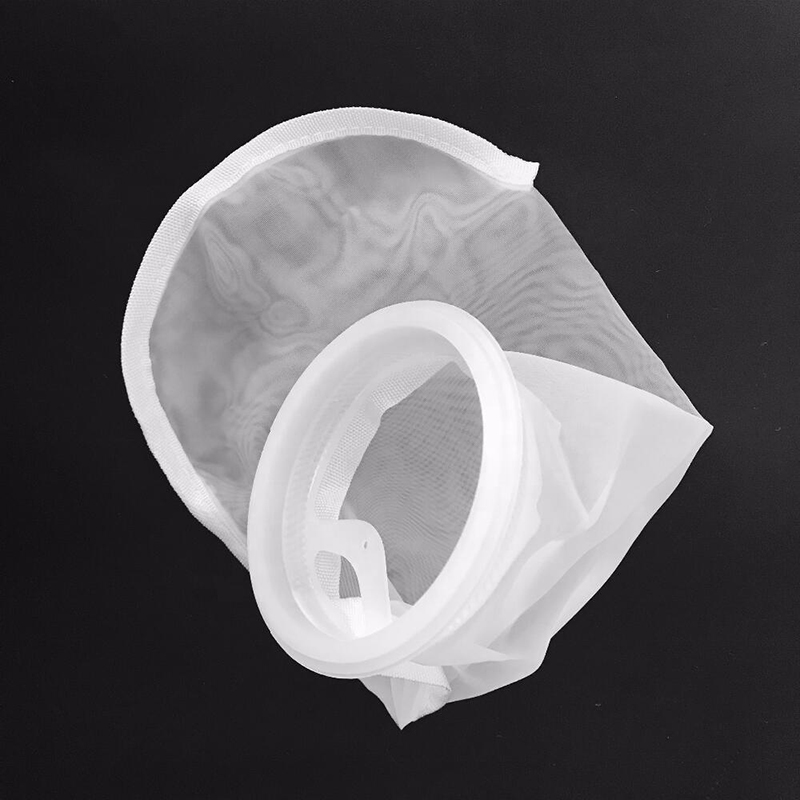
Why Nylon Mesh Bags May Be Reusable
Nylon monofilament mesh primarily retains particles on or near its woven surface, unlike depth-type felt media that can hold solids throughout its thickness. When captured material can be removed without damaging the mesh, a bag may be cleaned and returned to service. However, fouling by sticky resins, oils, gels or embedded solids may make cleaning impractical.
Cleaning Qualification: Six Checks Before Reuse
| Check | Question to Answer | Reject or Investigate If |
|---|---|---|
| Process liquid | What chemicals contact the nylon during filtration? | Compatibility is unknown or the mesh shows softening or swelling |
| Captured solids | Can particles be released without aggressive abrasion? | Deposits remain lodged or form a permanent film |
| Cleaning agent | Is the detergent or solvent compatible with the exact nylon grade? | The cleaning chemistry has not been approved |
| Cleaning temperature | Is the procedure within the supplier’s verified limits? | Heat causes shrinkage, distortion or damage |
| Construction | Are seams, ring and collar intact? | Loose stitching, broken welds, torn mesh or deformed ring |
| Performance | Does the cleaned bag still meet the process specification? | Leakage, abnormal differential pressure or unacceptable filtrate quality |
A Conservative Cleaning and Inspection Workflow
- Record the used bag. Note its mesh opening, size, batch, operating hours, fluid and changeout reason.
- Remove loose solids safely. Follow site procedures for the captured material and use methods that do not cut or abrade the mesh.
- Apply an approved cleaning method. Choose the cleaning medium only after confirming compatibility with nylon, seams and the closure.
- Rinse and inspect. Check for residual contamination, blocked openings, stretched mesh, seam failure and ring distortion.
- Trial the cleaned bag. Compare filtration results and differential-pressure behavior with the accepted reference, where practical.
- Document pass/fail. Retire the bag if it no longer meets the agreed cleanliness, dimensional or integrity criteria.
Do not assume that high-pressure jets, harsh solvents or elevated cleaning temperatures are universally safe. Cleaning instructions should be based on the actual mesh material and application.
When a New Bag Is Better Than Reuse
Replace the bag when there are visible tears, loose seams, distorted openings, chemical attack, unacceptable retained residue or a change in filtration performance. For critical cleanliness processes, validation requirements may rule out reuse even when the bag looks undamaged.
Reusable Nylon Mesh vs Disposable PP Felt
Nylon mesh bags are commonly considered for defined-opening surface screening and product recovery. Polypropylene felt filter bags use a depth structure and are often selected for fine particle removal and solids holding. These are different filtration mechanisms; a nylon bag should not be substituted for a PP felt bag on micron number alone.
What to Send in an OEM Reusable-Bag RFQ
- Mesh opening or existing mesh specification, including nominal/actual opening where known
- Bag size (#01, #02, #03, #04 or drawing-defined dimensions)
- Closure: plastic/metal ring, collar, drawstring or custom connection
- Seam and edge construction requirements
- Liquid, solids, operating temperature and chemical exposure
- Proposed cleaning agent, temperature and method
- Flow, operating differential pressure and changeout criterion
- Sample quantity, annual usage, OEM labeling and packing requirements
For a broad micron-selection starting point, use the Filter Bag Micron Size Chart. Final selection should be based on a process trial where performance is critical.
Request a Reusable Nylon Mesh Bag Quote
Send your existing bag photo or drawing, mesh opening, cleaning conditions and expected quantity. INCE filtration can review the specification for a matching bag or OEM configuration.
Frequently Asked Questions
Can every nylon mesh filter bag be washed and reused?
No. Reuse depends on the mesh condition, contaminants, cleaning chemistry, temperature, seam integrity and the cleanliness requirement. Qualify a cleaning procedure for each process.
Does washing restore the original micron rating?
Not automatically. Cleaning may remove surface deposits, but abrasion, deformation or damaged seams can change performance. Inspect and test before reuse.
How should a buyer specify a reusable nylon filter bag?
Send mesh opening, bag dimensions, closure style, liquid chemistry, temperature, flow, cleaning method, expected changeout criteria and quantity.
How many cleaning cycles will a nylon bag last?
There is no universal cycle count. Record condition and filtration results through a controlled trial, and replace bags that fail inspection or performance criteria.
 WhatsApp