
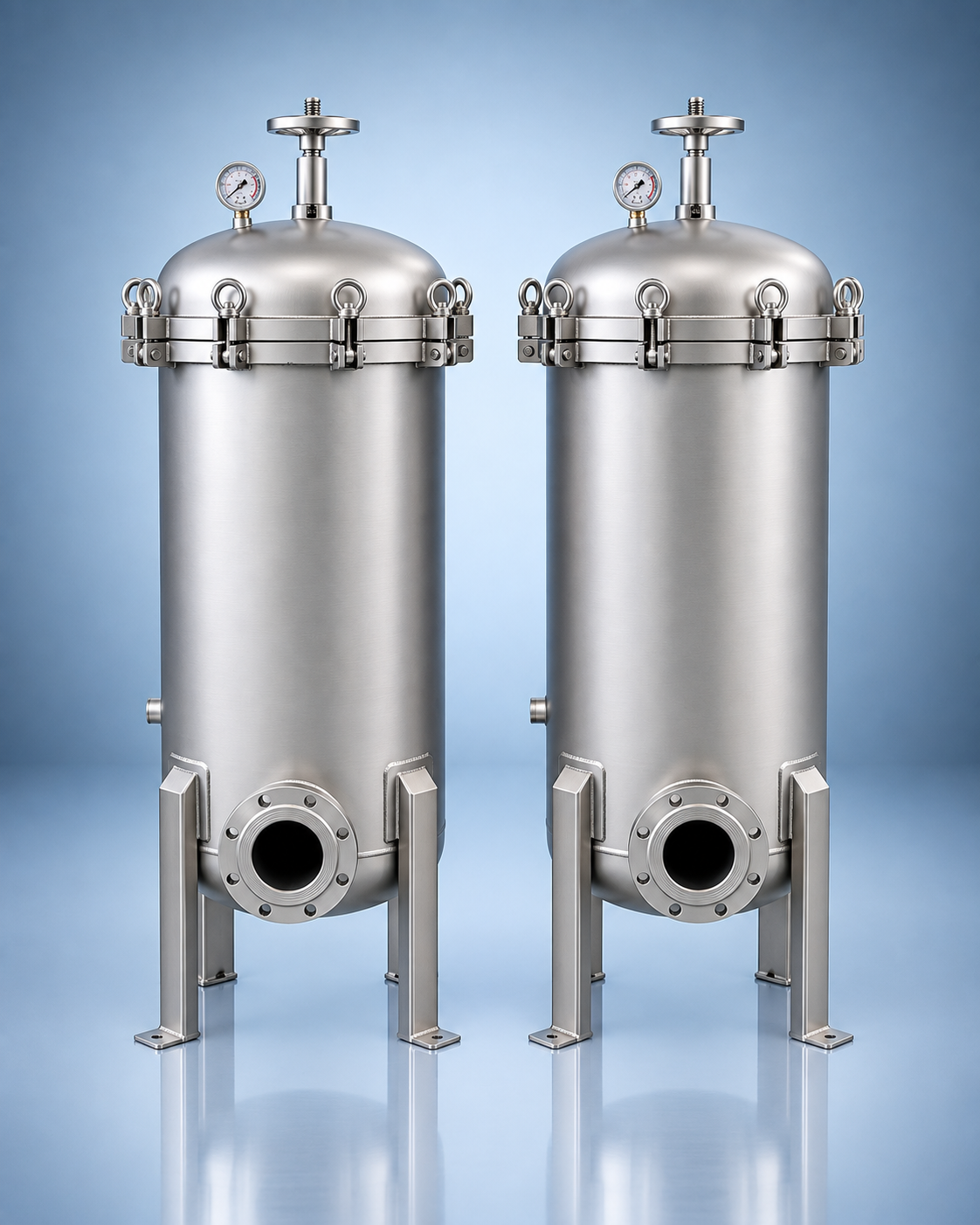
A clean pressure drop baseline is the pressure difference recorded with new, correctly installed cartridges at a documented operating condition. It provides a reference for later troubleshooting. A reading without flow and temperature is difficult to compare with another run.
Use this worksheet when commissioning an industrial high flow filter housing or qualifying replacement cartridges. It complements housing sizing by focusing on measured startup conditions rather than catalogue capacity.
Define the measurement boundary
For two pressure readings in the same units, calculate ΔP = P upstream − P downstream. Document exactly where the taps are located. Taps outside the housing may include losses from nearby piping or valves; they do not necessarily measure the cartridge media alone.
Illustrative calculation: 3.20 bar upstream minus 3.02 bar downstream gives 0.18 bar differential pressure. This is arithmetic only, not an INCE product specification, acceptance limit or change-out recommendation.
Use a commissioning log that another operator can repeat
| Record | Why it belongs in the baseline |
|---|---|
| Housing model and serial number | Identifies the vessel and connection arrangement |
| Cartridge code, quantity, length and lot | Defines the installed configuration |
| Liquid, concentration and temperature | Helps explain viscosity-related changes |
| Measured flow and units | Makes pressure comparisons meaningful |
| Upstream and downstream pressure | Preserves the original readings, not just their difference |
| Tap positions and instrument identification | Defines the measurement boundary and calibration record |
| Valve configuration and startup time | Helps distinguish process changes from cartridge loading |
| Outlet-quality result and sample point | Pairs hydraulic data with the actual filtration objective |
Establish the baseline under the approved startup procedure
Before operation, confirm the cartridge model, end connection, seal material and flow direction against the approved assembly documents. Follow the manufacturer’s procedure for filling, venting and bringing the system into service; this article does not prescribe a universal valve sequence.
Once the required flow and temperature are stable, record the pressures together with the other log fields. If the project requires measurements at several flow rates, agree those test points in advance and remain within all equipment limits. Keep the baseline record with the cartridge lot and commissioning documents.
Interpret high initial pressure drop carefully
Pall’s guidance on differential pressure explains that readings require flowing conditions and that higher viscosity at cold startup can increase pressure drop. Its discussion supports comparing operating conditions before treating a pressure increase as contaminant loading.
The following are investigation prompts, not diagnoses:
- Different temperature or liquid: compare with the intended duty and the supplier’s pressure-drop data.
- Changed flow: return to an agreed comparison point before judging two cartridge sets.
- Restricted flow path: review the approved valve configuration and measurement boundary.
- Unexpected cartridge configuration: verify quantity, model, interface and installation records.
- Questionable readings: check instrument range, zero, calibration and pressure-tap condition through the approved maintenance procedure.
Never exceed the cartridge or housing limits while investigating. Obtain the permitted operating envelope, alarm setting and change-out criterion for the exact assembly; they are separate from a clean baseline.
Use the same record for replacement trials
Compare replacements at the same flow, liquid and temperature, and evaluate outlet quality and service life as well as initial pressure drop. A lower initial reading alone does not demonstrate equivalent particle removal. Record how much acceptable product is processed before the agreed end-of-run condition.
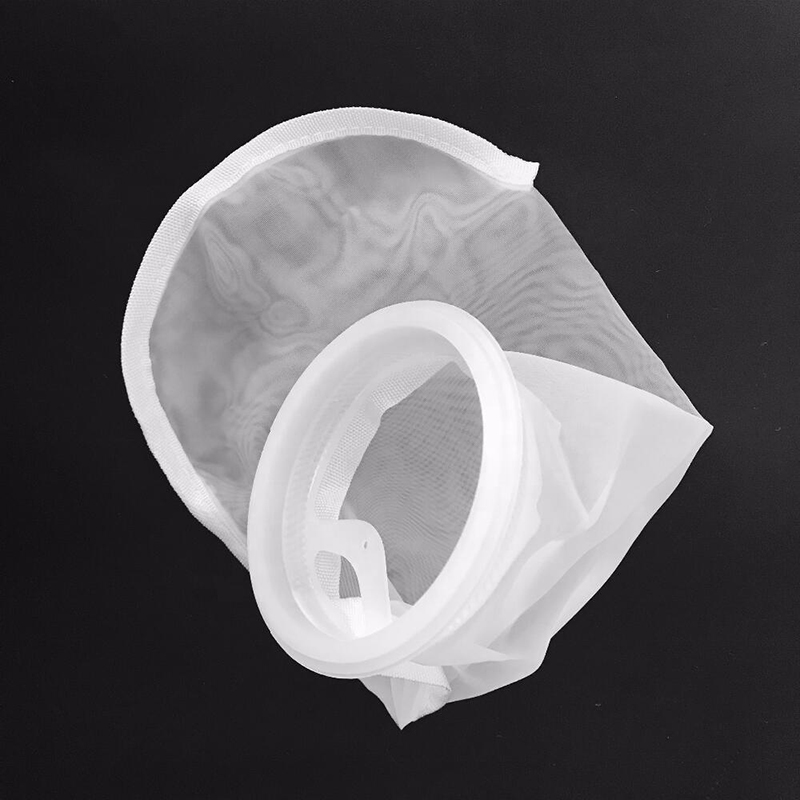
Request a high flow housing and cartridge review with your baseline log, required flow, liquid properties, cartridge photographs and current part number. INCE filtration can use those requirements when discussing a proposed configuration; final performance requires the agreed duty and validation.
FAQ
Is operating pressure the same as differential pressure?
No. Operating pressure describes pressure at a location; differential pressure describes the difference between defined locations.
Can a water pressure-drop curve be used directly for a viscous liquid?
Do not assume it can. Ask the supplier to assess the liquid and operating temperature.
Technical reference
Pall: Differential Pressure Indicators and Switches. Its general measurement principles are referenced here; Pall equipment settings are not INCE acceptance criteria.
 WhatsApp