

A machine tool coolant filter should be selected from the recirculation duty, contaminant load and maintenance plan—not from pump flow alone. First decide whether the system is an inline loop, a side-stream loop or a portable batch-cleaning cart. Then document the actual flow, coolant condition and result required at the machine.
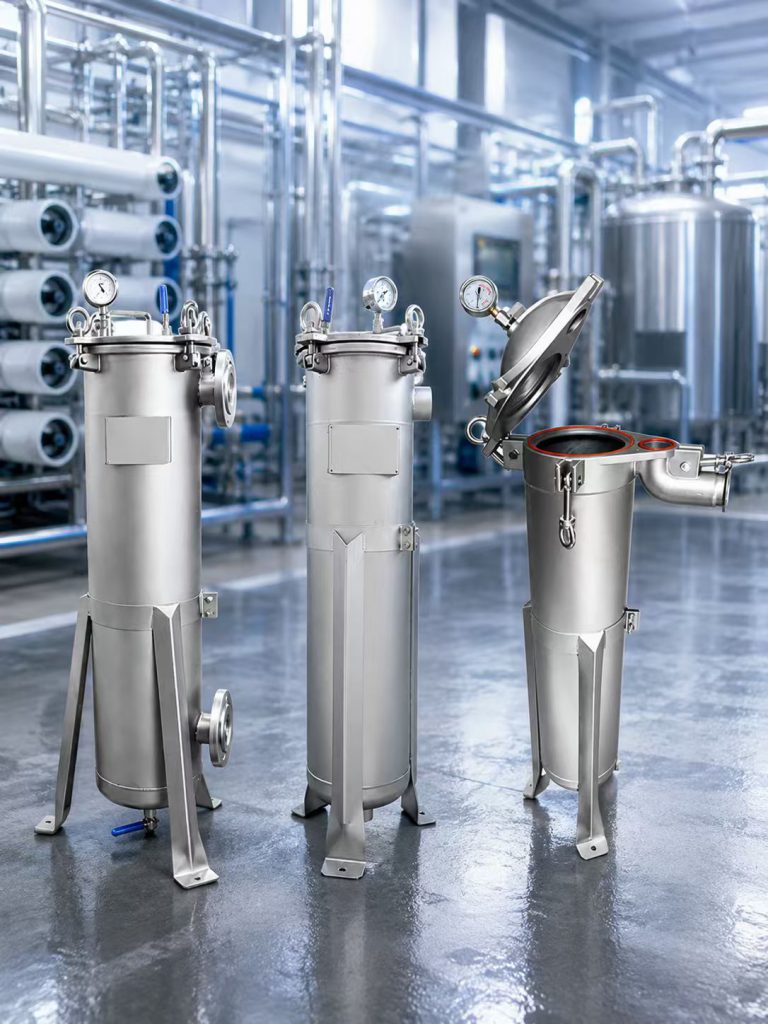
The image shows a representative Size 1/Size 2 industrial single-bag housing. It does not establish compatibility, capacity or a coolant-filtration result for a specific plant.
Define where the filter sits
An inline filter receives the process flow whenever the machine operates. A side-stream system treats part of a reservoir flow continuously or on a schedule. A mobile or fixed offline cart transfers coolant through a separate loop and returns it to the tank. These arrangements do not share the same sizing basis.
Eaton documents an application in which a portable pump and single-line bag filter processed used machining coolant outside the machine. Another Eaton case describes a mobile system that could operate inline or as a standalone unit. Those cases demonstrate workable arrangements, but their flow, savings and service life belong to those plants and must not be copied into a new quotation as guarantees.
Six sizing inputs to record
| Input | What to state | Why it changes the quote |
|---|---|---|
| Flow duty | Normal, minimum and maximum actual flow; continuous or batch | Sets hydraulic demand and whether one or several bags are practical |
| Coolant condition | Water-miscible emulsion or oil, concentration and operating temperature | Changes viscosity, seal selection and material review |
| Solids | Chip/fines description, approximate mass or volume per shift, and upset events | Drives bag loading and change-out frequency |
| Required result | Downstream cleanliness measurement, surface-finish issue or equipment protection target | Prevents an arbitrary micron choice |
| Pressure data | Available pump differential pressure and allowable clean/terminal filter differential pressure | Checks whether the loop can maintain flow as the bag loads |
| Maintenance | Allowed stop time, lifting access, drain/collection plan and disposal route | Influences housing number, arrangement and isolation requirements |
Do not turn turnover into a housing rating
For an offline batch, reservoir volume divided by planned processing time gives a target average recirculation rate. For example, a 3 m³ tank processed over two hours implies an average of 1.5 m³/h. That arithmetic is not a housing capacity rating. The selected pump and housing must still be checked at the actual coolant viscosity, element condition and piping loss.
For continuous service, use the measured or engineered loop flow. If plant data are uncertain, obtain a pump curve, pressure readings and a timed-volume or other suitable flow measurement. Quoting from a nameplate maximum can oversize the housing while leaving the real bottleneck unresolved.
Build a micron trial around the failure mode
Metal fines, grinding debris, fibers, tramp contamination and agglomerated material can behave differently. A 250 µm bag may be considered for coarse chip protection, while 75 µm or finer candidates may be evaluated for finer solids. These are trial bands, not universal recommendations. The required surface finish, nozzle size, downstream clearance and current particle evidence should determine the sequence.
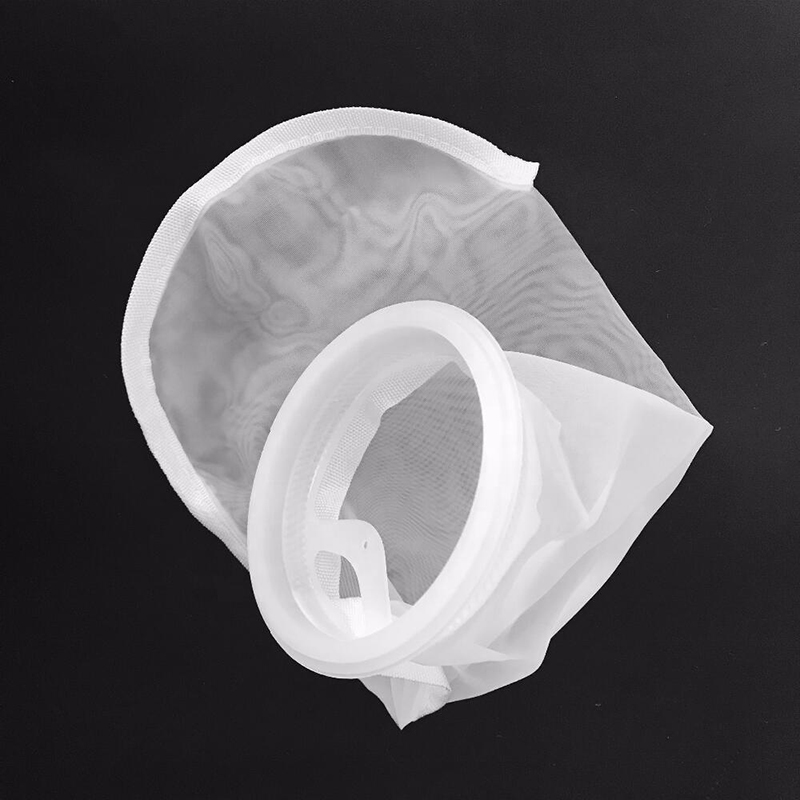
Record each trial candidate’s media type as well as micron value. A PP needle-felt bag and a mesh bag with the same number should not be treated as identical. Track clean and terminal differential pressure, run hours, fluid temperature, production state, bag mass or collected solids and the measured downstream result.
Choose single or multi-bag service deliberately
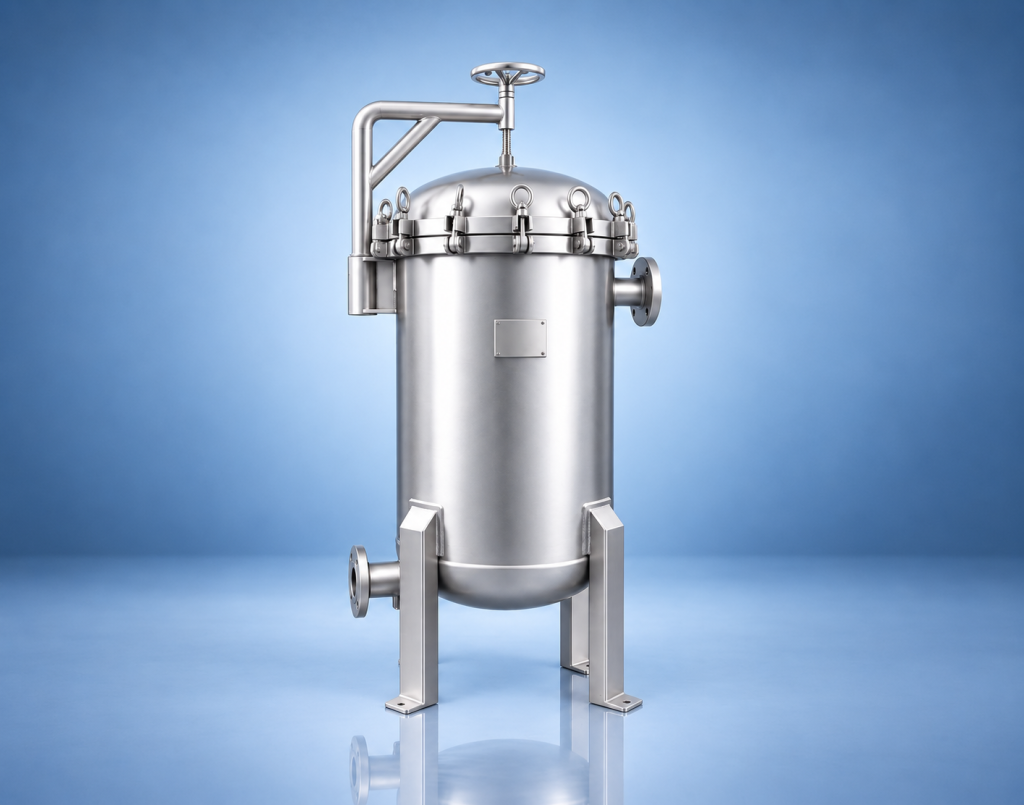
A single bag filter housing may suit a moderate-flow machine, a portable cart or a controlled trial. A multi bag filter housing may be evaluated when flow or solids loading makes one bag impractical. Bag count should follow hydraulic and solids-loading calculations; it is not selected from tank size alone.
If uninterrupted flow is required, state whether a duty/standby or duplex arrangement is expected. Also state the isolation, venting, draining and safe-access requirements. The supplier should return an arrangement drawing and the limits of supply for review by the plant engineer.
RFQ package
- Coolant name, supplier data sheet, concentration and operating temperature range.
- Reservoir volume, loop arrangement and required processing time or continuous flow.
- Pump curve or duty point, line size and available pressure.
- Current filter type, bag size, micron/media, service life and problem observed.
- Contaminant description and representative fluid/solids sample where permitted.
- Target trial result and how it will be measured.
- Housing material, connection standard, bag quantity, seals, drain/vent and instruments.
- Installation envelope, electrical or compressed-air limitations, quantity and delivery location.
Source notes
- Eaton coolant filtration case: documents a portable pump, bag housing and filter-bag arrangement for machining coolant.
- Eaton mobile coolant cleaning case: distinguishes inline and standalone use in one documented plant.
Send your specification for review
Send coolant data, reservoir volume, measured flow, temperature, solids evidence, current bag performance, pressure information, maintenance window and target result. We can review a single- or multi-bag housing trial around your actual duty.
Frequently asked questions
Can a machine coolant bag filter be sized from reservoir volume only?
No. Reservoir volume and turnover time provide an average recirculation target for a batch, but pump duty, viscosity, piping loss, solids loading and terminal differential pressure still control the equipment selection.
Should a coolant trial start with 75 or 250 micron?
There is no universal starting micron. Use the contaminant evidence and the downstream protection or quality target. Record media type as well as micron value, and compare measured trial results.
When is a multi-bag housing considered for machine coolant?
Evaluate a multi-bag housing when the required flow or solids load makes one bag impractical, or when the maintenance interval is unacceptable. Confirm bag count with hydraulic and loading calculations.

 WhatsApp