Edible oil filtration must be specified by process stage. Crude-oil filtration, polishing after refining steps and final filtration during loading have different contaminant loads and quality objectives. A buyer should not send only “food-grade bag, 5 micron” and expect a defensible quotation.
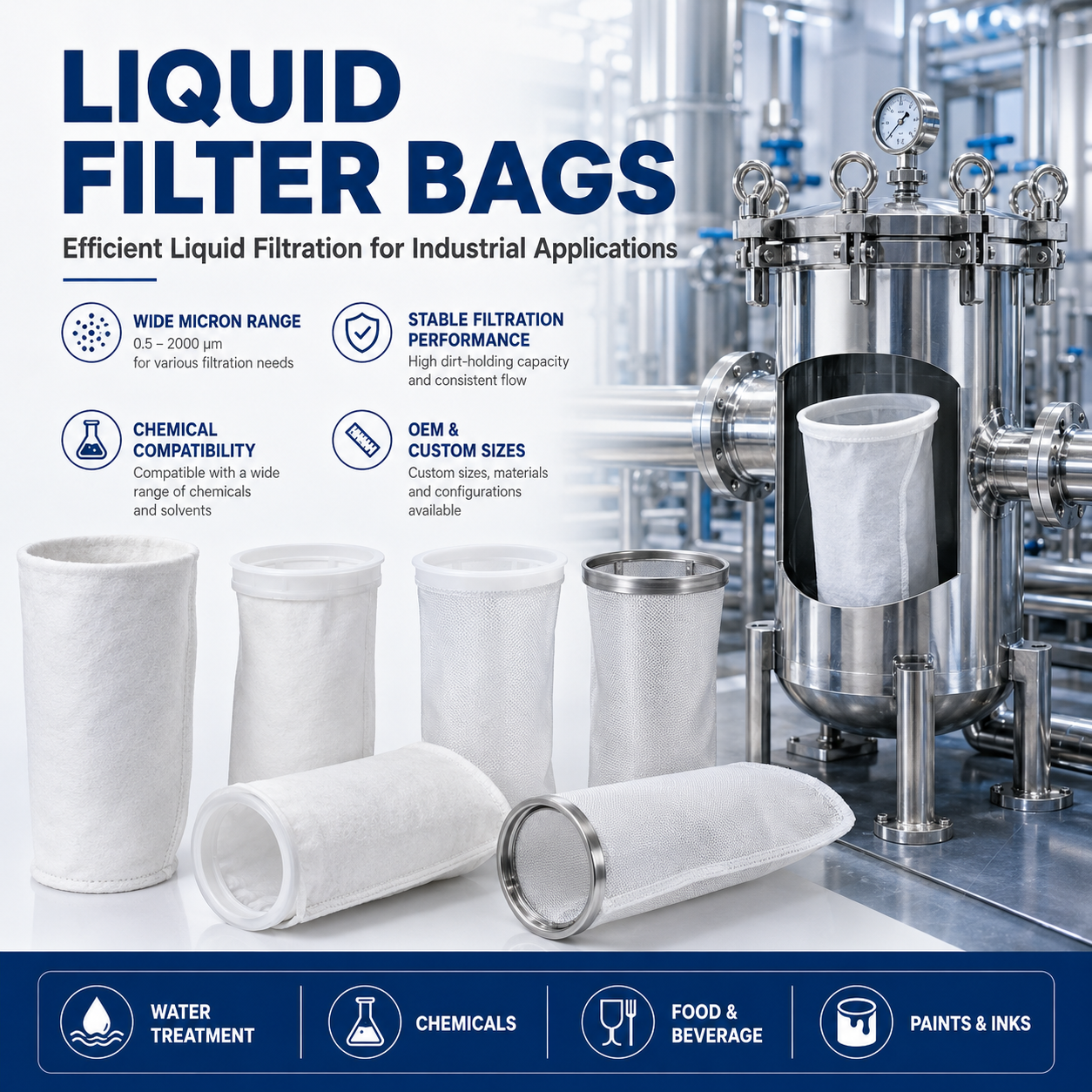
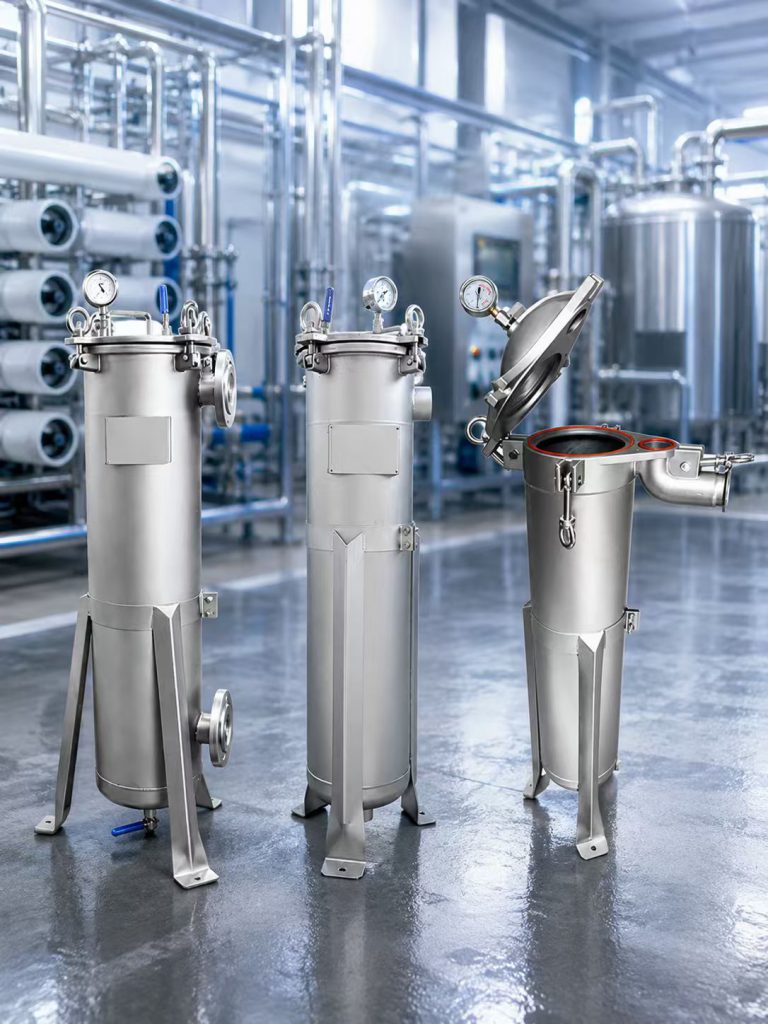
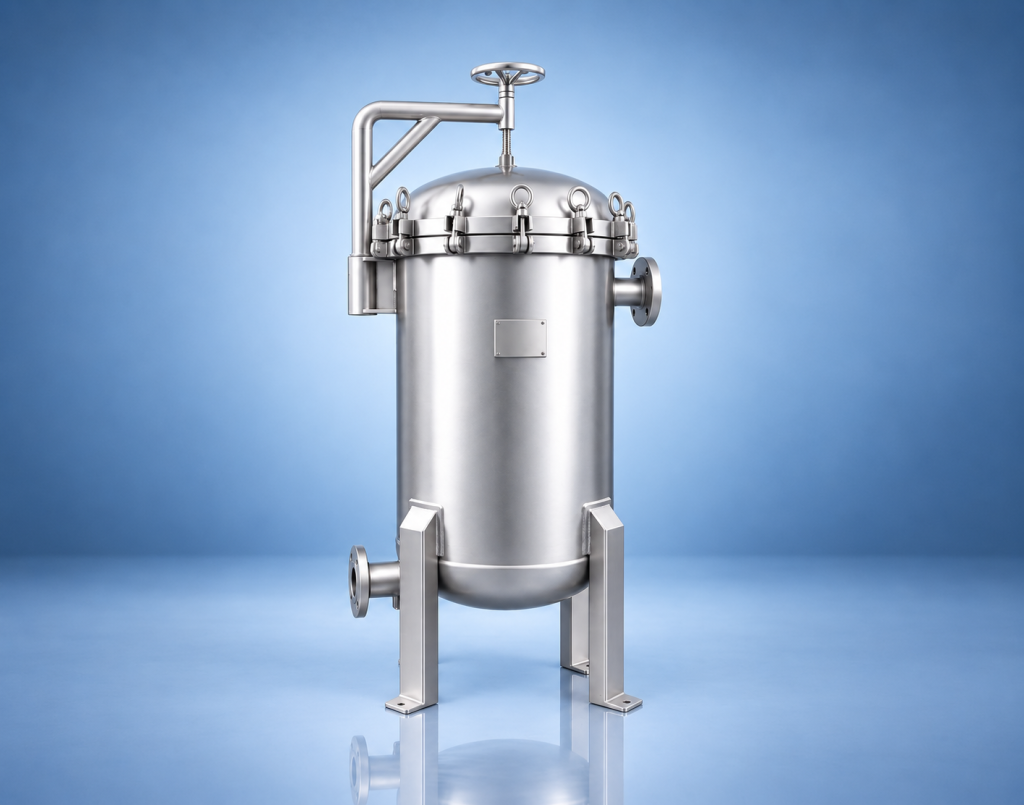
The image is representative of industrial liquid filter bags. It does not prove food-contact compliance, oil compatibility or a filtration result for a specific process.
Separate the three duties
| Stage | Typical purchasing question | Data to provide |
|---|---|---|
| Crude oil filtration | What coarse and process solids must be removed before downstream refining? | Oil source, temperature, solids type/loading, flow and upstream equipment |
| Polishing filtration | What residual impurity from prior steps must be reduced before storage? | Previous process step, current result, target measurement and batch/continuous duty |
| Final/loading filtration | What contamination risk is controlled during transfer to a truck or package? | Loading flow, line condition, final quality check and change-out/cleaning plan |
Eaton’s current edible-oil application brief presents its own polyester needle-felt bag and multi-bag housing combination. It gives 10–25 µm nominal as a manufacturer example for crude-oil filtration and 1–5 µm nominal for polishing/final duty. These are Eaton product recommendations for the described system, not universal setpoints and not evidence that an unrelated bag will deliver the same result.
Temperature and viscosity belong in the first line of the RFQ
Oil viscosity can change strongly with temperature, affecting clean pressure loss and practical flow through the media. State minimum, normal and maximum filtration temperature, not only storage temperature. Provide viscosity at a stated temperature when available and identify start-up or cold-oil cases.
A water-flow value should not be copied directly to edible oil. The supplier should size the housing and bag count using fluid properties, clean and terminal differential-pressure limits, media, solids load and piping conditions. If data are limited, plan a controlled trial rather than promising a production flow from a nominal housing size.
Select material from the full exposure
State the oil type, additives, cleaning chemicals, steam or hot-water exposure, and contact time. Polyester needle felt is one documented manufacturer choice for edible oil, but an actual polyester filter bag still needs model-specific temperature, construction and food-contact evidence. A PP filter bag should be evaluated only when the process temperature, chemistry and required documents support it.
Do not convert a general polymer statement into a compliance claim. The quotation should identify the exact media, surface finish, seam, collar or ring, gasket, housing wetted materials and the declarations supplied for that exact construction.
Food-contact evidence is project- and market-specific
Ask which destination market and customer standard apply. Define the required declaration, migration or extractables report, manufacturing controls, lot traceability, packaging and change-control notice. A material supplier’s statement is not automatically a declaration for the entire finished bag and housing assembly.
Cleanliness on delivery also matters. State individual bagging or protective packaging, label content, lot segregation, foreign-material controls and the procedure for storage and handling before installation.
Do not prescribe 75 or 250 micron without the stage
A 75 or 250 µm bag may be considered for a coarse upstream or recovery task where the contaminant and downstream target justify it. Those sizes should not be presented as replacements for the finer manufacturer examples used in polishing and loading. If staged filtration is proposed, define each stage, the solids it removes and the measured acceptance result.
Housing and operation data
- Required flow, batch volume and operating schedule.
- Oil type, temperature range, viscosity and density where available.
- Solids type, loading, particle evidence and upset conditions.
- Target result and test method for each process stage.
- Bag media, rating basis, size, collar, seam and surface finish.
- Single or multi-bag housing, material, surface finish, gaskets, connections and drain/vent.
- Clean/terminal differential pressure, pump data and change-out interval target.
- Cleaning method, allergen/changeover policy where applicable and waste route.
- Food-contact, traceability, inspection and documentation requirements.
A single-bag housing may suit a controlled trial or smaller transfer. Higher flow or solids duty may require several bags, but bag count must come from hydraulic and loading calculations rather than an assumed flow per bag.
Trial and acceptance plan
Record feed condition, temperature, flow, pressure loss, run time, bag mass or solids collected and the downstream quality result. Keep the oil lot and process stage clear. A short clean-oil trial can verify fit and initial hydraulics but cannot by itself prove service life under representative solids loading.
Source note
- Eaton Edible Oil Filtration application brief: manufacturer example separating crude, polishing and final filtration and listing the specific Eaton system used. Its ratings and compliance statements are not transferred to an INCE offer without model-specific evidence.
Send your specification for review
Send the oil and process stage, temperature/viscosity, solids data, required result, flow, pump and pressure limits, bag/housing preference, cleaning exposure, destination market and food-contact documents for a stage-specific quotation.
Frequently asked questions
Is 5 micron always correct for final edible oil filtration?
No. The required rating depends on the process stage, impurity, quality target, rating method and validated product. A manufacturer example is not a universal setpoint.
Can water flow data be used to size an edible oil bag housing?
Not directly. Use the oil viscosity at operating and start-up temperatures, actual flow, media pressure loss, solids loading, piping and allowable differential pressure.
What documents should be requested for food-contact filter bags?
Define the destination market and request model-specific declarations or test evidence, material and finished-construction identification, lot traceability, packaging, inspection and change-control requirements.
 WhatsApp