Flat End Cap
Flat end configuration for standard open or closed cartridge designs.

INCE filtration manufactures hydrophilic and hydrophobic PTFE pleated filter cartridges for aggressive chemicals, organic solvents, liquid filtration, air filtration and gas filtration. PTFE membrane provides strong resistance to acids, alkalis, heat and corrosion, while the reinforced pleated structure supports high retention efficiency, toughness and long service life.
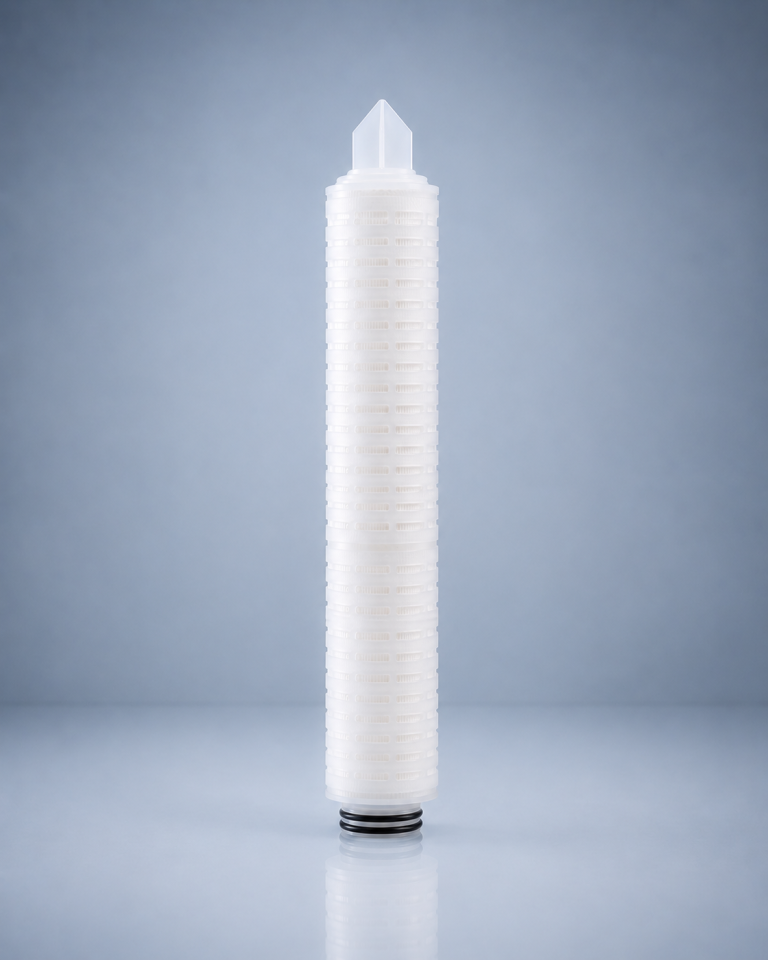
PTFE cartridges are selected for demanding filtration duties requiring chemical resistance, heat resistance and reliable fine retention.
Tolerates strong acids, strong alkalis and many organic solvents when the complete cartridge materials are compatible.
PTFE membrane offers strong resistance to elevated temperature and corrosive filtration environments.
Fine membrane grades provide high filtration efficiency, strong retention and stable process protection.
Support layers, center core and outer cage provide toughness and structural stability.
Durable membrane construction supports extended operation under compatible process conditions.
Hydrophilic PTFE is used mainly for liquids; hydrophobic PTFE is used mainly for air, gas and vent filtration.
Select hydrophilic or hydrophobic membrane treatment according to whether the process fluid is liquid, air or gas.
Designed mainly for liquid filtration. Modified PTFE media wets with compatible liquids while maintaining strong chemical resistance.
Designed mainly for air, gas and vent filtration. The water-repellent membrane supports gas passage while resisting liquid wetting.
Confirm fluid phase, chemical composition, temperature, pressure, required retention and wetting method before choosing the PTFE media type.
PTFE membrane media is combined with non-woven support layers, a polypropylene cage and a PP or 316L stainless steel center core.
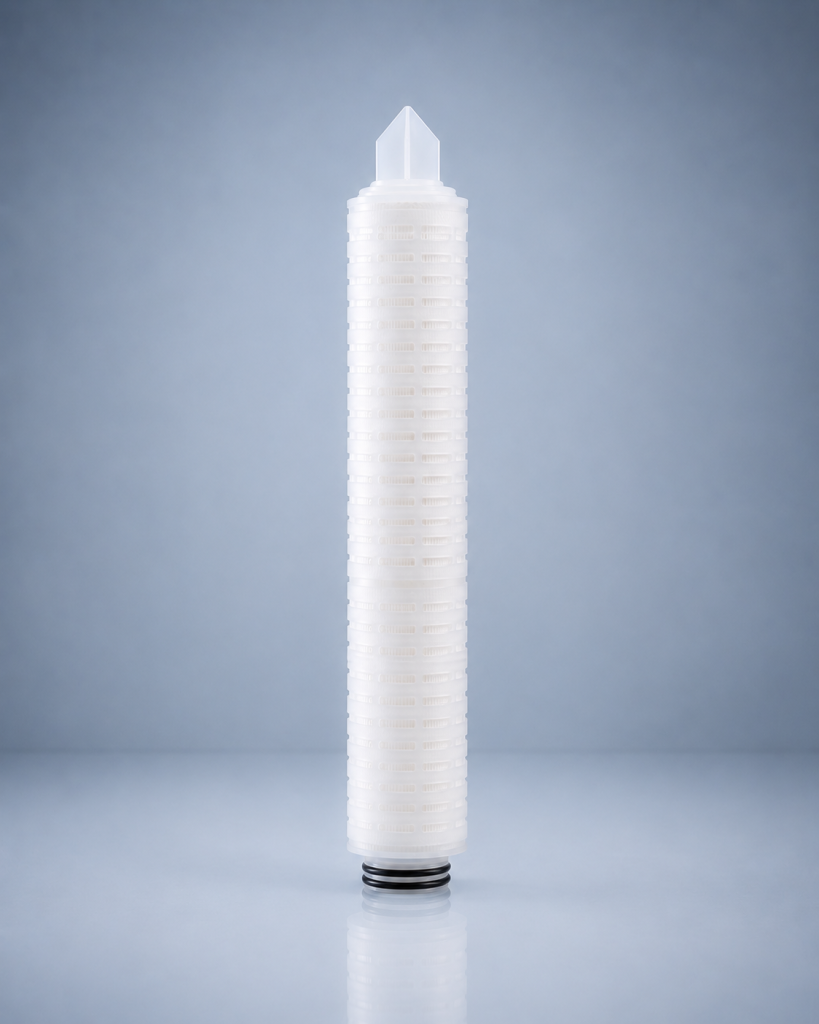
The filtration membrane is made from PTFE for chemical and thermal resistance.
Material configurations can be selected to comply with CFR 21 requirements where applicable.
Thermal welding supports cleaner construction and reduces adhesive-related contamination risk.
Select pore size according to retention requirement, gas or liquid flow, acceptable differential pressure and integrity-test target.
For demanding liquid, air or gas filtration where high retention is required.
For fine chemical filtration, water treatment, ink filtration and controlled gas filtration.
Lower pore sizes create greater pressure drop; coarser PTFE grades support higher gas or liquid flow.
Match length, outside diameter, inside diameter and interface dimensions to the existing filter housing.
Available from 10 to 70 inches. Lengths from 20 to 40 inches can be manufactured in one piece.
Reference outside diameters include 60, 64, 68, 84 and 131 mm.
The reference inside diameter is 28 mm. Custom dimensions are available.
Each card includes a reserved image position for the corresponding PTFE cartridge end cap photo.
Flat end configuration for standard open or closed cartridge designs.
Double O-ring 222 adapter for secure insertion and sealing.
Extended 222 adapter for housings requiring a taller connection profile.
Bayonet-style 226 adapter for fast locking in compatible housings.
215 interface for selected process and OEM filter housings.
Threaded adapter for screw-in cartridge installation.
Triangle fin design for positioning and stabilization.
Semi-winged fin for cartridge alignment in compatible housings.
Flat peak cover for selected closed-end support configurations.
The following values are organized from the supplied PTFE cartridge product sheet.
| Category | Specification Item | Available Data |
|---|---|---|
| Product Size | Filtration Accuracy | 0.1 µm, 0.22 µm, 0.45 µm, 1 µm |
| Length | 10–70 inches; 20–40 inches can be manufactured in one piece | |
| Diameter | OD 60 mm, 64 mm, 68 mm, 84 mm, 131 mm (±1 mm); ID 28 mm | |
| End Cap Type | Port / Interface Options | 215, 222, High 222, 226, Triangle Tip, Semi-Winged Tip, Flat Peak Cover, Flat and custom interfaces |
| Operating Conditions | Normal Operating Temperature | Liquid: 90°C; Gas: 100°C |
| Maximum Temperature / ΔP | Liquid: 80°C, ΔP ≤ 0.30 MPa; Gas: 100°C, ΔP ≤ 0.20 MPa | |
| Maximum Differential Pressure | At 25°C, ΔP ≤ 0.55 MPa | |
| Note | Hot Water / Steam Sterilization | Stainless steel insert option is required for cartridges intended for hot water sanitization or steam sterilization. |
The supplied data includes gas-flow, water-flow and air-diffusion integrity references for PTFE membrane cartridges.
Reference: 30 psig system pressure at 65°F (18°C). Finer PTFE grades create higher differential pressure.
Reference: below 10 psig, vented to atmosphere. Used as a comparative gas-flow guide.
Typical water-flow reference per 10-inch cartridge length for wetted PTFE membrane.
| Pore Size | Reference Air Diffusion Rate |
|---|---|
| 0.1 µm | <50 cc/min at 18 psig (1.2 bar) |
| 0.2 µm | <20 cc/min at 12 psig (0.8 bar) |
| 0.45 µm | <15 cc/min at 5 psig (0.34 bar) |
| 1.0 µm | <15 cc/min at 3 psig (0.2 bar) |
Integrity reference per 10-inch length with membrane wetted by 60/40 IPA/water, as shown in the supplied sheet.
Hydrophilic and hydrophobic PTFE cartridges cover liquid, air, gas, solvent and aggressive chemical filtration duties.
Fine liquid filtration, gas filtration and venting in compatible pharmaceutical processes.
Compatible process liquid, air and gas filtration where PTFE is suitable.
Strong acids, alkalis, solvents and aggressive chemical filtration.
Fine filtration of compatible chemicals and process gases.
Hydrophilic PTFE liquid filtration for selected high-purity water duties.
Fine particle removal from compatible inks and solvent-based liquids.
Hydrophobic PTFE for sterile gas, tank venting and compressed-air filtration.
Custom PTFE cartridges for housings, skids, vent filters and process systems.
INCE filtration supports custom membrane treatment, pore size, length, diameter, end cap, gasket, core and sterilization configuration.
Confirm whether the cartridge is for liquid, air, gas, venting or solvent filtration.
Choose hydrophilic or hydrophobic PTFE and the required 0.1–1 µm rating.
Review chemicals, temperature, pressure, gasket, end cap and sterilization method.
Support sample approval, integrity data, OEM labels and bulk export supply.
Send your gas or liquid application, chemical composition, pore size, size, end cap photo, pressure and temperature.
Common questions about PTFE membrane cartridge selection.
Hydrophilic PTFE is used mainly for liquids. Hydrophobic PTFE resists water wetting and is used mainly for air, gas and vent filtration.
Available PTFE grades include 0.1, 0.22, 0.45 and 1 µm.
PTFE is compatible with many strong acids, alkalis and organic solvents, but the complete cartridge materials must be checked against the actual process.
Yes. Air-diffusion or other integrity testing can be discussed according to pore size, membrane wetting method and customer protocol.
Please provide media type, micron rating, length, OD, ID, end cap, gasket, chemical composition, temperature, pressure, flow rate and quantity.
Send the model, size, material, micron rating and operating requirements. The current product page is included automatically with your inquiry.
The choice between hydrophilic and hydrophobic PTFE starts with the actual liquid or gas duty and the manufacturer's wetting requirements. Keep liquid filtration and vent service distinct, even when both use a PTFE medium. A vent element should not be selected using a liquid pressure-drop assumption.
Include the support materials, seals and cleaning exposure in the review. Chemical resistance attributed to the membrane is not proof that every component in the assembled cartridge is compatible. Ask how the offered construction is prepared, installed and assessed for the specific process instead of assuming that another PTFE element behaves the same way.
The inquiry needs to distinguish the requested configuration from an established performance claim.
An inquiry headed “PTFE pleated filter cartridge” should identify the actual media grade and supporting materials. Ask the supplier to state what is offered and what still needs confirmation; the description alone is not approval.
An inquiry headed “PTFE membrane filter cartridge” should identify the actual media grade and supporting materials. Ask the supplier to state what is offered and what still needs confirmation; the description alone is not approval.
An inquiry headed “PTFE filter cartridge manufacturer” should identify the actual media grade and supporting materials. Ask the supplier to state what is offered and what still needs confirmation; the description alone is not approval.
An inquiry headed “PTFE membrane filter cartridge supplier” should identify the actual media grade and supporting materials. Ask the supplier to state what is offered and what still needs confirmation; the description alone is not approval.
An inquiry headed “hydrophilic PTFE filter cartridge” should identify the actual media grade and supporting materials. Ask the supplier to state what is offered and what still needs confirmation; the description alone is not approval.
An inquiry headed “hydrophilic PTFE membrane cartridge” should identify the actual media grade and supporting materials. Ask the supplier to state what is offered and what still needs confirmation; the description alone is not approval.
An inquiry headed “hydrophobic PTFE filter cartridge” should identify the actual media grade and supporting materials. Ask the supplier to state what is offered and what still needs confirmation; the description alone is not approval.
An inquiry headed “PTFE vent filter cartridge” should identify the actual media grade and supporting materials. Ask the supplier to state what is offered and what still needs confirmation; the description alone is not approval.
Use a drawing and an exposure record to close the interfaces and materials questions.
For “PTFE pleated filter cartridge”, compare the production liquid, cleaning liquid and proposed seal before accepting an apparent match. Record any unresolved point on the drawing or materials review instead of leaving it as an installation assumption.
For “PTFE membrane filter cartridge”, compare the production liquid, cleaning liquid and proposed seal before accepting an apparent match. Record any unresolved point on the drawing or materials review instead of leaving it as an installation assumption.
For “PTFE filter cartridge manufacturer”, compare the production liquid, cleaning liquid and proposed seal before accepting an apparent match. Record any unresolved point on the drawing or materials review instead of leaving it as an installation assumption.
For “PTFE membrane filter cartridge supplier”, compare the production liquid, cleaning liquid and proposed seal before accepting an apparent match. Record any unresolved point on the drawing or materials review instead of leaving it as an installation assumption.
For “hydrophilic PTFE filter cartridge”, compare the production liquid, cleaning liquid and proposed seal before accepting an apparent match. Record any unresolved point on the drawing or materials review instead of leaving it as an installation assumption.
For “hydrophilic PTFE membrane cartridge”, compare the production liquid, cleaning liquid and proposed seal before accepting an apparent match. Record any unresolved point on the drawing or materials review instead of leaving it as an installation assumption.
For “hydrophobic PTFE filter cartridge”, compare the production liquid, cleaning liquid and proposed seal before accepting an apparent match. Record any unresolved point on the drawing or materials review instead of leaving it as an installation assumption.
For “PTFE vent filter cartridge”, compare the production liquid, cleaning liquid and proposed seal before accepting an apparent match. Record any unresolved point on the drawing or materials review instead of leaving it as an installation assumption.
Agree what the trial must demonstrate before treating a sample as an approved production element.
Evaluate “PTFE pleated filter cartridge” using retention and compatibility evidence for the offered element. Keep the operating conditions and end-of-run trigger with the result so another reviewer can understand what the evidence actually establishes.
Evaluate “PTFE membrane filter cartridge” using retention and compatibility evidence for the offered element. Keep the operating conditions and end-of-run trigger with the result so another reviewer can understand what the evidence actually establishes.
Evaluate “PTFE filter cartridge manufacturer” using retention and compatibility evidence for the offered element. Keep the operating conditions and end-of-run trigger with the result so another reviewer can understand what the evidence actually establishes.
Evaluate “PTFE membrane filter cartridge supplier” using retention and compatibility evidence for the offered element. Keep the operating conditions and end-of-run trigger with the result so another reviewer can understand what the evidence actually establishes.
Evaluate “hydrophilic PTFE filter cartridge” using retention and compatibility evidence for the offered element. Keep the operating conditions and end-of-run trigger with the result so another reviewer can understand what the evidence actually establishes.
Evaluate “hydrophilic PTFE membrane cartridge” using retention and compatibility evidence for the offered element. Keep the operating conditions and end-of-run trigger with the result so another reviewer can understand what the evidence actually establishes.
Evaluate “hydrophobic PTFE filter cartridge” using retention and compatibility evidence for the offered element. Keep the operating conditions and end-of-run trigger with the result so another reviewer can understand what the evidence actually establishes.
Evaluate “PTFE vent filter cartridge” using retention and compatibility evidence for the offered element. Keep the operating conditions and end-of-run trigger with the result so another reviewer can understand what the evidence actually establishes.
Keep the technical scope attached to the quantity, packing and delivery request.
When requesting “PTFE pleated filter cartridge”, ask for the specific construction and documents included. Compare offers against the same requirements and list exceptions explicitly, including any item excluded from the quoted scope.
When requesting “PTFE membrane filter cartridge”, ask for the specific construction and documents included. Compare offers against the same requirements and list exceptions explicitly, including any item excluded from the quoted scope.
When requesting “PTFE filter cartridge manufacturer”, ask for the specific construction and documents included. Compare offers against the same requirements and list exceptions explicitly, including any item excluded from the quoted scope.
When requesting “PTFE membrane filter cartridge supplier”, ask for the specific construction and documents included. Compare offers against the same requirements and list exceptions explicitly, including any item excluded from the quoted scope.
When requesting “hydrophilic PTFE filter cartridge”, ask for the specific construction and documents included. Compare offers against the same requirements and list exceptions explicitly, including any item excluded from the quoted scope.
When requesting “hydrophilic PTFE membrane cartridge”, ask for the specific construction and documents included. Compare offers against the same requirements and list exceptions explicitly, including any item excluded from the quoted scope.
When requesting “hydrophobic PTFE filter cartridge”, ask for the specific construction and documents included. Compare offers against the same requirements and list exceptions explicitly, including any item excluded from the quoted scope.
When requesting “PTFE vent filter cartridge”, ask for the specific construction and documents included. Compare offers against the same requirements and list exceptions explicitly, including any item excluded from the quoted scope.
Retain the accepted reference and identify changes that need another review.
Before approving “PTFE pleated filter cartridge”, retain the approved materials list and exposure conditions. A later change should be checked against that record rather than accepted because the description or outside appearance seems similar.
Before approving “PTFE membrane filter cartridge”, retain the approved materials list and exposure conditions. A later change should be checked against that record rather than accepted because the description or outside appearance seems similar.
Before approving “PTFE filter cartridge manufacturer”, retain the approved materials list and exposure conditions. A later change should be checked against that record rather than accepted because the description or outside appearance seems similar.
Before approving “PTFE membrane filter cartridge supplier”, retain the approved materials list and exposure conditions. A later change should be checked against that record rather than accepted because the description or outside appearance seems similar.
Before approving “hydrophilic PTFE filter cartridge”, retain the approved materials list and exposure conditions. A later change should be checked against that record rather than accepted because the description or outside appearance seems similar.
Before approving “hydrophilic PTFE membrane cartridge”, retain the approved materials list and exposure conditions. A later change should be checked against that record rather than accepted because the description or outside appearance seems similar.
Before approving “hydrophobic PTFE filter cartridge”, retain the approved materials list and exposure conditions. A later change should be checked against that record rather than accepted because the description or outside appearance seems similar.
Before approving “PTFE vent filter cartridge”, retain the approved materials list and exposure conditions. A later change should be checked against that record rather than accepted because the description or outside appearance seems similar.
A clean element test answers only part of the selection question. Once contaminants accumulate, resistance and sometimes filtrate quality change. Record the amount of accepted product processed before the agreed changeout trigger is reached. State whether that trigger is a pressure difference, a quality limit, a batch change or another defined event. This makes the operating interval interpretable instead of reducing the result to a claim that the filter lasted several days.
Keep the comparison at the actual liquid conditions. A warmer liquid or a lower flow can make one run appear easier than another. Record the temperature and viscosity basis where relevant, and identify differences in the feed. If conditions cannot be matched, explain the limitation rather than treating the results as a direct ranking of two products.
The element needs the intended support, seating and seal arrangement. Inspect the contact surfaces and use the supplied assembly procedure. Do not assume that a cartridge is correctly installed just because the closure can be fastened. Keep the outlet and clean-side surfaces protected while the housing is open, and make the installed element reference part of the service record.
If particles remain downstream, investigate more than the media label. Consider bypass, a damaged or misplaced seal, installation contamination and changes in the upstream liquid. Preserve the removed element and useful observations for the review. Replacing the cartridge with a finer grade can be an expensive distraction if the real problem is an interface or operating error.
Give suppliers the same drawing revision and process brief. Request the proposed material construction, end connection, seal, retention description and any documents needed by the project. Ask which items are included and which remain to be confirmed. Price, availability, MOQ and delivery are commercial terms for the actual offered configuration; none should be assumed from a general product description.
Keep the approved element and the accepted conditions together after purchase. A change in formulation, cleaning chemistry, operating temperature or housing arrangement may require another review. Having the original basis makes that decision easier and gives maintenance buyers a reliable reference for repeat orders. It also prevents a series of apparently minor substitutions from changing the assembly without anyone reviewing the complete result.
Put a date and drawing revision on the inquiry so technical replies can be tied to the same requirements. State the units beside each flow, temperature, dimension and pressure value. Identify whether a pressure figure refers to the vessel, the line or the difference across the element. Keep a list of agreed deviations with the final offer. These details make later receiving checks and repeat orders easier, especially when several configurations have similar names or several people take part in purchasing.
Identify whether the duty is liquid filtration or gas/vent service and follow the offered element’s wetting and operating requirements. Compare the relevant construction and process conditions. Hydrophilic and hydrophobic descriptions do not make different elements automatically interchangeable within the same application.
For the equipment around the element, see the filter housing resource center. To discuss a defined configuration, send the liquid duty and drawing to sales@incefiltration.com.
 WhatsApp