Flat End Cap
Flat end configuration for standard open or closed cartridge arrangements.

INCE filtration manufactures PES pleated filter cartridges with naturally hydrophilic polyethersulfone membrane media for high-flow fine filtration. Their uniform pore structure, strong microbial retention, low extractables and broad compatibility with aqueous and selected non-aqueous liquids make them suitable for pharmaceutical production, food and beverage, biotechnology, life sciences, water treatment, electronics, semiconductor and chemical applications.
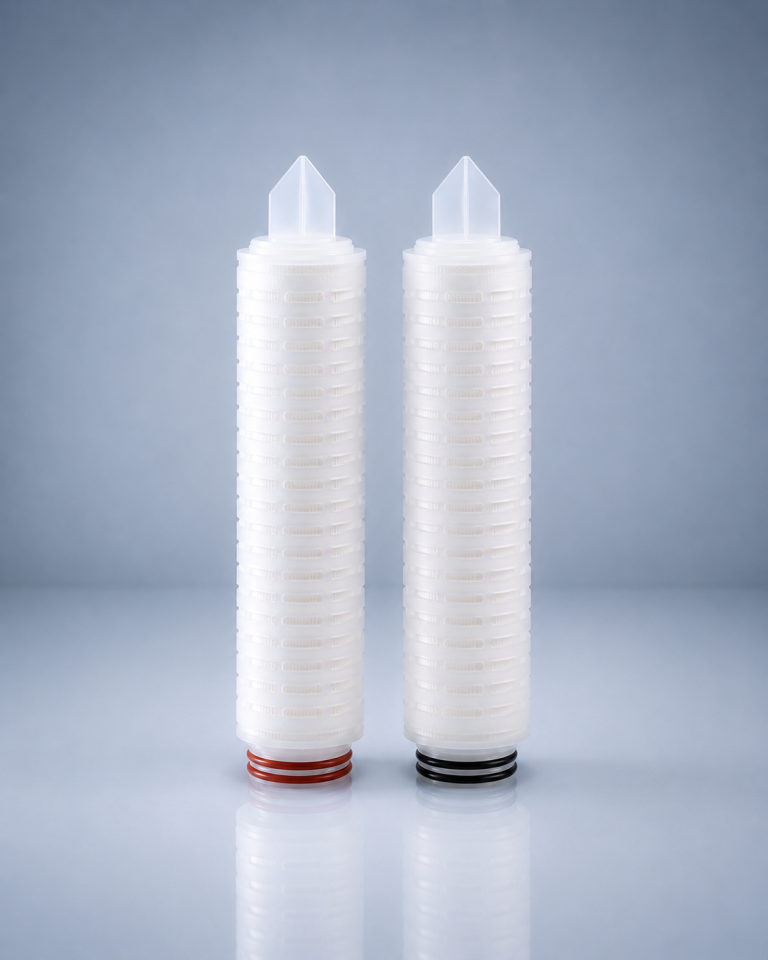
The naturally hydrophilic PES membrane combines high flow, uniform pore structure and reliable microbial retention for demanding fine-filtration processes.
The hydrophilic membrane and optimized pleated structure provide efficient liquid wetting, high flow rate and low initial pressure difference.
Uniform pore size and fine membrane grades support high filtration efficiency and reliable microbial retention in sensitive liquid applications.
The membrane contains no added binders, has low precipitates and can filter a variety of compatible aqueous and non-aqueous liquids.
A large pleated membrane area provides strong dirt holding capacity and supports longer operating cycles.
PES media wets readily with water and does not require pre-wetting with alcohol for common aqueous filtration.
Controlled pore structure improves filtration consistency across the cartridge surface.
PES membrane media is supported by non-woven layers and a polypropylene cage. The cartridge is thermally welded without adhesive to reduce contamination risk.
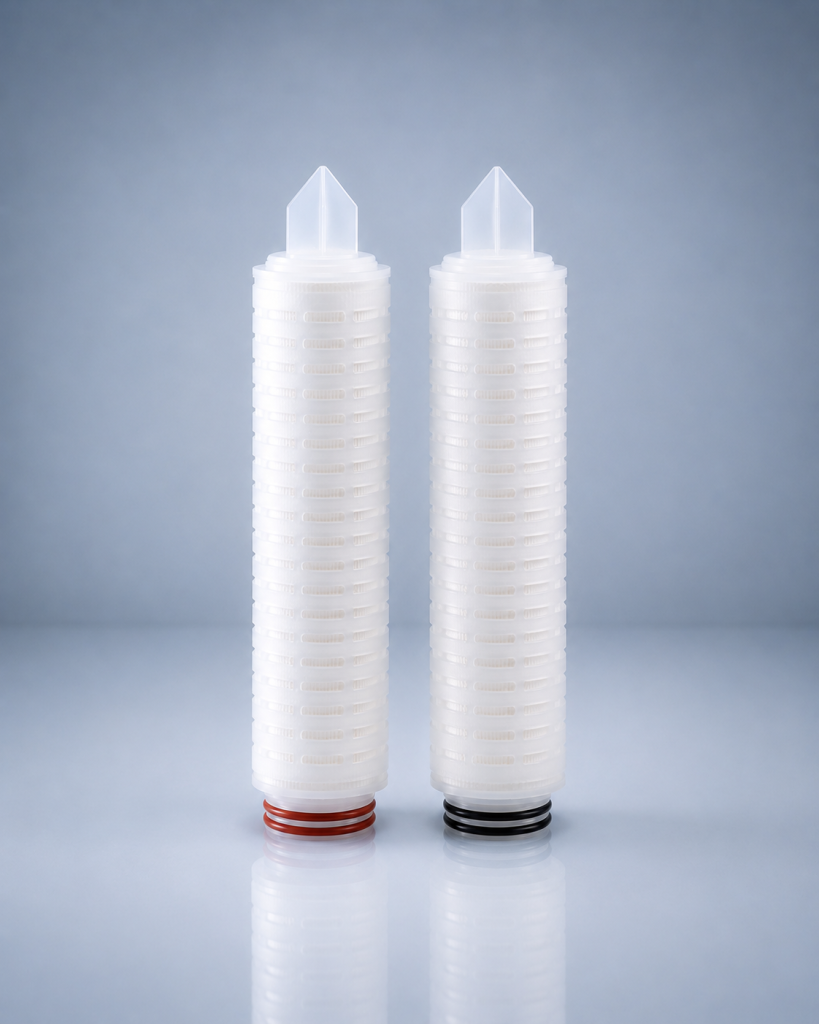
The filtration membrane is made from polyethersulfone for hydrophilic fine filtration.
Material configurations can be selected to comply with CFR 21 requirements where applicable.
Hot melt welding eliminates adhesive and supports cleaner, more consistent cartridge construction.
Select the pore size according to microbial retention target, particle size, required flow rate and downstream cleanliness standard.
Selected for the highest retention requirements, fine polishing and critical liquid filtration.
Suitable for beverage, pharmaceutical water, biotechnology and high-cleanliness process liquids.
Finer membrane grades provide higher particle or microbial retention but create greater pressure drop. Coarser PES grades support higher flow and lower resistance in the same housing.
Cartridge size must match the housing and sealing geometry. Confirm overall length, outside diameter, inside diameter, end cap and gasket before ordering replacements.
Available from 10 to 70 inches. Lengths from 20 to 40 inches can be manufactured in one piece.
Available reference outside diameters include 60, 64, 68, 84 and 131 mm.
The reference inside diameter is 28 mm. Custom ID and housing-compatible dimensions are available.
Each card contains a reserved image position for your actual PES cartridge end cap photo. The available interface range includes Flat, 215, 222, High 222, 226, Threaded, Triangle Tip, Semi-Winged Tip and Flat Peak Cover.
Flat end configuration for standard open or closed cartridge arrangements.
Double O-ring 222 adapter for secure insertion and reliable sealing.
Extended 222 adapter for housings requiring a taller connection profile.
226 bayonet-style adapter for fast locking in compatible sanitary housings.
215 interface for selected fine-filtration housings and OEM equipment.
Threaded adapter option for screw-in cartridge installation.
Triangle fin design for alignment and stabilization in compatible housings.
Semi-winged fin design for stable positioning during installation.
Flat peak cover for selected closed-end and support configurations.
The following values are organized from the supplied PES filter cartridge product sheet.
| Category | Specification Item | Available Data |
|---|---|---|
| Product Size | Filtration Accuracy | 0.04 µm, 0.1 µm, 0.2 µm, 0.45 µm, 0.65 µm, 0.8 µm |
| Length | 10–70 inches; 20–40 inches can be manufactured in one piece | |
| Diameter | OD 60 mm, 64 mm, 68 mm, 84 mm, 131 mm; ID 28 mm | |
| End Cap Type | Port / Interface Options | 215, 222, High 222, 226, Triangle Tip, Semi-Winged Tip, Flat Peak Cover, Flat and custom interfaces |
| Operating Conditions | Normal Operating Temperature | ≤80°C |
| Maximum Temperature | 80°C, ΔP ≤ 0.20 MPa | |
| Maximum Differential Pressure | At 25°C, ΔP ≤ 0.5 MPa | |
| Note | Hot Water / Steam Sterilization | Filter elements can be sterilized with hot water or steam; stainless steel lining can be selected as required. |
The supplied chart shows pressure-drop trends for a 10-inch PES cartridge in water at 70°F. The 0.04 µm membrane has the highest resistance, while 0.65 µm and 0.8 µm grades provide lower pressure drop.
Reference condition: 10-inch cartridge, water, 70°F. Actual pressure drop depends on membrane area, liquid viscosity, temperature, contamination level, housing and operating flow.
Hydrophilic PES cartridges are used where high flow, fine retention, low extractables and consistent membrane performance are important.
Process water, buffers and compatible liquid filtration in pharmaceutical manufacturing.
Beverage polishing and process liquid filtration where PES compatibility is confirmed.
Fine filtration for biotechnology and life science process liquids.
High-purity water, final polishing and fine particle or microbial retention.
Fine liquid filtration for electronics and semiconductor manufacturing processes.
Compatible aqueous and selected non-aqueous chemical filtration.
Fine filtration for laboratory liquids and research workflows.
Custom PES cartridges for sanitary housings, filtration skids and branded systems.
INCE filtration supports custom pore size, membrane area, length, diameter, end cap, gasket and support structure for fine-filtration projects.
Confirm particle size, microbial retention requirement and downstream cleanliness target.
Choose 0.04–0.8 µm according to retention, flow and acceptable pressure drop.
Confirm length, OD, ID, end cap photo, gasket and sterilization method.
Support sample approval, OEM labels, bulk production and export packaging.
Send the required micron rating, cartridge size, end cap photo, sterilization method, liquid type and current model number.
Common questions about hydrophilic PES membrane cartridges.
Available grades include 0.04, 0.1, 0.2, 0.45, 0.65 and 0.8 µm.
PES is naturally hydrophilic, offers uniform pore distribution, high flow, low extractables and strong microbial retention.
Flat, 215, 222, High 222, 226, Threaded, Triangle Tip, Semi-Winged Tip, Flat Peak Cover and custom interfaces are available.
Hot water or steam sterilization can be supported. Stainless steel lining may be selected according to the process requirement.
Please provide pore size, length, OD, ID, end cap, gasket, liquid type, temperature, sterilization method, flow rate and quantity.
Send the model, size, material, micron rating and operating requirements. The current product page is included automatically with your inquiry.
PES selection should begin with the liquid and the required retention result. Specify the full cartridge construction and the proposed test evidence, rather than treating the membrane abbreviation as a complete performance claim. Hydrophilic behavior is one selection characteristic; it does not by itself establish suitability for every water-based process.
For a controlled microbial-retention duty, request the validation and integrity-test information for the specific element. A nominal pore-size label alone cannot establish a sterilizing process. Cleaning, sterilization exposure, seals and installation all need to fit the intended use. Do not infer those conclusions from the words PES or membrane.
The inquiry needs to distinguish the requested configuration from an established performance claim.
An inquiry headed “PES pleated filter cartridge” should identify the actual media grade and supporting materials. Ask the supplier to state what is offered and what still needs confirmation; the description alone is not approval.
An inquiry headed “polyethersulfone filter cartridge” should identify the actual media grade and supporting materials. Ask the supplier to state what is offered and what still needs confirmation; the description alone is not approval.
An inquiry headed “PES membrane filter cartridge” should identify the actual media grade and supporting materials. Ask the supplier to state what is offered and what still needs confirmation; the description alone is not approval.
An inquiry headed “PES filter cartridge manufacturer” should identify the actual media grade and supporting materials. Ask the supplier to state what is offered and what still needs confirmation; the description alone is not approval.
An inquiry headed “PES membrane filter cartridge supplier” should identify the actual media grade and supporting materials. Ask the supplier to state what is offered and what still needs confirmation; the description alone is not approval.
An inquiry headed “hydrophilic PES filter cartridge” should identify the actual media grade and supporting materials. Ask the supplier to state what is offered and what still needs confirmation; the description alone is not approval.
An inquiry headed “hydrophilic PES membrane cartridge” should identify the actual media grade and supporting materials. Ask the supplier to state what is offered and what still needs confirmation; the description alone is not approval.
Use a drawing and an exposure record to close the interfaces and materials questions.
For “PES pleated filter cartridge”, compare the production liquid, cleaning liquid and proposed seal before accepting an apparent match. Record any unresolved point on the drawing or materials review instead of leaving it as an installation assumption.
For “polyethersulfone filter cartridge”, compare the production liquid, cleaning liquid and proposed seal before accepting an apparent match. Record any unresolved point on the drawing or materials review instead of leaving it as an installation assumption.
For “PES membrane filter cartridge”, compare the production liquid, cleaning liquid and proposed seal before accepting an apparent match. Record any unresolved point on the drawing or materials review instead of leaving it as an installation assumption.
For “PES filter cartridge manufacturer”, compare the production liquid, cleaning liquid and proposed seal before accepting an apparent match. Record any unresolved point on the drawing or materials review instead of leaving it as an installation assumption.
For “PES membrane filter cartridge supplier”, compare the production liquid, cleaning liquid and proposed seal before accepting an apparent match. Record any unresolved point on the drawing or materials review instead of leaving it as an installation assumption.
For “hydrophilic PES filter cartridge”, compare the production liquid, cleaning liquid and proposed seal before accepting an apparent match. Record any unresolved point on the drawing or materials review instead of leaving it as an installation assumption.
For “hydrophilic PES membrane cartridge”, compare the production liquid, cleaning liquid and proposed seal before accepting an apparent match. Record any unresolved point on the drawing or materials review instead of leaving it as an installation assumption.
Agree what the trial must demonstrate before treating a sample as an approved production element.
Evaluate “PES pleated filter cartridge” using retention and compatibility evidence for the offered element. Keep the operating conditions and end-of-run trigger with the result so another reviewer can understand what the evidence actually establishes.
Evaluate “polyethersulfone filter cartridge” using retention and compatibility evidence for the offered element. Keep the operating conditions and end-of-run trigger with the result so another reviewer can understand what the evidence actually establishes.
Evaluate “PES membrane filter cartridge” using retention and compatibility evidence for the offered element. Keep the operating conditions and end-of-run trigger with the result so another reviewer can understand what the evidence actually establishes.
Evaluate “PES filter cartridge manufacturer” using retention and compatibility evidence for the offered element. Keep the operating conditions and end-of-run trigger with the result so another reviewer can understand what the evidence actually establishes.
Evaluate “PES membrane filter cartridge supplier” using retention and compatibility evidence for the offered element. Keep the operating conditions and end-of-run trigger with the result so another reviewer can understand what the evidence actually establishes.
Evaluate “hydrophilic PES filter cartridge” using retention and compatibility evidence for the offered element. Keep the operating conditions and end-of-run trigger with the result so another reviewer can understand what the evidence actually establishes.
Evaluate “hydrophilic PES membrane cartridge” using retention and compatibility evidence for the offered element. Keep the operating conditions and end-of-run trigger with the result so another reviewer can understand what the evidence actually establishes.
Keep the technical scope attached to the quantity, packing and delivery request.
When requesting “PES pleated filter cartridge”, ask for the specific construction and documents included. Compare offers against the same requirements and list exceptions explicitly, including any item excluded from the quoted scope.
When requesting “polyethersulfone filter cartridge”, ask for the specific construction and documents included. Compare offers against the same requirements and list exceptions explicitly, including any item excluded from the quoted scope.
When requesting “PES membrane filter cartridge”, ask for the specific construction and documents included. Compare offers against the same requirements and list exceptions explicitly, including any item excluded from the quoted scope.
When requesting “PES filter cartridge manufacturer”, ask for the specific construction and documents included. Compare offers against the same requirements and list exceptions explicitly, including any item excluded from the quoted scope.
When requesting “PES membrane filter cartridge supplier”, ask for the specific construction and documents included. Compare offers against the same requirements and list exceptions explicitly, including any item excluded from the quoted scope.
When requesting “hydrophilic PES filter cartridge”, ask for the specific construction and documents included. Compare offers against the same requirements and list exceptions explicitly, including any item excluded from the quoted scope.
When requesting “hydrophilic PES membrane cartridge”, ask for the specific construction and documents included. Compare offers against the same requirements and list exceptions explicitly, including any item excluded from the quoted scope.
Retain the accepted reference and identify changes that need another review.
Before approving “PES pleated filter cartridge”, retain the approved materials list and exposure conditions. A later change should be checked against that record rather than accepted because the description or outside appearance seems similar.
Before approving “polyethersulfone filter cartridge”, retain the approved materials list and exposure conditions. A later change should be checked against that record rather than accepted because the description or outside appearance seems similar.
Before approving “PES membrane filter cartridge”, retain the approved materials list and exposure conditions. A later change should be checked against that record rather than accepted because the description or outside appearance seems similar.
Before approving “PES filter cartridge manufacturer”, retain the approved materials list and exposure conditions. A later change should be checked against that record rather than accepted because the description or outside appearance seems similar.
Before approving “PES membrane filter cartridge supplier”, retain the approved materials list and exposure conditions. A later change should be checked against that record rather than accepted because the description or outside appearance seems similar.
Before approving “hydrophilic PES filter cartridge”, retain the approved materials list and exposure conditions. A later change should be checked against that record rather than accepted because the description or outside appearance seems similar.
Before approving “hydrophilic PES membrane cartridge”, retain the approved materials list and exposure conditions. A later change should be checked against that record rather than accepted because the description or outside appearance seems similar.
A clean element test answers only part of the selection question. Once contaminants accumulate, resistance and sometimes filtrate quality change. Record the amount of accepted product processed before the agreed changeout trigger is reached. State whether that trigger is a pressure difference, a quality limit, a batch change or another defined event. This makes the operating interval interpretable instead of reducing the result to a claim that the filter lasted several days.
Keep the comparison at the actual liquid conditions. A warmer liquid or a lower flow can make one run appear easier than another. Record the temperature and viscosity basis where relevant, and identify differences in the feed. If conditions cannot be matched, explain the limitation rather than treating the results as a direct ranking of two products.
The element needs the intended support, seating and seal arrangement. Inspect the contact surfaces and use the supplied assembly procedure. Do not assume that a cartridge is correctly installed just because the closure can be fastened. Keep the outlet and clean-side surfaces protected while the housing is open, and make the installed element reference part of the service record.
If particles remain downstream, investigate more than the media label. Consider bypass, a damaged or misplaced seal, installation contamination and changes in the upstream liquid. Preserve the removed element and useful observations for the review. Replacing the cartridge with a finer grade can be an expensive distraction if the real problem is an interface or operating error.
Give suppliers the same drawing revision and process brief. Request the proposed material construction, end connection, seal, retention description and any documents needed by the project. Ask which items are included and which remain to be confirmed. Price, availability, MOQ and delivery are commercial terms for the actual offered configuration; none should be assumed from a general product description.
Keep the approved element and the accepted conditions together after purchase. A change in formulation, cleaning chemistry, operating temperature or housing arrangement may require another review. Having the original basis makes that decision easier and gives maintenance buyers a reliable reference for repeat orders. It also prevents a series of apparently minor substitutions from changing the assembly without anyone reviewing the complete result.
Put a date and drawing revision on the inquiry so technical replies can be tied to the same requirements. State the units beside each flow, temperature, dimension and pressure value. Identify whether a pressure figure refers to the vessel, the line or the difference across the element. Keep a list of agreed deviations with the final offer. These details make later receiving checks and repeat orders easier, especially when several configurations have similar names or several people take part in purchasing.
A change in medium can arrive with changes elsewhere in the element. Ask the supplier to identify supports, core, cage, end caps and seals rather than describing the proposal only by its membrane or fiber. Compare the full construction with the existing element and the intended liquid. Where a requirement applies to the complete flow path, evidence about one material does not close the entire review.
Keep production and cleaning exposures separate in the inquiry. State the actual liquid composition, concentration and temperature, together with relevant contact times or excursions. If information is incomplete, identify what is needed to finish the assessment. The useful result is a review tied to stated conditions, not a broad claim that a polymer or fiber is compatible with every process bearing the same industry label.
For the equipment around the element, see the filter housing resource center. To discuss a defined configuration, send the liquid duty and drawing to sales@incefiltration.com.
 WhatsApp